Why Union College, Stanford & Dartmouth Use 10-Week Terms
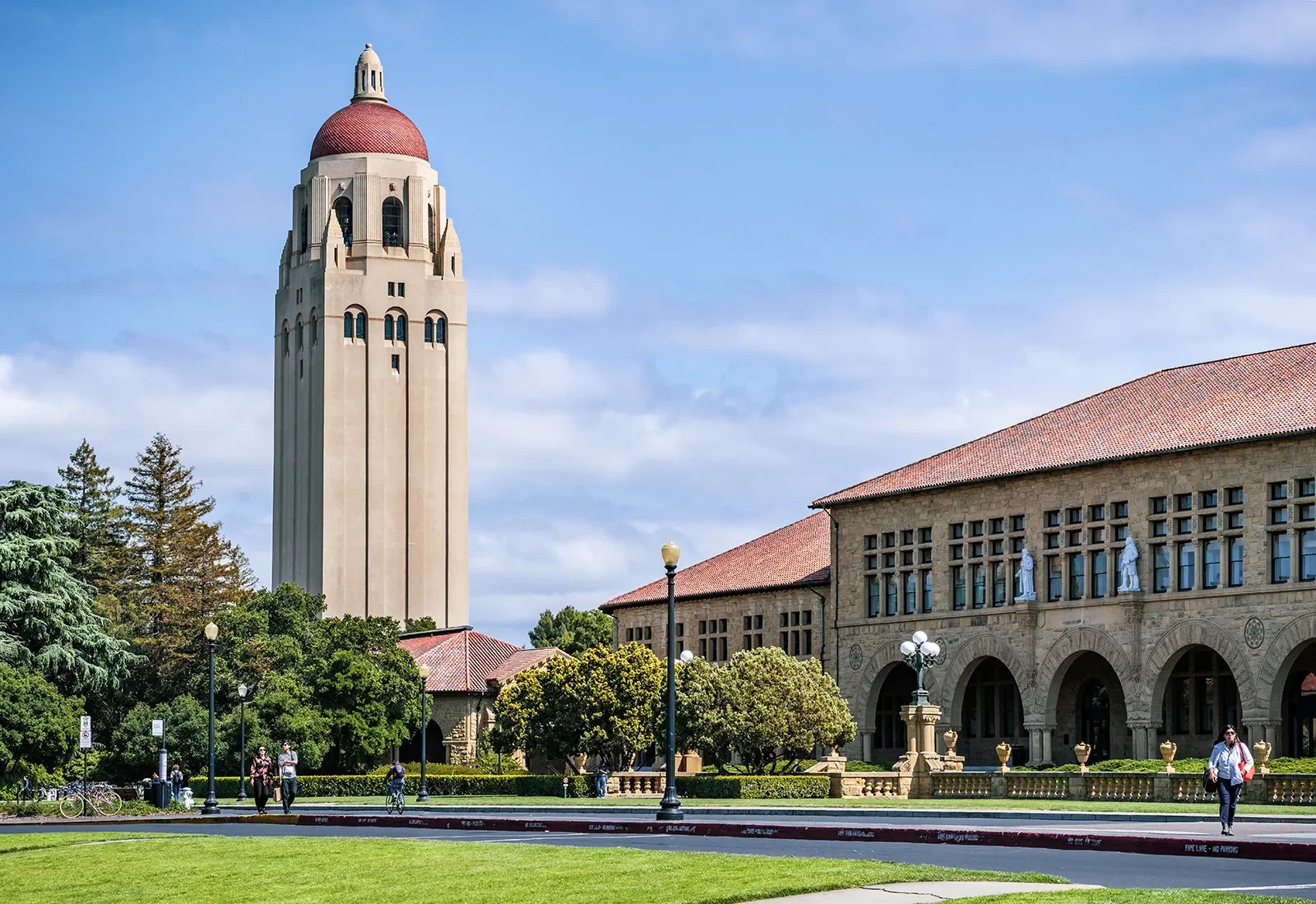
Stanford University
An Uncommon Academic Structure Shared by Elite Institutions
In American higher education, the two-semester academic calendar has become nearly universal among liberal arts colleges. Williams, Amherst, Bowdoin, and most of their peer institutions divide the academic year into two 15-week terms, a structure that has remained largely unchanged for decades.
Union College is a notable exception. Since 1966, Union has operated on a trimester system—three 10-week academic terms per year. This places Union in the company of Stanford University and Dartmouth College, both of which use similar quarter-based calendars. The parallels are not superficial: all three institutions structure their academic years around 10-week terms, require students to take approximately three courses per term, and organize their calendars to create distinct breaks between academic periods.
The structural similarities raise an important question: does this academic format produce measurably different outcomes for students? The available data suggests it does.
| Feature | 10-Week System (Union/Stanford/Dartmouth) |
15-Week System (Williams/Amherst/Bowdoin) |
|---|---|---|
| Terms per Year | 3 academic terms (quarters) | 2 academic terms (semesters) |
| Term Length | ~10 weeks + exams | ~15 weeks + exams |
| Courses per Term | Typically 3 courses | Typically 4-5 courses |
| Total Courses (4 years) | ~36 courses | ~32 courses |
| Academic Calendar | Sep-Nov (Fall) Jan-Mar (Winter) Apr-Jun (Spring) |
Late Aug-Dec (Fall) Late Jan-May (Spring) |
| Winter Break Length | ~6 weeks | ~4 weeks |
| Finals Schedule | Before each break | Before winter break; mid-spring semester |
| Study Abroad Rate | 60% (Union/Dartmouth) | ~40-50% at peer institutions |
| Internship Timing | Year-round opportunities | Primarily summer-focused |
| Double Major Rate | 75%+ combine fields (Union) | ~20-30% at most institutions |
| Concurrent Course Load | 3 subjects simultaneously | 4-5 subjects simultaneously |
The Academic Structure: Key Differences
The trimester system creates several mathematical differences from traditional semester calendars that compound over four years:
Course Volume: Union students typically complete 36 courses over four years (three courses per term × 12 terms), compared to approximately 32 courses at semester institutions (four courses per term × 8 semesters). This represents a 12.5% increase in total course enrollment opportunities.
Concurrent Course Load: Students on trimester systems typically juggle three subjects simultaneously rather than four or five, reducing the cognitive load of context-switching between disciplines while maintaining overall academic rigor through compressed timeframes.
Calendar Structure: Union's academic year runs September through November (Fall term), January through March (Winter term), and April through June (Spring term). Final examinations conclude before breaks begin, creating approximately six weeks of winter break—50% longer than typical semester institutions. This timing also shifts the summer window, with classes ending in early-to-mid June rather than late May.
Historical Context: Why These Institutions Adopted Non-Traditional Calendars
The adoption of trimester and quarter systems at these institutions was driven by specific institutional challenges and educational philosophies, not arbitrary preference.
Union College (1966): Union's transition from semesters to trimesters occurred under President Harold C. Martin as part of a broader curriculum overhaul. The shift coincided with the implementation of the "CompEd" curriculum, which required students to take courses across both humanities/social sciences and sciences/engineering. The trimester structure was designed to increase curricular flexibility at a time when traditional liberal arts colleges faced growing competition from expanding public universities. Significantly, when faculty reconsidered the trimester system in 2003, they voted 124-99 to retain it—suggesting sustained institutional confidence in the model after nearly four decades of operation.
Dartmouth College (1972): Dartmouth's adoption of the "D-Plan" (Dartmouth Plan for Year-Round Operation) was initially a practical solution to a capacity problem. When Dartmouth decided to admit women, the college needed to increase enrollment without constructing significant new facilities. The solution: a four-quarter system with staggered enrollment that required students to attend one summer term. This allowed the college to maintain the same physical infrastructure while increasing student body size. The system subsequently became valued for its academic flexibility, with faculty noting it offered "unmatched flexibility, allowing students to work out their own individual patterns of attendance and study both on and off campus."
Stanford University: Stanford has operated on quarters for decades, part of a West Coast tradition dating to the University of Chicago's adoption of a four-quarter calendar in 1891. Stanford's quarter system comprises Autumn, Winter, and Spring quarters of approximately 10 weeks each, plus an optional summer quarter. When Stanford Law School remained on semesters while the rest of the university operated on quarters, the law school ultimately switched to quarters in 2009-2010 to facilitate cross-disciplinary enrollment—suggesting the university views calendar alignment as academically advantageous.
Measured Outcomes: Study Abroad Participation
One of the most quantifiable differences appears in study abroad participation rates. Union reports that approximately 60% of its students study abroad during their undergraduate years. This rate exceeds both the national average (roughly 10% of all undergraduates) and compares favorably to highly selective liberal arts colleges. Williams College, for comparison, reports approximately 50% of students study abroad by junior year.
Dartmouth similarly reports study abroad participation above 60%, with approximately 30% of students participating in multiple international programs. The college operates study abroad programs across all four quarters, allowing students to integrate international experiences without sacrificing full semesters of on-campus coursework.
Several factors appear to contribute to these elevated participation rates:
Program Integration: Union offers 24 full-term study abroad programs specifically designed for the 10-week trimester format across 29 countries. The abbreviated term length means students spend approximately 10 weeks abroad rather than 15-16 weeks, making the time commitment more manageable while still providing substantial immersion.
Reduced Opportunity Cost: Semester-long study abroad programs require students to be absent from campus for half the academic year. A 10-week program represents approximately one-third of the academic year, potentially reducing the perceived sacrifice of missing campus activities, research opportunities, or sequential courses.
Scheduling Flexibility: The existence of three terms rather than two provides additional scheduling options. Students can more easily fit study abroad between major requirements or sequential courses in their major.
The practical implications extend beyond participation rates. A Dartmouth student interviewed for institutional research noted: "I studied abroad in Morocco during freshman summer, and later did an internship in Kuwait during sophomore spring. At other schools, these two experiences likely would've taken up the course of a year, but at Dartmouth I integrated those experiences smoothly into the rest of my schedule."
Off-Cycle Internship Access and Career Preparation
Traditional semester calendars create a structural bottleneck in the internship market: the vast majority of college students are available for internships during the same three-month summer window. Trimester and quarter systems distribute this availability across the calendar year.
Union College reports facilitating 500+ internships annually for its student body. More significantly, these internships occur throughout the academic year rather than being concentrated in summer months. The extended winter break (approximately six weeks) and the possibility of taking individual terms off create windows for professional experience that don't exist in traditional semester calendars.
Dartmouth has explicitly marketed this as a competitive advantage in their admissions materials, noting that students can "pursue internships during any season, whereas most college students are vying for summer internships only." The practical implications are considerable:
Seasonal Opportunity Access: Political campaigns peak in fall election years; semester students must typically take a semester leave of absence to participate, while quarter-system students can take a single fall term off.
Extended Internships: Two consecutive quarters off (e.g., winter and spring) enable six-month internship programs while maintaining on-track graduation timelines.
Reduced Competition: Applying for internships during off-peak periods (fall, winter, spring) places students in smaller applicant pools than the competitive summer market.
The calendar structure appears to create a systematic advantage in building professional experience portfolios prior to graduation. However, it's worth noting that this advantage depends significantly on institutional career services infrastructure and employer relationship development—structural calendar advantages alone are insufficient without supporting systems.
Cognitive Load and Academic Focus
The trimester system creates a distinct pedagogical environment characterized by reduced concurrent coursework and accelerated pacing. Students typically enroll in three courses simultaneously rather than four to five, while covering equivalent material in compressed timeframes.
Research on cognitive load theory suggests potential advantages to this structure. Students report that managing three subjects simultaneously, even at an accelerated pace, allows for greater depth of engagement with each subject. A Dartmouth student survey noted that the structure allows students to "focus on fewer classes at the same time, allowing them to explore each course more in-depth."
The compressed timeline also affects the examination schedule. Finals periods on trimester systems involve three examinations rather than four or five, potentially reducing the acute stress of examination weeks. However, students experience three finals periods annually rather than two—redistributing stress across more frequent intervals rather than eliminating it.
Stanford students interviewed about their academic experience noted that the rapid pace "very rarely" creates boredom, suggesting the frequent course rotation maintains engagement. However, the system also requires rapid adaptation: students must quickly integrate into new courses three times per year rather than twice, which some describe as initially disorienting.
The break structure creates a distinct pattern: final examinations conclude before each break period begins. Students return to campus facing new coursework rather than incomplete assignments from the previous term. The psychological implications of this structure have not been formally studied, though student satisfaction surveys at Union and Dartmouth suggest preference for complete breaks over mid-term interruptions.
Break Structure and Calendar Timing
The trimester system creates a mathematically distinct break structure:
Winter Break Duration: Union's winter break extends approximately six weeks (late November through early January), compared to approximately four weeks at most semester institutions. This represents a 50% increase in unstructured time during the winter period.
Break Quality: Finals conclude before breaks begin, eliminating the pattern common in semester systems where students return from spring break to remaining weeks of coursework or where final examinations occur after winter break ends.
Extended Summer Window: Classes conclude in early-to-mid June rather than late May, creating a slightly compressed summer but potentially advantageous timing for students pursuing fall-start graduate programs or specific internship cycles.
The implications of this break structure have received limited formal study. However, Union's 2003 faculty review of the trimester system found that students expressed strong preference for maintaining the calendar structure, suggesting satisfaction with the break distribution. Dartmouth has institutionalized its winter break as "Winterim," promoting it as time for short internships, personal projects, or rest—though the actual utilization patterns vary significantly by student.
Curricular Breadth and Multi-Disciplinary Study
The additional courses available over four years create measurable differences in curricular outcomes. Union reports that over 75% of students combine fields of study through double majors, joint majors, or major-minor combinations. This rate substantially exceeds typical patterns at semester-based liberal arts colleges.
Several structural factors contribute to this outcome:
Course Accumulation: The 12.5% increase in total courses (36 vs. 32) provides four additional course slots that can be allocated to second majors or minors without requiring course overloads.
Reduced Scheduling Conflicts: Three terms rather than two creates additional opportunities to schedule required courses that might otherwise conflict in a two-semester system.
Lower Risk Exploration: The 10-week commitment to individual courses may reduce the perceived risk of exploring unfamiliar disciplines. Students can sample courses in new fields knowing the time commitment is bounded at 10 weeks rather than 15 weeks.
Stanford has explicitly cited this breadth advantage in institutional materials, noting the quarter system "allows students to take advantage of dozens of additional courses not possible under a more traditional semester calendar." The practical implication for students pursuing interdisciplinary work or graduate programs requiring diverse preparation is considerable.
However, this breadth comes with trade-offs. The accelerated pace may reduce the depth achievable in individual courses compared to semester-long equivalents. Some disciplines—particularly laboratory sciences and intensive language study—may face pedagogical challenges in compressed formats. The data on learning outcomes comparing trimester and semester formats remains limited, with most studies focusing on institutional satisfaction rather than learning assessment.
Comparative Outcomes Analysis
Assessing the long-term impact of calendar systems on student outcomes presents methodological challenges, as calendar structure is only one variable among many affecting student success. However, several metrics suggest trimester institutions achieve competitive or superior outcomes:
Study Abroad Participation: Union (60%), Dartmouth (60%+), compared to Williams (~50%) and national averages (~10%). The trimester structure appears correlated with elevated participation rates, though institutional commitment to international education and program availability also contribute significantly.
Internship Engagement: Union reports facilitating 500+ internships annually. Dartmouth reports near-universal internship participation before graduation. Comparable data from semester institutions is limited, making direct comparison difficult.
Multi-Disciplinary Study: Union's 75%+ rate of students combining fields of study exceeds typical liberal arts college patterns, where double majors often represent 20-30% of graduates. The additional course slots appear to enable this outcome.
Graduation Rates: Union's four-year graduation rate (typically 80%+) aligns with peer semester institutions, suggesting the trimester structure creates no disadvantage for degree completion. Dartmouth similarly maintains high completion rates despite the more complex D-Plan structure.
Alumni Outcomes: Dartmouth maintains one of the highest alumni giving rates among colleges, which some interpret as a proxy for satisfaction and perceived value. Union competes effectively with peer institutions in job placement, though comparative salary data is not systematically available across calendar systems.
The limited research on calendar format and learning outcomes prevents definitive conclusions. Student satisfaction data suggests preference for trimester systems among students who experience them, but selection bias may influence these results—students who chose trimester institutions may have self-selected for preferences aligned with that structure.
Strategic Positioning in the Liberal Arts Market
The trimester calendar functions as a differentiating characteristic in a relatively homogeneous liberal arts college market. Among highly selective liberal arts colleges, the vast majority operate on traditional semester calendars: Williams, Amherst, Swarthmore, Bowdoin, Middlebury, Pomona, and others in the commonly referenced "Little Ivies" and NESCAC conferences all use two-semester academic years.
Union's adoption and retention of the trimester system creates several strategic implications:
Market Differentiation: The trimester calendar provides a concrete, structural difference from peer institutions that extends beyond subjective claims about culture or teaching philosophy. Prospective students comparing Union to semester-based peers encounter a fundamentally different academic structure rather than marginal variations on similar themes.
Prestige Association: Operating on the same calendar structure as Stanford (often ranked among the top five universities globally) and Dartmouth (an Ivy League institution) creates an implicit association, regardless of whether that association meaningfully reflects academic quality. This positioning may influence perception among prospective students and families for whom institutional prestige signals matter.
Flexibility as Value Proposition: In an era when experiential learning, study abroad, and internship experience have become standard expectations rather than differentiators, the structural enablement of these experiences through calendar design provides a competitive advantage. Union can substantiate claims about flexibility and opportunity with structural evidence rather than aspirational statements.
Institutional Commitment Signal: The 2003 faculty vote to retain trimesters despite opportunity to revert to semesters demonstrates institutional willingness to maintain distinctive approaches rather than conforming to sector norms. This may appeal to students seeking institutions with strong institutional identity.
However, the calendar structure also creates challenges. Operating on a different schedule from peer institutions complicates athletic scheduling, creates misalignment with semester-based study abroad programs not designed for 10-week terms, and requires additional explanation to prospective students and families unfamiliar with non-semester calendars.
Institutional Scale and Academic Structure
Union's implementation of the trimester system occurs in a context significantly different from Stanford and Dartmouth, creating a distinct institutional profile:
Institutional Size: Union enrolls approximately 2,000 undergraduates, compared to Stanford's ~7,000 undergraduates and ~9,000 graduate students, and Dartmouth's ~4,500 undergraduates and ~2,000 graduate students. This smaller scale enables higher faculty-student interaction rates (9:1 student-faculty ratio at Union) while maintaining the same calendar structure.
Academic Model: Stanford operates as a research university with extensive graduate programs; Dartmouth combines undergraduate focus with professional schools; Union functions as a primarily undergraduate institution. The trimester calendar serves different institutional purposes across these contexts—enabling research flexibility at Stanford, supporting the D-Plan's off-term system at Dartmouth, and facilitating experiential learning at Union.
Resource Implications: Smaller institutions typically face greater per-student costs for administrative complexity. Operating on a non-standard calendar requires specialized registrar systems, financial aid calculations aligned with three billing cycles, and coordination with external systems (including federal financial aid) designed for semester calendars. Union's sustained operation of the trimester system for 58 years suggests these administrative costs are manageable at the small college scale.
The combination of small institutional size and trimester calendar structure is relatively rare. Carleton College represents another example of a highly selective liberal arts college operating on trimesters, while the majority of liberal arts colleges maintain semester calendars regardless of size.
Structural Flexibility and Individual Pathways
The trimester calendar creates specific forms of flexibility that differ from semester systems:
Leave Options: Students can take individual terms off without extending their graduation timeline, assuming they complete the required number of courses (typically 36 at Union). This enables participation in opportunities that don't align with academic calendars—political campaigns, seasonal research projects, extended internships, or personal circumstances requiring time away from campus.
Course Load Variation: The three-term structure allows greater variation in course intensity across the academic year. Students can take lighter loads during terms with significant extracurricular commitments and compensate in other terms, maintaining overall progress toward graduation.
Graduation Timing: Union and Stanford can award degrees at multiple points in the academic year (typically March and June), providing flexibility for students who complete requirements off-cycle or who face timing constraints for graduate programs or employment.
Summer Optimization: The later spring term end date (early-to-mid June) and the possibility of taking fall or winter terms off creates varied summer patterns. Some students extend their academic year and compress summer; others optimize for specific internship cycles or graduate program applications.
These flexibility mechanisms require active advising and planning. Students who don't strategically utilize the calendar's structural opportunities receive no inherent advantage from the trimester system beyond the standard experience. The system creates possibilities rather than guarantees—outcomes depend on individual initiative and institutional support systems.
Conclusion: Calendar Structure as Competitive Advantage
The trimester academic calendar represents a structural difference with measurable implications for student experience and outcomes. Union College's 58-year commitment to this system, shared with institutions like Stanford and Dartmouth, creates several documented advantages:
Increased Course Opportunities: 36 courses over four years versus approximately 32 in semester systems—a 12.5% increase in curricular capacity that enables higher rates of double majors and interdisciplinary study.
Elevated Study Abroad Participation: Union's 60% participation rate exceeds both national averages and many peer institutions, facilitated by 10-week program structures and reduced opportunity costs.
Year-Round Internship Access: The calendar structure enables off-cycle professional experiences, reducing competition and enabling seasonal opportunities unavailable to semester-bound students.
Reduced Concurrent Cognitive Load: Three courses per term versus four or five allows for greater depth of engagement with individual subjects, though at an accelerated pace.
However, these advantages come with trade-offs. The accelerated pace may challenge some students and disciplines. Operating on a non-standard calendar creates administrative complexity and requires explanation to prospective students unfamiliar with the format. The system provides opportunities rather than guarantees—outcomes depend heavily on individual initiative and institutional support infrastructure.
For students prioritizing academic flexibility, experiential learning opportunities, and interdisciplinary study, the trimester system offers structural advantages over traditional semester calendars. The 2003 faculty vote to retain the system despite opportunity to revert suggests sustained institutional confidence in the model's efficacy.
The question for prospective students is not whether the trimester system is objectively superior to semester systems across all dimensions, but rather whether its specific characteristics align with individual educational priorities and learning styles. For students who value the documented benefits—more courses, easier study abroad integration, year-round internship access, and frequent fresh starts—Union's trimester calendar represents a meaningful differentiator in the liberal arts college market.
Further Reading: For detailed information on Union College's trimester system and academic programs, visit Union's admissions website or consult the Office of the Registrar for specific calendar structures and course planning resources.