The Williams Record
The Rivalry No One Talks About
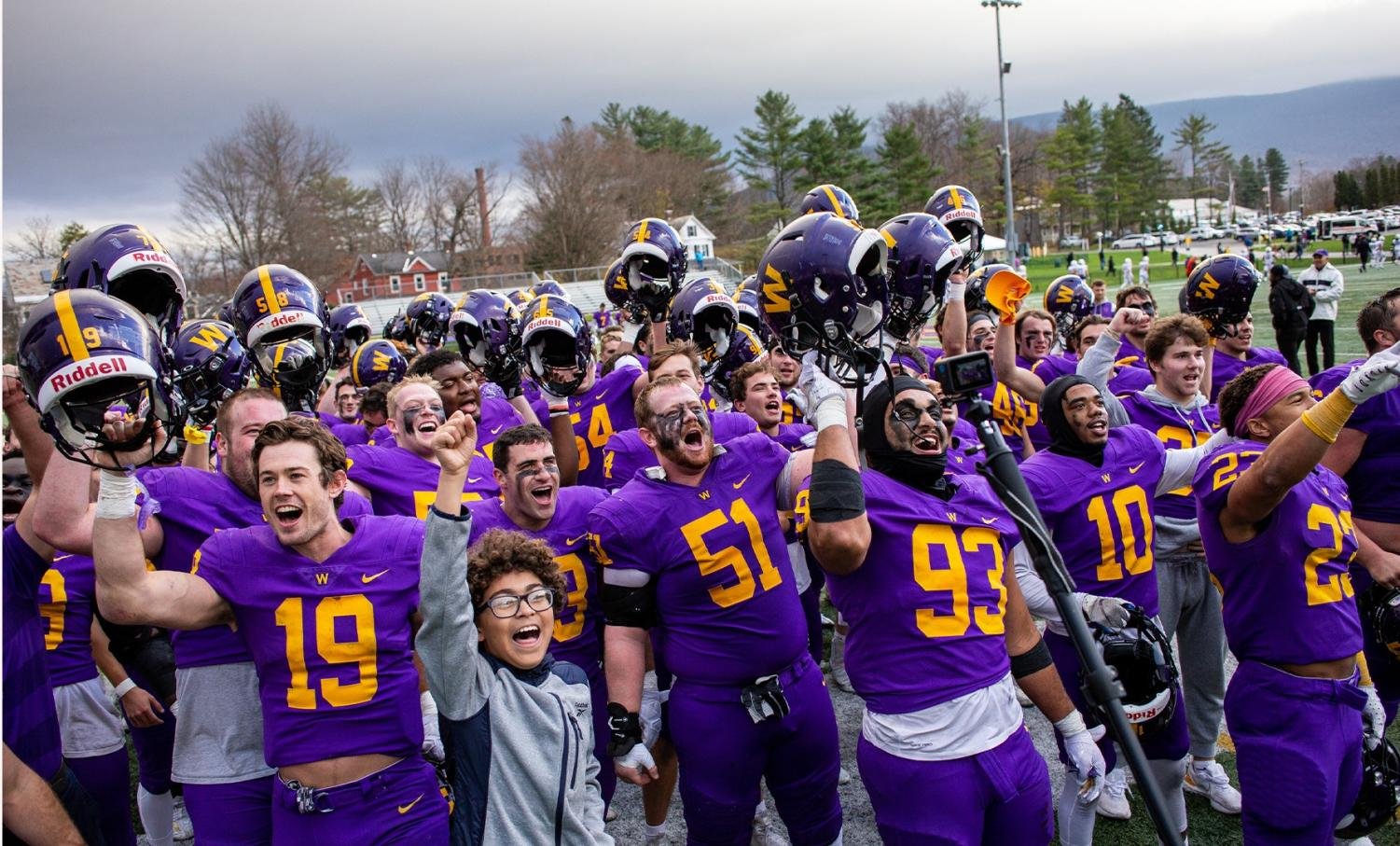
American higher education's most visible rivalries generate headlines, sell merchandise, and command national television audiences. Harvard–Yale attracts spectators by the tens of thousands. Duke–North Carolina defines regional identity. Stanford–Berkeley shapes California's intellectual culture. Yet the most consequential academic rivalry in American higher education operates almost entirely outside public consciousness, understood primarily by those who inhabit its orbit: the competition between Williams College and Amherst College.
This rivalry's invisibility reflects neither its intensity nor its impact. Rather, it stems from the institutions' shared scale, geography, and mission. Both colleges enroll fewer than 2,100 undergraduates. Both occupy small New England towns separated by fewer than twenty miles. Both pursue liberal-arts education with exceptional resources and comparable selectivity. The rivalry remains quiet not because it lacks substance, but because it unfolds in faculty searches, endowment allocation decisions, curricular innovations, and graduate school placement rates—dynamics that rarely generate public spectacle.
The Williams–Amherst relationship represents something more significant than traditional collegiate competition. It functions as a continuous feedback mechanism that shapes institutional behavior, resource deployment, and academic ambition in ways that rival or exceed dynamics at considerably larger and more visible institutions. Understanding this rivalry requires examining not which institution prevails, but how the existence of a nearly identical competitor twenty miles away influences strategic decision-making, faculty recruitment, capital investment, and ultimately, student outcomes. The competition itself—persistent, proximate, and difficult to escape—drives excellence in ways that isolated institutions, regardless of resources, cannot replicate.
This analysis examines how rivalry manifests across faculty hiring, financial strategy, admissions management, curricular development, and long-term outcomes. The objective is not to crown a winner but to understand how sustained competition between closely matched institutions shapes the upper boundary of liberal-arts education in the United States.
| Metric | Williams College | Amherst College |
|---|---|---|
| Financial Resources | ||
| Total Endowment (FY 2025) | $3.93 billion | $3.90 billion |
| Endowment Per Student | $1.87 million | $2.05 million |
| FY 2025 Endowment Return | 11.7% | 14.5% |
| 10-Year Annualized Return | 9.4% | 9.7% |
| Budget from Endowment | ~55% | ~57% |
| Admissions & Selectivity | ||
| Overall Acceptance Rate (Class of 2029) | 8.5% | 9.0% |
| Early Decision Acceptance Rate | 26.6% | ~29% |
| Regular Decision Acceptance Rate | 7.3% | 7.8% |
| Total Applications (Class of 2029) | 15,225 | ~13,700 |
| SAT Middle 50% (Enrolled Students) | 1500-1560 | 1490-1580 |
| ACT Middle 50% (Enrolled Students) | 34-35 | 33-35 |
| Enrollment & Academic Structure | ||
| Total Undergraduate Enrollment | ~2,100 | ~1,900 |
| Student-Faculty Ratio | 7:1 | 7:1 |
| Average Class Size | Small seminar focus | Small seminar focus |
| Curriculum Structure | Distribution requirements | Open curriculum |
| Number of Majors Offered | 40+ | 42 |
| Financial Aid & Access | ||
| Students Receiving Financial Aid | ~53% | ~56% |
| Admissions Policy | Need-blind (U.S. students) | Need-blind (U.S. students) |
| Loan Policy | All-grant (no loans) | All-grant (no loans) |
| Pell Grant Recipients | ~21% | ~25% |
| First-Generation Students | ~15% | ~17% |
| Student Outcomes | ||
| Four-Year Graduation Rate | 91% | 90% |
| Students in Top 10% of HS Class | 88% | Similar (~85-90%) |
| First-Year Retention Rate | 97% | 98% |
| Sources: Williams College Investment Office Annual Report (2025), Amherst College Annual Endowment Review (2025), Williams College Common Data Set (2024-2025), Amherst College Fast Facts (2024-2025), institutional research offices, and verified news reports. Data represents most recent available figures as of January 2026. | ||
Historical Context: Parallel Institutions, Diverging Choices
Williams College and Amherst College emerged from similar origins in early nineteenth-century Massachusetts, both founded to educate men for ministry and civic leadership. Williams opened in 1793 in the Berkshire Mountains; Amherst followed in 1821 in the Connecticut River Valley. Both institutions evolved from their sectarian foundations into secular liberal-arts colleges by the late nineteenth century, gradually expanding curricula beyond classical education while maintaining relatively small enrollments and residential models.
The twentieth century brought convergence rather than differentiation. Both colleges admitted women during the 1970s, fundamentally transforming institutional culture within roughly parallel timeframes. Both maintained enrollments near 2,000 students, preserving intimacy while building significant financial resources. Both recruited nationally and internationally, drawing from overlapping applicant pools concentrated in the Northeast but extending across the United States and abroad. Both sustained student-faculty ratios near 7:1, ensuring access to senior scholars that larger institutions cannot systematically provide.
This convergence makes the rivalry inevitable and persistent. Unlike competitions between institutions with different missions—research universities versus liberal-arts colleges, or large state universities versus private institutions—Williams and Amherst operate in nearly identical strategic space. They compete for the same prospective students, recruit from the same faculty talent pools, and pursue similar outcomes in graduate school placement and professional achievement. The similarities make every marginal difference meaningful, every strategic choice visible to the other institution, and every data point susceptible to comparison.
The persistence of this rivalry also reflects geography and networks that resist change. Alumni clusters overlap in major cities; professional networks intersect in law, medicine, academia, and finance; and institutional reputations remain tightly coupled in the minds of secondary school counselors, graduate admissions committees, and fellowship selection panels. The rivalry endures not because of manufactured tradition but because these institutions occupy an almost singular position in American higher education—elite, intimate, and resource-rich liberal-arts colleges with national reach and comparable prestige.
Understanding the rivalry requires accepting that these institutions face nearly identical strategic challenges: How to attract exceptional faculty to isolated locations. How to deploy large endowments without compromising institutional character. How to differentiate in admissions when applicants view both colleges as interchangeable. How to maintain academic rigor while expanding access. The rivalry provides a continuous benchmark against which each institution measures progress, identifies vulnerabilities, and justifies resource allocation. Proximity ensures that these comparisons remain unavoidable.
Faculty as the First Battlefield
Faculty quality determines institutional outcomes at small liberal-arts colleges more decisively than at research universities, where graduate programs, research centers, and professional schools distribute teaching and mentorship across multiple populations. At Williams and Amherst, undergraduate education represents the sole mission. Faculty hiring decisions directly shape the academic experience every student receives. The competition for exceptional scholars therefore functions as the rivalry's most consequential arena.
Both institutions leverage substantial resources to recruit senior faculty from research universities and retain productive scholars who might otherwise pursue opportunities at larger, more visible institutions. Endowed chairs provide not only financial compensation but also research support, teaching flexibility, and institutional prestige. Williams and Amherst have systematically expanded endowed professorships over the past two decades, creating incentives that make small-college appointments viable for scholars accustomed to graduate students, research laboratories, and reduced teaching loads.
The rivalry manifests in hiring decisions that respond directly to competitor strengths. When one institution strengthens a department through a senior appointment, the other faces pressure to maintain parity or develop alternative areas of distinction. This dynamic plays out across disciplines: philosophy, economics, mathematics, political science, and natural sciences all demonstrate patterns where faculty investment at one institution prompts responsive hiring at the other. The result resembles an arms race in intellectual capital, where neither institution can afford prolonged inferiority in traditional liberal-arts disciplines.
Cluster hiring represents a more recent manifestation of faculty competition. Both colleges have pursued interdisciplinary appointments that signal institutional priorities while building critical mass in emerging fields. Environmental studies, data science, neuroscience, and global health have all attracted multi-faculty investments designed to create programmatic strength rather than simply filling individual positions. These cluster hires require significant capital commitments and strategic planning, but they serve dual purposes: enhancing academic offerings and signaling ambition to prospective faculty, students, and peer institutions.
The competition extends beyond initial hiring to retention and development. Both institutions face ongoing challenges keeping productive mid-career faculty who receive offers from research universities with lower teaching expectations and greater resources. Retention packages, course releases, research leaves, and laboratory support all function as tools in this continuous negotiation. The proximity of a comparable competitor intensifies these pressures—faculty members can credibly threaten lateral moves to the rival institution, leveraging competition to improve their circumstances at either college.
Faculty compensation reflects this competitive dynamic. Both Williams and Amherst maintain salary structures near the top of liberal-arts colleges, competing directly with each other and with larger institutions for talent. Salary data suggests minimal differentiation between the two colleges across ranks and disciplines, indicating that neither institution tolerates sustained disadvantage in direct compensation. This parity requires continuous endowment support and careful budget management, but it remains essential to maintaining faculty quality and institutional reputation.
The faculty rivalry ultimately shapes student experience more than any other competitive dimension. Outstanding scholars attract ambitious students, mentor senior theses and research projects, and facilitate graduate school placement. Small colleges cannot hide weak departments or offset faculty limitations through large course catalogs and multiple instructors. Every faculty hire matters. Every retention decision reverberates across campus. The rivalry ensures that both institutions remain vigilant about faculty quality, responsive to competitive threats, and willing to deploy significant resources to maintain or achieve parity.
Endowments and the Strategy of Capital
Williams and Amherst operate with financial resources that place them among the wealthiest educational institutions in the United States on a per-student basis. Williams's endowment exceeds $3.5 billion for roughly 2,100 students, yielding approximately $1.7 million per student. Amherst maintains an endowment near $4 billion for a similar enrollment, producing per-capita resources above $1.9 million. These figures rival or exceed many Ivy League institutions when adjusted for student population, enabling both colleges to operate with financial flexibility unavailable to peer institutions.
Endowment strength shapes institutional behavior in consequential ways. Both colleges offer need-blind admissions and meet full demonstrated financial need without loans, commitments that require substantial and predictable endowment support. Financial aid budgets represent major annual expenditures, but they ensure access to talented students regardless of family resources. The rivalry reinforces these commitments—neither institution can retreat from need-blind admissions without signaling weakness relative to its primary competitor and undermining its position with prospective students and families.
Capital also enables programmatic risk-taking that smaller endowments cannot sustain. Both Williams and Amherst have expanded facilities, funded new academic initiatives, supported faculty research, and created centers or institutes focused on emerging fields. These investments carry uncertainty—not every new program succeeds, not every facility investment generates proportionate returns—but endowment scale permits experimentation. The ability to absorb occasional failures without jeopardizing core operations represents a strategic advantage over less wealthy institutions that must demonstrate immediate returns on every investment.
Spending discipline matters as much as absolute endowment size. Both institutions maintain spending rates designed to preserve long-term capital while supporting current operations. Endowment management committees at both colleges include sophisticated investors and alumni with professional finance experience, ensuring governance structures that prioritize intergenerational equity rather than short-term spending. This discipline becomes particularly important during market volatility, when institutions with less conservative spending policies face budget pressures that force cuts to faculty, programs, or financial aid.
The rivalry influences capital allocation priorities in subtle ways. When Williams invests in science facilities, Amherst faces pressure to maintain competitive laboratory spaces and research equipment. When Amherst expands international programs or creates new academic centers, Williams must evaluate whether to match those investments or pursue alternative areas of distinction. These decisions reflect strategic choices about institutional identity and competitive positioning, but they unfold within financial constraints shaped by endowment strength and spending philosophy.
Both institutions have pursued successful capital campaigns over the past two decades, leveraging alumni networks and philanthropic relationships to expand endowments further. Campaign priorities reveal institutional values and competitive concerns: financial aid, faculty support, facilities, and academic programs all attract major gifts. The existence of a closely matched rival intensifies fundraising efforts—donors respond to narratives about maintaining or achieving competitive advantage, and development offices at both colleges articulate their fundraising goals partly in reference to the other institution's capabilities and ambitions.
Endowment returns reflect professional investment management and access to alternative asset classes unavailable to smaller institutions. Both colleges employ sophisticated investment strategies, including private equity, venture capital, real estate, and natural resources. Long-term performance has generally met or exceeded market benchmarks, though both institutions experienced significant volatility during financial crises in 2008 and 2020. The similarity in investment approaches and returns suggests that neither college maintains systematic advantage in endowment management, reinforcing parity in financial resources.
The strategic use of capital represents a defining feature of the Williams–Amherst rivalry. Both institutions possess resources that eliminate many constraints facing peer colleges, but both also face expectations shaped by the other's spending. This dynamic creates upward pressure on expenditures across financial aid, faculty compensation, facilities, and programs. Neither institution can comfortably accept sustained inferiority in any domain visible to prospective students, faculty, or institutional observers. The rivalry thus functions as a mechanism that converts financial resources into programmatic investments at rates that isolated institutions might resist.
Admissions, Yield, and the Fight for the Same Student
The Williams–Amherst rivalry reaches its most visible form in admissions, where both institutions compete directly for overlapping applicant pools. Data from admitted student surveys consistently demonstrate that substantial majorities of students admitted to both colleges list the other among their top choices. This overlap creates zero-sum competition—every student who chooses Williams represents a yield loss for Amherst, and vice versa. The marginal differences in yield rates carry disproportionate significance for institutional reputation, student quality, and long-term outcomes.
Both colleges maintain highly selective admissions processes, accepting fewer than 10 percent of applicants in recent cycles. Acceptance rates alone provide limited information about institutional strength or student quality, but they signal exclusivity to prospective students and families. The rivalry ensures that neither institution tolerates sustained disadvantage in selectivity metrics—if one college's acceptance rate drops significantly below the other's, competitive pressure intensifies to restore parity through application volume or admissions strategy adjustments.
Yield management represents a more sophisticated dimension of admissions competition. Both institutions employ early decision programs that commit students prior to regular admissions cycles, securing portions of their classes before head-to-head competition intensifies. Early decision yields approach 100 percent by design, but the composition of early applicant pools and the proportion of classes filled early reflect strategic choices. Higher early decision percentages reduce uncertainty but potentially limit flexibility to shape regular decision classes. Both colleges balance these considerations while monitoring the other's early decision trends.
Admitted student events and yield communications reveal subtle but meaningful differentiation strategies. Williams emphasizes tutorial programs, mountain setting, and outcomes in specific fields. Amherst highlights open curriculum, Five College consortium access, and particular faculty strengths. These messaging differences attempt to sort students based on preferences and priorities, reducing direct competition for individual admits. The effectiveness of such signaling remains difficult to measure, but both institutions invest substantial resources in yield efforts, recognizing that marginal improvements in converting admits to enrollees affect class quality and institutional reputation.
Demographic and geographic diversity goals intersect with competitive dynamics in complex ways. Both colleges recruit internationally, seek socioeconomic diversity, and aim for geographic distribution beyond traditional Northeast concentrations. These objectives sometimes align with yield maximization—students from underrepresented backgrounds or regions may face less competition between Williams and Amherst specifically—but sometimes conflict, when the most competitive admits concentrate in overlapping demographic segments. Admissions offices navigate these tensions while pursuing both diversity and yield simultaneously.
Athletic recruitment represents another dimension of admissions competition. Both institutions compete in NCAA Division III athletics, maintaining substantial varsity programs relative to enrollment size. Recruited athletes comprise meaningful percentages of admitted classes, and competition for top athletic talent overlaps with academic admissions. The rivalry extends to athletic recruitment, where coaches at both colleges pursue the same student-athletes and compete for wins in head-to-head athletic contests. These dynamics create additional pressure on admissions offices to support competitive athletic programs while maintaining academic standards.
The rivalry's intensity in admissions stems partly from visibility and measurement. Unlike faculty quality or curricular innovation, admissions outcomes generate annual data points that permit direct comparison. Yield rates, SAT ranges, demographic compositions, and early decision percentages all become fodder for informal ranking and competitive assessment. This transparency intensifies pressure on admissions offices and institutional leadership to maintain or improve relative performance year over year.
Ultimately, admissions competition reflects broader institutional rivalry while driving strategic behavior in recruiting, financial aid allocation, and student messaging. Neither Williams nor Amherst can ignore the other's admissions outcomes without risking competitive disadvantage in student quality, campus culture, and long-term reputation. The proximity and similarity ensure that admissions remains a high-stakes arena where marginal differences matter enormously and institutional pride connects directly to annual yield results.
Academic Programs as Strategic Signaling
Curricular development and programmatic expansion at Williams and Amherst reflect institutional values, faculty strengths, and student demand, but they also function as competitive signals. New majors, interdisciplinary concentrations, pedagogical innovations, and academic support structures communicate priorities to prospective students while responding to perceived advantages or limitations relative to the rival institution.
Both colleges have expanded quantitative and computational offerings over the past decade, recognizing student demand for skills applicable to technology, finance, and data science careers. These additions do not represent radical departures from liberal-arts missions—mathematics, statistics, and computer science have long existed at both institutions—but the emphasis, resource allocation, and faculty hiring in these areas reflect competitive awareness. Neither college can afford sustained perception of weakness in increasingly valued quantitative domains.
Writing instruction demonstrates another area where programmatic investment signals institutional priorities. Both Williams and Amherst maintain substantial writing support through centers, embedded writing tutors, and curricular requirements. The specific models differ—Williams employs a tutorial program with intensive faculty mentorship; Amherst emphasizes distributed writing instruction across disciplines—but both approaches require significant resources and faculty commitment. The competition ensures that neither institution allows writing instruction to deteriorate relative to the other, maintaining parity in an area prospective students and families associate with liberal-arts value.
Study abroad and global engagement programs reflect similar competitive dynamics. Both colleges offer extensive international opportunities, fund student research abroad, and maintain relationships with institutions worldwide. The specific programs and geographic focuses vary, but the scale and ambition remain comparable. Neither institution tolerates prolonged perception that the other provides superior global access, leading to ongoing program development and resource allocation that maintains rough parity.
Interdisciplinary programs represent areas where differentiation occurs more naturally. Both colleges have developed environmental studies, American studies, comparative literature, and other interdisciplinary concentrations, but the specific faculty strengths, methodological approaches, and programmatic emphases differ meaningfully. These variations allow prospective students to differentiate between institutions based on academic interests while permitting both colleges to claim strength in overlapping domains. The rivalry encourages program development while allowing sustainable differentiation.
Academic support structures have expanded at both institutions in response to changing student needs and competitive pressure. Quantitative skills centers, research librarians, thesis advising support, and pre-professional counseling all receive institutional investment. Some of these services respond to genuine student demand; others reflect competitive concern that the rival institution might provide superior support. The result is comprehensive academic support that benefits students while creating ongoing pressure to match or exceed competitor offerings.
Research opportunities for undergraduates represent another competitive arena. Both Williams and Amherst fund summer research extensively, support senior thesis projects with dedicated advising, and facilitate student-faculty collaboration. The scale and structure of these programs differ marginally, but both institutions commit substantial resources to undergraduate research access. The rivalry ensures that neither college allows the other to claim decisive advantage in research opportunities, a dimension prospective students increasingly value when evaluating liberal-arts colleges.
The open curriculum at Amherst versus distribution requirements at Williams represents the most visible curricular difference between the institutions. Amherst eliminated distribution requirements decades ago, allowing students complete freedom in course selection subject only to major requirements. Williams maintains distribution requirements across traditional liberal-arts divisions. This difference provides a clear point of differentiation in admissions messaging and appeals to students with different preferences about curricular structure. The persistence of this distinction suggests both institutions believe their approaches serve students well while attracting somewhat different applicant populations.
Programmatic competition ultimately reinforces academic quality while creating pressure toward expansion and investment. Both institutions must continuously evaluate whether existing programs remain competitive, whether new offerings would attract students or faculty, and whether perceived weaknesses require resource allocation. The rivalry functions as a forcing mechanism that discourages complacency and rewards innovation, even when such innovation requires significant financial commitment or organizational change.
Outcomes: Graduate School, Fellowships, and Long-Term Signal
The ultimate measure of institutional quality in elite liberal-arts education lies not in inputs—selectivity, endowment, faculty credentials—but in student outcomes measured years after graduation. Graduate school placement, competitive fellowship awards, and long-term professional achievement provide evidence of how effectively institutions develop talent. The Williams–Amherst rivalry shapes these outcomes through faculty mentorship, academic rigor, network access, and institutional reputation.
Both colleges demonstrate exceptional PhD placement rates when measured per capita. Graduates pursue doctoral programs in humanities, social sciences, and natural sciences at rates exceeding most universities, including many Ivy League institutions. This outcome reflects multiple factors: student academic orientation, faculty mentorship quality, institutional culture that values scholarship, and graduate admissions committees' familiarity with both colleges' rigor. The similarity in PhD placement patterns suggests neither institution maintains systematic advantage in preparing students for academic careers.
Competitive fellowships—Rhodes, Marshall, Fulbright, Goldwater, and similar programs—provide another outcome measure. Both Williams and Amherst produce fellowship winners consistently, though annual results vary based on applicant strength and selection committee preferences. Over extended periods, fellowship success rates remain comparable when adjusted for enrollment size. Neither institution dominates these competitions, but both demonstrate the capacity to prepare students for rigorous selection processes and support competitive applications.
Professional outcomes prove more difficult to measure systematically. Both colleges track career paths through alumni surveys and institutional research, but methodology, response rates, and data quality introduce uncertainty. Available evidence suggests both institutions send substantial proportions of graduates to consulting, finance, law, medicine, and technology sectors. Starting salaries and graduate program placements reflect the institutions' similar reputations among employers and professional schools. Marginal differences in specific industries or career paths may exist, but neither college demonstrates decisive advantage in broad professional outcomes.
The rivalry influences outcomes through several mechanisms. Faculty quality, shaped partly by competitive hiring, directly affects student mentorship and recommendation letters that influence graduate admissions and fellowship applications. Academic rigor, maintained partly through awareness of competitor standards, ensures graduates arrive in professional and academic contexts prepared for demanding work. Network strength, reinforced through alumni connections and institutional reputation, provides access to opportunities that might otherwise remain unavailable.
Outcomes measurement becomes complicated by selection effects. Students admitted to both Williams and Amherst likely possess similar capabilities on average. Attributing outcome differences to institutional factors rather than student quality requires careful analysis and remains methodologically challenging. Most comparative outcome studies suggest that highly capable students achieve similar results across elite institutions, with individual fit and personal development mattering more than marginal institutional differences.
Both institutions invest substantially in outcomes tracking, career advising, and alumni network development. These investments reflect genuine commitment to student success, but they also respond to competitive pressure. Neither college can tolerate perception that the other provides superior career support or achieves better long-term outcomes. The rivalry thus drives resource allocation toward career services, alumni engagement, and outcomes assessment, benefiting students while reinforcing institutional parity.
The graduate school and fellowship competition also shapes institutional identity and self-conception. Both Williams and Amherst view themselves as training grounds for future scholars, professionals, and leaders. This identity influences admissions priorities, curricular choices, and student culture. The rivalry reinforces commitment to these outcomes by providing continuous benchmarking and competitive pressure that discourages complacency or mission drift.
Why the Rivalry Still Matters in 2026 and Beyond
The Williams–Amherst rivalry persists in an era when Ivy League institutions dominate public consciousness about elite education, when rankings generate endless debate and anxiety, and when scale and name recognition seemingly matter more than institutional mission or outcomes. Yet the rivalry endures precisely because it represents something increasingly rare: direct, sustained competition between closely matched institutions pursuing similar objectives with comparable resources and minimal external interference.
This rivalry matters because it influences institutional behavior in ways that benefit students, faculty, and broader educational outcomes. The existence of a proximate competitor creates accountability mechanisms that isolated institutions lack. Strategic choices about faculty hiring, program development, financial aid, and facilities investment face continuous scrutiny through comparison. Neither institution can afford prolonged inferiority in dimensions visible to prospective students, faculty, or peer institutions. This pressure drives excellence in ways that rankings, accreditation, or even trustee oversight cannot replicate.
The rivalry also matters because it demonstrates that elite education competition need not center on visibility, brand recognition, or athletic spectacle. Williams and Amherst compete primarily through outcomes, faculty quality, and resource deployment—dimensions less visible than football victories or celebrity faculty but more consequential for student development. This focus on substance over performance offers a model increasingly relevant as higher education faces questions about value, purpose, and public benefit.
The geographic and institutional proximity that enables this rivalry shows no signs of diminishing. Both colleges remain committed to small scale, residential liberal-arts education, and neither faces pressure to expand enrollment, pursue online programs, or fundamentally alter mission. The stability of institutional form ensures that competition will continue along familiar dimensions: faculty, facilities, programs, admissions, and outcomes. Changes in specific programs or emphases will occur, but the fundamental competitive dynamic appears durable.
The rivalry's future relevance depends partly on broader trends in higher education. If public universities strengthen dramatically through increased state investment, or if online credentials reshape degree value, small residential colleges may face challenges that alter competitive dynamics. If financial pressures force consolidation or mission changes among peer institutions, Williams and Amherst might find themselves competing in a different landscape. But current evidence suggests sustained demand for intimate, resource-rich liberal-arts education among academically ambitious students and families.
Ultimately, the Williams–Amherst rivalry endures because it reflects genuine institutional commitment to excellence measured through continuous comparison. Neither institution competes with the other for public relations victories or superficial rankings advantages. Instead, both pursue overlapping objectives—exceptional faculty, talented students, rigorous curriculum, meaningful outcomes—while monitoring the competitor's progress and adjusting strategy accordingly. This dynamic creates upward pressure on quality, discourages complacency, and ensures that both institutions remain focused on core educational mission rather than peripheral concerns.
The quietest rivalry in American higher education thus carries outsize influence on how elite liberal-arts education functions, how institutions allocate resources, and what outcomes students achieve. Understanding this rivalry requires looking past visibility and spectacle to examine how sustained competition between closely matched institutions shapes excellence. The Williams–Amherst relationship demonstrates that rivalry itself, properly understood, functions not as zero-sum conflict but as a mechanism that elevates both participants through continuous pressure to improve, innovate, and maintain standards that isolated institutions might struggle to sustain.