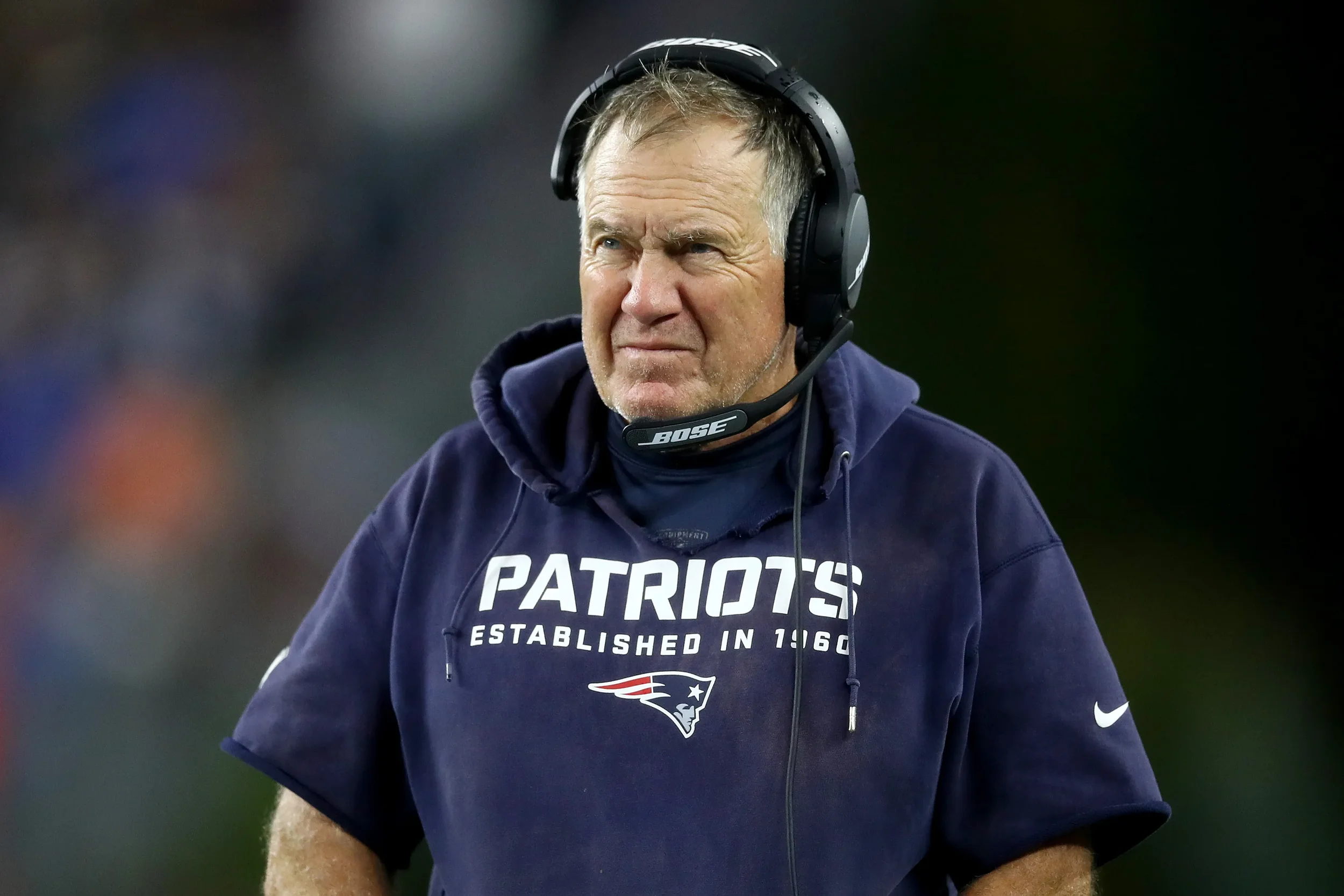
Patriots' Bill Belichick
When prospective students and their families consider college options, they often focus on the big names—the Ivy League institutions whose brands dominate headlines and popular imagination. Yet tucked away in picturesque New England towns and Mid-Atlantic settings, a collection of exceptional liberal arts colleges has been quietly producing some of America's most influential leaders, innovators, and cultural icons for nearly two centuries. These schools—collectively known as the "Little Ivies"—include Amherst, Bates, Bowdoin, Colby, Connecticut College, Hamilton, Haverford, Lafayette, Middlebury, Swarthmore, Trinity, Union, Wesleyan, and Williams.
The alumni roster from these institutions reads like a who's-who of American achievement: presidents who shaped the nation's course, Nobel laureates who revolutionized medicine and economics, artists who transformed Broadway and Hollywood, activists who expanded civil rights, and business leaders who built media empires. Their stories reveal a powerful truth: that the intimate, intellectually rigorous environment of a small liberal arts college can be the perfect incubator for outsized impact.
Presidential Leadership and Political Vision
Few credentials speak more powerfully to an institution's quality than having educated presidents of the United States. The Little Ivies can claim four such leaders, each representing different eras of American history and embodying distinct approaches to governance.
James A. Garfield (Williams College, Class of 1856) and Chester A. Arthur (Union College, Class of 1848) both served as president during the transformative Gilded Age of the 1880s. Garfield, a Civil War general and longtime Congressman, brought military discipline and moral clarity to the presidency, determined to root out the corruption that plagued post-war Washington. Though his presidency was tragically cut short by an assassin's bullet after just months in office, his commitment to civil service reform resonated beyond his death. His successor, Chester A. Arthur—who had himself ascended to the presidency following Garfield's assassination—surprised critics by becoming a champion of the very reforms his patron-based political career had previously opposed. Arthur signed the landmark Pendleton Civil Service Reform Act of 1883, which established merit-based hiring for federal positions and began dismantling the spoils system that had dominated American politics for decades.
Fast forward to the 1890s, and we find Calvin Coolidge (Amherst College, Class of 1895) embodying a different strain of presidential leadership. Ascending from Vice President to Commander-in-Chief in 1923, "Silent Cal" presided over the Roaring Twenties with a philosophy of minimal government intervention and maximum economic freedom. His pro-business, low-tax policies and famously laconic style made him an icon of conservative governance. Coolidge restored public confidence in the White House after the scandals that had tarnished his predecessor's administration, and his fiscally conservative approach aligned perfectly with an era of unprecedented economic prosperity.
These presidents demonstrated the breadth of leadership styles and political philosophies that Little Ivies graduates have brought to the nation's highest office—from Garfield's moral crusading to Arthur's pragmatic reform to Coolidge's quiet conservatism.
Diplomatic Triumphs and Nation-Building
Beyond the Oval Office, Little Ivies alumni have shaped American foreign policy and territorial expansion. William H. Seward (Union College, Class of 1820) stands as perhaps the most consequential Secretary of State in American history. Serving under Presidents Lincoln and Johnson from 1861 to 1869, Seward played a crucial role in preserving the Union during the Civil War and helped draft the Emancipation Proclamation. But he's best remembered for a controversial decision that would prove transformative: the 1867 purchase of Alaska from Russia for $7.2 million—a transaction initially ridiculed as "Seward's Folly."
Critics mocked the acquisition of what they saw as a frozen wasteland, but Seward possessed strategic vision that transcended his era. He understood Alaska's value for Pacific naval power, natural resources, and territorial integrity. Today, with Alaska's vast oil reserves, fishing industry, and strategic military importance, Seward's "folly" is recognized as one of history's shrewdest real estate deals and a master stroke of American expansionism. The story offers a powerful lesson about long-term thinking and the courage to pursue visionary goals despite public skepticism—qualities consistently nurtured in Little Ivies classrooms.
Scientific Breakthroughs That Changed the World
The intimate learning environment and research opportunities at small liberal arts colleges have produced groundbreaking scientists whose discoveries have saved millions of lives and reshaped entire fields of study.
Dr. Baruch S. Blumberg (Union College, Class of 1946) exemplifies this tradition of scientific excellence. His co-discovery of the hepatitis B virus and development of the first hepatitis B vaccine earned him the 1976 Nobel Prize in Physiology or Medicine. Blumberg's identification of the "Australian antigen" in the 1960s led to screening tests that made blood transfusions dramatically safer and paved the way for a vaccine that has prevented countless infections. Remarkably, his vaccine was the first preventive measure against a major human cancer—liver cancer caused by chronic hepatitis B infection. In a world where hepatitis B infects approximately 300 million people and causes over 800,000 deaths annually, Blumberg's work represents one of medicine's greatest humanitarian triumphs.
In economics, Joseph E. Stiglitz (Amherst College, Class of 1964) revolutionized how we understand markets, information, and inequality. His Nobel Prize in Economic Sciences (2001) recognized pioneering analyses of markets with asymmetric information—situations where buyers and sellers have different levels of knowledge. This work fundamentally challenged classical economic assumptions about perfect information and helped birth the "New Keynesian" movement in economics. As Chief Economist of the World Bank and chair of President Clinton's Council of Economic Advisers, Stiglitz brought academic rigor to policy-making. His influential books critiquing free-market fundamentalism and analyzing globalization's impacts have made him one of the world's most-cited economists and a leading public intellectual on issues of inequality and sustainable development.
Shapers of Human Behavior and Thought
The liberal arts tradition emphasizes understanding human nature, society, and behavior—pursuits that have led Little Ivies alumni to revolutionary insights in psychology and social science.
B.F. Skinner (Hamilton College, Class of 1926) fundamentally changed how we understand learning and behavior. His theory of operant conditioning demonstrated that behaviors are shaped by their consequences—that positive and negative reinforcement can predictably modify how organisms act. The "Skinner Box," his invention for conducting controlled experiments, became an icon of psychological research. His 1938 work "The Behavior of Organisms" established principles that revolutionized not just psychology but also education, behavioral therapy, and animal training. Though some of his more speculative ideas about language and society proved controversial, Skinner's core insights about behaviorism made him one of the 20th century's most influential psychologists, with a citation record that places him among the discipline's giants.
Champions of Justice and Social Change
Perhaps no contribution is more enduring than advancing human rights and social justice. The Little Ivies have produced leaders whose courage and vision expanded liberty and opportunity for millions.
Alice Paul (Swarthmore College, Class of 1905) stands as an icon of the suffragist movement. As chief strategist of the campaign to secure women's voting rights, Paul employed bold tactics that made her both controversial and effective. She organized the 1913 suffrage parade in Washington D.C.—the day before Woodrow Wilson's inauguration—which drew national attention when participants were attacked by hostile crowds. She picketed the White House, endured imprisonment, and engaged in hunger strikes to dramatize the cause. Her relentless pressure helped secure passage of the 19th Amendment in 1920, granting women the right to vote. But Paul didn't stop there. In 1923, she drafted the first Equal Rights Amendment to guarantee legal equality for women under the Constitution—a cause she championed for the rest of her long life. Her strategic brilliance and unwavering commitment established the template for modern civil rights activism.
Similarly transformative was Benjamin E. Mays (Bates College, Class of 1920), longtime president of Morehouse College and mentor to Dr. Martin Luther King Jr. Often called the "schoolmaster of the civil rights movement," Mays laid intellectual foundations for the struggle through his writings, sermons, and educational philosophy. His emphasis on Black self-determination, academic excellence, and nonviolent protest profoundly influenced King and countless other civil rights leaders. When Dr. King was assassinated in 1968, it was Mays who delivered the moving eulogy. His legacy demonstrates how educators can shape history by inspiring and mentoring the next generation of leaders.
Elijah Parish Lovejoy (Colby College, Class of 1826) made the ultimate sacrifice for freedom of expression. An abolitionist newspaper editor in the 1830s, Lovejoy published fearless anti-slavery editorials at a time when such views invited violence. In 1837, a pro-slavery mob in Alton, Illinois attacked him while he was defending his printing press, killing him and making him the first martyr for freedom of the press in America. His death galvanized the abolitionist movement and became a rallying cry for both anti-slavery advocates and defenders of free speech. Lovejoy's courage reminds us that the liberal values nurtured at institutions like Colby sometimes require defenders willing to risk everything.
| College | Alumni Name | Field | Key Achievement |
|---|---|---|---|
| Union College | Chester A. Arthur Class of 1848 |
Politics | 21st U.S. President; Civil Service Reform |
| Union College | William H. Seward Class of 1820 |
Politics/Diplomacy | Secretary of State; Purchased Alaska |
| Union College | Baruch S. Blumberg Class of 1946 |
Medicine | Nobel Prize; Hepatitis B Vaccine |
| Union College | Alan F. Horn Class of 1964 |
Entertainment | Chairman of Walt Disney Studios |
| Amherst College | Calvin Coolidge Class of 1895 |
Politics | 30th U.S. President; "Silent Cal" |
| Amherst College | Joseph E. Stiglitz Class of 1964 |
Economics | Nobel Prize in Economics (2001) |
| Bates College | Benjamin E. Mays Class of 1920 |
Education/Civil Rights | Morehouse President; MLK's Mentor |
| Bowdoin College | Henry Wadsworth Longfellow Class of 1825 |
Literature | Iconic American Poet |
| Colby College | Elijah Parish Lovejoy Class of 1826 |
Journalism/Activism | First Martyr for Press Freedom |
| Connecticut College | Tim Armstrong Class of 1993 |
Business/Technology | CEO of AOL (2009-2018) |
| Hamilton College | B.F. Skinner Class of 1926 |
Psychology | Pioneer of Operant Conditioning |
| Haverford College | Daniel Dae Kim Class of 1990 |
Entertainment | Actor (Lost, Hawaii Five-0) |
| Lafayette College | Joel Silver Attended 1970s |
Film Production | Producer (Die Hard, The Matrix) |
| Middlebury College | Eve Ensler Class of 1975 |
Theater/Activism | The Vagina Monologues; V-Day Founder |
| Swarthmore College | Alice Paul Class of 1905 |
Social Activism | Women's Suffrage Leader; 19th Amendment |
| Trinity College | George F. Will Class of 1962 |
Journalism | Pulitzer Prize-Winning Columnist |
| Wesleyan University | Lin-Manuel Miranda Class of 2002 |
Musical Theater | Creator of Hamilton; Pulitzer Prize |
| Wesleyan University | Bill Belichick Class of 1975 |
Sports (Football) | 6× Super Bowl Champion Coach |
| Williams College | Stephen Sondheim Class of 1950 |
Musical Theater | 8× Tony Award Winner; Pulitzer Prize |
| Williams College | James A. Garfield Class of 1856 |
Politics | 20th U.S. President |
Cultural Icons Who Defined American Arts
The creative arts have been profoundly shaped by Little Ivies graduates whose work has entertained, challenged, and inspired generations.
Stephen Sondheim (Williams College, Class of 1950) revolutionized American musical theater. After writing lyrics for classics like "West Side Story" and "Gypsy" in the 1950s, Sondheim went on to compose both music and lyrics for a string of sophisticated, genre-defying shows: "Company," "Follies," "Sweeney Todd," "Into the Woods," and more. His complex harmonies, intricate wordplay, and psychologically nuanced characters elevated Broadway to new artistic heights. With 8 Tony Awards, 8 Grammys, an Academy Award, a Pulitzer Prize, and the Presidential Medal of Freedom, Sondheim's accolades reflect his status as America's greatest musical dramatist. His work proved that popular entertainment could achieve genuine artistic sophistication without sacrificing emotional power.
Lin-Manuel Miranda (Wesleyan University, Class of 2002) represents the next evolution of Broadway innovation. His musical "In the Heights" began as a student project at Wesleyan and eventually won four Tony Awards. But it was "Hamilton"—a hip-hop retelling of American history—that made Miranda a cultural phenomenon. The show won 11 Tony Awards and the 2016 Pulitzer Prize for Drama, shattered box office records, and sparked a national conversation about history, race, and representation. Miranda's fusion of hip-hop, R&B, and traditional musical theater created something genuinely new, proving that the experimental spirit fostered at places like Wesleyan can produce mainstream cultural events that reshape the American conversation.
Eve Ensler (Middlebury College, Class of 1975) used theater to advance feminist activism. Her Tony-winning play "The Vagina Monologues" (1996) broke cultural taboos, sparked conversations about women's sexuality and violence, and has been translated into 48 languages and performed worldwide. Beyond the play's artistic impact, Ensler launched V-Day, a global movement to fight violence against women, for which she received the 2011 Isabelle Stevenson Tony Award for humanitarian work. Her career demonstrates how art can serve as catalyst for social change.
In literature, Henry Wadsworth Longfellow (Bowdoin College, Class of 1825) helped establish distinctly American poetry in the 19th century. His narrative poems like "Paul Revere's Ride" and "The Song of Hiawatha" captured American folklore and history in accessible, memorable verse. So popular was Longfellow in his era that he achieved a celebrity status rarely accorded to poets—a true literary "rock star" who proved American letters could stand alongside European traditions.
Entertainment Industry Visionaries
Little Ivies graduates have not only created art but also built the infrastructure of American entertainment.
Alan F. Horn (Union College, Class of 1964) ranks among Hollywood's most successful executives. As President and COO of Warner Bros., he oversaw production of blockbusters including the Harry Potter series, The Matrix trilogy, and the Batman franchise. Later, as Chairman of Walt Disney Studios (2012-2020), he helped guide Disney's transformative acquisitions of Pixar, Marvel, and Lucasfilm—moves that reshaped the entertainment landscape and established Disney's dominance over franchise filmmaking. Horn's strategic vision and creative instincts made him one of the industry's most powerful figures.
Joel Silver (Lafayette College, attended 1970s) similarly redefined Hollywood as the mega-producer behind 1980s and 1990s action blockbusters. His Silver Pictures produced iconic franchises including "Die Hard," "Lethal Weapon," and "The Matrix" series. Silver helped establish the high-octane, effects-driven action film as a dominant genre and became one of the first producers to achieve brand-name recognition rivaling that of stars and directors.
On screen, Daniel Dae Kim (Haverford College, Class of 1990) broke barriers as a Korean American actor with starring roles in "Lost" (2004-2010) and "Hawaii Five-0" (2010-2017). Beyond acting, Kim has become a prominent advocate for diversity in Hollywood and a successful producer, helping bring "The Good Doctor" to television. His career trajectory—from liberal arts student to actor to producer to activist—exemplifies how a broad education can prepare graduates for evolving, multi-faceted careers.
Masters of Sports and Strategy
Athletic excellence and strategic thinking have made Little Ivies alumni legendary in the sports world.
Bill Belichick (Wesleyan University, Class of 1975) is widely considered one of the greatest NFL coaches in history. His six Super Bowl championships as head coach of the New England Patriots (2002, 2004, 2005, 2015, 2017, 2019) surpass any other head coach's total. Known for his defensive genius, meticulous preparation, and ability to adapt strategy mid-game, Belichick has dominated professional football for two decades. He remains actively engaged with Wesleyan, crediting his liberal arts education with developing the analytical thinking and broad perspective that inform his coaching philosophy. A triple-letterman at Wesleyan (football, lacrosse, squash), Belichick exemplifies how small-college athletics can develop both competitive excellence and intellectual discipline.
Voices of American Commentary
The liberal arts tradition of critical thinking and clear communication has produced influential journalists and public intellectuals.
George F. Will (Trinity College, Class of 1962) has been called "perhaps the most powerful journalist in America" by The Wall Street Journal. His syndicated Washington Post column, published since 1974, won the Pulitzer Prize for Commentary in 1977. For over three decades as a pundit on ABC News's "This Week," Will brought erudite conservative analysis to political debates. His writing on subjects ranging from politics to baseball demonstrates the breadth of knowledge and analytical rigor cultivated in liberal arts education. Will's influence extends beyond mere opinion journalism—his ideas have shaped conservative thought and policy debates for half a century.
Business Innovation in the Digital Age
The internet era has seen Little Ivies graduates build and transform major technology companies.
Tim Armstrong (Connecticut College, Class of 1993) led AOL's transformation from dial-up internet provider to digital media powerhouse. As CEO from 2009 to 2018, Armstrong orchestrated AOL's bold 2011 acquisition of The Huffington Post—a $315 million bet on building a "content empire" that signaled the future of digital media. Earlier in his career, Armstrong was a top advertising executive at Google during its explosive growth phase. His path from liberal arts college to tech leadership illustrates how adaptable thinking and broad perspective can drive innovation in rapidly changing industries.
The Little Ivies Advantage
What explains this extraordinary record of achievement? Several factors distinguish the Little Ivies experience:
Intimate Learning Environments: With student bodies typically ranging from 1,500 to 3,000, these colleges offer unprecedented access to faculty. Classes are discussions, not lectures to hundreds. Professors know students by name, mentor their research, and invest in their intellectual development. This personalized attention cultivates confidence, critical thinking, and close mentorship relationships that often last lifetimes.
Liberal Arts Breadth: Rather than early specialization, the Little Ivies emphasize broad exposure to humanities, sciences, and social sciences. This interdisciplinary foundation enables graduates to make creative connections across fields—whether that's Belichick applying analytical thinking to football strategy, Miranda fusing history and hip-hop, or Stiglitz connecting economic theory to policy outcomes.
Residential Community: Nearly all students live on campus, creating an immersive intellectual and social experience. Conversations extend from classroom to dining hall to dorm room. Friendships formed in this intense environment often become lifelong professional networks and sources of support.
Values and Service: These institutions emphasize not just knowledge but character—civic responsibility, ethical leadership, and using one's talents for the greater good. Alice Paul's suffragist activism, Benjamin Mays's civil rights leadership, and Eve Ensler's feminist organizing all reflect values cultivated in small college communities committed to social justice.
Flexibility and Self-Direction: Unlike large universities with rigid requirements, Little Ivies typically offer flexible curricula that allow students to design individualized academic programs. This self-direction develops initiative and the confidence to chart unconventional paths—precisely what innovators and leaders need.
Legacy and Looking Forward
The alumni profiled here represent just a fraction of the Little Ivies' contribution to American life. Across nearly two centuries, these institutions have produced Supreme Court justices, pioneering scientists, celebrated authors, successful entrepreneurs, dedicated teachers, and engaged citizens whose impact may be less visible but no less vital.
What's striking is the diversity of these achievements. The same colleges that produced presidents also produced Broadway composers. Schools that educated Nobel laureates also produced Hollywood executives. This range reflects the liberal arts ideal: that rigorous study of diverse subjects, combined with close faculty mentorship and a supportive community, can prepare students for virtually any field they choose to pursue.
For prospective students weighing college options, the Little Ivies' alumni record offers powerful evidence that educational quality and impact aren't measured solely by institutional size, research budgets, or U.S. News rankings. The focused attention, intellectual rigor, and supportive environment of a small liberal arts college can be the perfect foundation for outsized achievement.
As Chester A. Arthur, James Garfield, Calvin Coolidge, William Seward, Baruch Blumberg, Joseph Stiglitz, Benjamin Mays, Henry Wadsworth Longfellow, Elijah Parish Lovejoy, Tim Armstrong, B.F. Skinner, Daniel Dae Kim, Joel Silver, Eve Ensler, Alice Paul, George Will, Lin-Manuel Miranda, Bill Belichick, Stephen Sondheim, and Alan Horn have proven across generations and fields, the Little Ivies don't just educate students—they launch leaders, innovators, artists, and change-makers whose influence shapes American society and extends around the world.
The next generation of Little Ivies students will write the next chapter of this remarkable story. Based on nearly 200 years of evidence, there's every reason to believe that among today's undergraduates walking tree-lined campuses in small New England and Mid-Atlantic towns are future presidents, Nobel laureates, cultural icons, and pioneers whose achievements we cannot yet imagine. That's the promise—and the proven track record—of the Little Ivies.