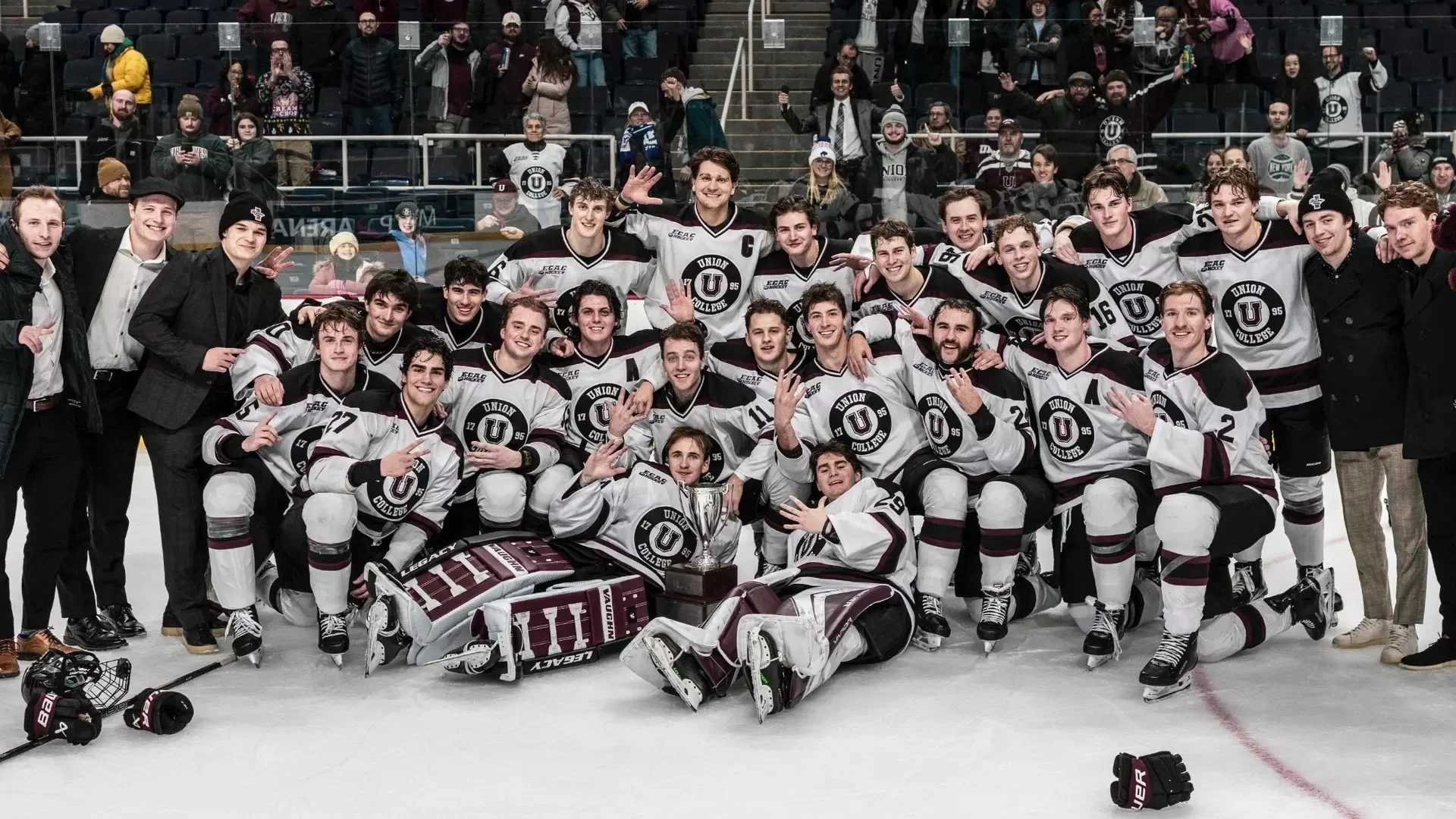
Union College Men's Ice Hockey 1/24/2026
The Little Ivies—a collection of elite liberal arts colleges in the Northeastern United States—occupy a unique space in American higher education. Like their Ivy League counterparts, these institutions combine rigorous academics with strong athletic traditions, yet their approach to collegiate sports differs markedly from the scholarship-driven model that dominates much of Division I athletics.
For prospective students, parents, and counselors navigating the college search process, understanding the athletic landscape of these schools is crucial. Athletics can shape campus culture, influence admissions decisions, and impact the overall undergraduate experience. But unlike the Ivy League, which competes uniformly at the Division I level across all sports, the Little Ivies present a more varied picture.
The central question this article addresses is straightforward: Which Little Ivy colleges compete in NCAA Division I athletics, and why?
The answer reveals a fascinating spectrum of institutional choices. The overwhelming majority of Little Ivies—15 of 18 schools—compete exclusively at the Division III level, adhering to a philosophy that emphasizes the student-athlete model without athletic scholarships. Three schools, however, operate as full Division I institutions across all sports: Lafayette College, Bucknell University, and Colgate University, all members of the Patriot League. Additionally, one Division III school, Union College, maintains Division I programs in men's and women's ice hockey through a special NCAA exception.
This article provides a comprehensive analysis of each school's athletic division status, explores the historical and institutional factors that shaped these choices, and examines what these distinctions mean for students considering these prestigious institutions.
What Are the Little Ivies? Historical Context and Definition
The term Little Ivies emerged in the mid-20th century to describe a group of highly selective, academically rigorous liberal arts colleges that shared characteristics with the Ivy League but operated on a smaller scale. While the Ivy League is a formal athletic conference with eight clearly defined members, the Little Ivies constitute a less formal grouping, with various sources including slightly different schools in their definitions.
The core of the Little Ivies consists of members of the New England Small College Athletic Conference (NESCAC), founded in 1971. NESCAC schools—Amherst, Bates, Bowdoin, Colby, Connecticut College, Hamilton, Middlebury, Trinity, Tufts, Wesleyan, and Williams—compete exclusively at the Division III level and share a commitment to balancing athletics with academics.
Beyond NESCAC, the Little Ivies designation typically extends to several other elite liberal arts colleges: Haverford and Swarthmore (Centennial Conference members), Vassar and Union (Liberty League members), and the Patriot League trio of Lafayette, Bucknell, and Colgate. This article examines all 18 schools commonly identified as Little Ivies, recognizing that institutional lists may vary slightly.
Historically, athletics developed differently at these small colleges than at larger universities. Many Little Ivies trace their athletic programs to the late 19th century, when intercollegiate competition first emerged. The famous Amherst-Williams football rivalry, for instance, dates to 1884. However, as college sports became increasingly commercialized in the 20th century, most Little Ivies chose to prioritize the amateur ideal, eventually aligning with Division III when the NCAA restructured its divisions in 1973.
A few institutions, however, maintained or developed Division I programs in specific sports, creating the mixed landscape we see today. Understanding this history is essential to appreciating why some schools compete at different levels.
NCAA Divisions Explained: The Framework for Collegiate Athletics
To understand the Little Ivies' athletic landscape, one must first grasp the NCAA's divisional structure. The National Collegiate Athletic Association organizes its member institutions into three divisions, each with distinct philosophies, rules, and competitive levels.
Division I: The High-Profile Tier
Division I represents the highest level of NCAA competition, characterized by significant athletic budgets, national media coverage, and—critically—athletic scholarships. Division I schools can offer full or partial scholarships based on athletic ability, which fundamentally shapes recruiting, team composition, and competitive dynamics.
Division I encompasses approximately 350 schools, ranging from major state universities with 40,000+ students to smaller private colleges like those in the Patriot League. Football is further subdivided into the Football Bowl Subdivision (FBS), featuring the sport's highest level, and the Football Championship Subdivision (FCS), which includes schools like Lafayette, Bucknell, and Colgate.
Division III: The Student-Athlete Model
Division III, by contrast, prohibits athletic scholarships entirely. Financial aid must be need-based and cannot consider athletic ability. This creates a fundamentally different athletic culture: athletes choose schools primarily for academic fit, and coaches recruit students who would likely attend the institution regardless of sports.
Division III is the NCAA's largest division, with over 450 member institutions. Most Little Ivies compete at this level, valuing the integration of athletics into a broader liberal arts education. Division III schools often excel academically—Amherst, Williams, Middlebury, and others consistently rank among the nation's top liberal arts colleges.
Competitively, Division III can be remarkably strong. NESCAC football, for example, features intense rivalries and high-caliber play. Division III national championships in sports like lacrosse, hockey, and soccer draw serious competitors who could play at higher levels but prioritize the Division III experience.
Multi-Divisional Classification: The Exception
The NCAA permits an important exception to divisional classification. Division III schools may "play up" one men's sport and one women's sport to Division I, excluding football and basketball. This provision, known as multi-divisional classification, typically applies to sports with limited national sponsorship—most commonly ice hockey, skiing, and occasionally lacrosse.
Schools taking advantage of this exception can offer athletic scholarships in those specific sports and compete for Division I national championships. Among the Little Ivies, Union College is the prime example, competing in Division I ice hockey while maintaining Division III status for all other sports.
This exception exists because certain sports—particularly ice hockey in the Northeast—have deep institutional traditions and strong regional competition at elite small colleges. Rather than forcing schools to choose between abandoning cherished programs or leaving Division III entirely, the NCAA created a middle path.
Quick Reference: Little Ivies and Division I Sports
The following table provides an at-a-glance summary of which Little Ivy colleges compete in Division I athletics. The vast majority remain exclusively Division III, while a select few participate at the Division I level either comprehensively or in specific sports.
| School | Overall Division | Division I Sports? | D-I Sport(s) | Conference |
|---|---|---|---|---|
| Amherst | Division III | No | — | NESCAC |
| Bates | Division III | No | — | NESCAC |
| Bowdoin | Division III | No | — | NESCAC |
| Bucknell | Division I | Yes (All) | All 27 varsity sports | Patriot |
| Colby | Division III | No* | Skiing (D-I competition) | NESCAC |
| Colgate | Division I | Yes (All) | All varsity sports | Patriot/ECAC |
| Connecticut College | Division III | No | — | NESCAC |
| Hamilton | Division III | No | — | NESCAC |
| Haverford | Division III | No | — | Centennial |
| Lafayette | Division I | Yes (All) | All 23 varsity sports | Patriot |
| Middlebury | Division III | No | — | NESCAC |
| Swarthmore | Division III | No | — | Centennial |
| Trinity (CT) | Division III | No | — | NESCAC |
| Tufts | Division III | No | — | NESCAC |
| Union | Division III | Yes | Men's & Women's Ice Hockey | Liberty/ECAC |
| Vassar | Division III | No | — | Liberty |
| Wesleyan | Division III | No | — | NESCAC |
| Williams | Division III | No | — | NESCAC |
*Colby competes against Division I teams in skiing but remains classified as Division III with no athletic scholarships.
School-by-School Analysis: Every Little Ivy's Division Status
The following section examines each Little Ivy college individually, clarifying which schools participate in Division I athletics and providing context for their choices. Schools are presented alphabetically within their conference groupings.
NESCAC Schools (New England Small College Athletic Conference)
Amherst College competes exclusively at the Division III level in all 27 varsity sports as a founding member of NESCAC. The Mammoths have no Division I programs. Amherst's athletic philosophy emphasizes the integration of sports into a broader liberal arts education, exemplified by its storied Division III football rivalry with Williams, often called the 'Biggest Little Game in America.' Amherst's women's lacrosse team won a Division III national championship in 2003, demonstrating that the school achieves athletic excellence without Division I programs.
Bates College fields all sports in Division III with no Division I teams. The Lewiston, Maine institution competes within NESCAC and maintains a strict Division III philosophy. While Bates has alpine and Nordic skiing programs that compete in Eastern Intercollegiate Ski Association meets—occasionally against Division I opponents—these teams remain Division III in classification and offer no athletic scholarships. Bates has produced strong Division III competitors in rowing and track, but no sport operates at the Division I level.
Bowdoin College competes in Division III for all sports with no Division I programs. The Brunswick, Maine college's Polar Bears are entirely non-scholarship Division III teams. While Bowdoin sponsors skiing and sailing programs that may compete against Division I schools in certain regional competitions, these remain under Division III auspices. Bowdoin has produced notable athletes—Olympic marathon champion Joan Benoit Samuelson is perhaps the most famous—but all through Division III programs.
Colby College presents a nuanced case. Colby is Division III overall, but its alpine and Nordic ski teams compete in the Eastern Intercollegiate Ski Association alongside Division I programs. NCAA skiing features a single combined championship where Division I, II, and III schools compete together. Colby skiers regularly qualify for the NCAA Skiing Championships and have achieved impressive results—at the 2019 NCAA meet, Colby ranked 12th overall and second among Division III schools. However, Colby adheres to Division III rules, offering no athletic scholarships in skiing. Thus, while Colby skiers compete at what is effectively a Division I level, the program technically remains Division III. All other Colby sports compete in NESCAC Division III.
Connecticut College competes entirely in Division III with no Division I sports. The Camels joined NESCAC in 1982, replacing Union College after Union departed to pursue Division I ice hockey. Connecticut College has no football program and focuses on Division III soccer, sailing, and other sports. The school remains committed to non-scholarship Division III competition across all programs.
Hamilton College fields all teams at the Division III level with no Division I programs. The Clinton, New York institution's Continentals compete in NESCAC for most sports. Hamilton has no history of Division I athletics and maintains a strict Division III philosophy emphasizing the student-athlete balance without athletic scholarships.
Middlebury College is a Division III powerhouse with no official Division I teams. The Vermont college's Panthers have won numerous Division III national championships across multiple sports, including men's ice hockey and women's lacrosse. Like Colby, Middlebury's skiing teams compete in the NCAA Skiing Championships against Division I opponents, but Middlebury maintains Division III classification for these programs with no athletic scholarships. Middlebury's focus remains on NESCAC Division III competition despite its skiing success at the national level.
Trinity College (Connecticut) competes wholly in Division III with no Division I teams. Trinity's Bantams are known for an extraordinary men's squash dynasty—17 consecutive national titles—but squash is not an NCAA sport, so this success falls outside the Division I/III framework. In NCAA sports, Trinity's highest achievements are at the Division III level, including a 2012 Division III men's ice hockey championship. No Trinity teams play in Division I conferences.
Tufts University fields all varsity teams in Division III with no official Division I programs. As the largest NESCAC school, Tufts has enjoyed significant Division III success, including multiple national titles in men's lacrosse. Tufts competes in some niche competitions against Division I opponents—its coed sailing team competes in the Intercollegiate Sailing Association, which includes Division I schools, though sailing is not an NCAA sport. All Tufts NCAA programs are non-scholarship Division III.
Wesleyan University competes solely in Division III, with no Division I teams. The Middletown, Connecticut institution's Cardinals are part of the historic 'Little Three' rivalry with Amherst and Williams—all Division III schools. Wesleyan has never elevated a sport to Division I and emphasizes Division III values. Wesleyan's football program, which produced NFL coaches Bill Belichick and Eric Mangini, has always been Division III.
Williams College is a perennial Division III athletic powerhouse with no Division I teams. The Ephs have won the Division III NACDA Directors' Cup—an all-sports trophy—multiple times, reflecting broad athletic excellence at the Division III level. Like several NESCAC peers, Williams' skiing teams compete in NCAA championships against Division I schools but remain classified as Division III with no athletic scholarships. Williams' storied rivalry with Amherst, dating to the 19th century, is entirely a Division III affair. No Williams teams compete in Division I conferences.
Centennial Conference Schools
Haverford College is entirely Division III with no Division I sports. The Pennsylvania college's 23 varsity teams compete in the Centennial Conference alongside peers like Swarthmore. Haverford is notable for fielding the only varsity cricket team in the United States, though this is a non-NCAA endeavor. Haverford's athletic philosophy strongly aligns with the Division III model—no athletic scholarships, pure student-athlete integration. Johns Hopkins, a fellow Centennial Conference member, does have Division I lacrosse, but Haverford itself has no such exception.
Swarthmore College competes fully in Division III with no Division I programs. The Quaker institution's teams compete in the Centennial Conference. Swarthmore famously eliminated its football program in 2000 to reallocate resources toward academics and other sports, underscoring its commitment to academic priorities over athletic prestige. All current Swarthmore sports operate at the Division III level. The men's basketball team reached the Division III national championship game in 2019, demonstrating Division III success.
Liberty League Schools
Vassar College is entirely Division III with no Division I sports. The Poughkeepsie, New York college's teams compete in the Liberty League. Vassar, historically a women's college that went coed in 1969, has developed competitive Division III programs in sports like women's volleyball and soccer. The Brewers do not play in any Division I conferences, and all athletics remain at the Division III level.
Union College represents the most significant Division I exception among primarily Division III Little Ivies. Union is a Liberty League member for most sports, competing at Division III in football, basketball, soccer, and other programs. However, Union's men's and women's ice hockey teams compete in NCAA Division I, specifically in ECAC Hockey, a conference that includes Ivy League schools.
Union's men's hockey program moved to Division I in 1991-92, and the women's program followed. This decision was permitted under NCAA multi-divisional classification rules, which allow Division III schools to elevate one men's and one women's sport to Division I (excluding football and basketball). Union chose ice hockey due to the sport's deep tradition at the college, dating to 1904, and the strength of regional Division I hockey competition in the Northeast.
The decision proved spectacularly successful. In 2014, Union's men's hockey team won the NCAA Division I Men's Ice Hockey National Championship, defeating Minnesota 7-4 in the title game. This landmark victory made Union—a college of just 2,200 students—the smallest school to win a Division I hockey championship. The 2014 championship team featured future NHL players, including defenseman Shayne Gostisbehere, who went on to a successful professional career.
Union's hockey rivals include nearby RPI, creating an intense upstate New York Division I rivalry within ECAC Hockey. The women's hockey team, while less heralded than the men's program, also competes at the Division I level, providing female athletes with a Division I opportunity. Union's Division I hockey programs offer athletic scholarships and compete for national championships, while all other Union sports remain Division III. This makes Union the only primarily Division III Little Ivy with Division I teams.
Patriot League Schools (Full Division I)
Three Little Ivies compete entirely at the Division I level: Lafayette, Bucknell, and Colgate. All three are members of the Patriot League, a conference founded in 1986 to provide Division I athletics with an Ivy League-like emphasis on academics. These schools chose to maintain Division I status across all sports rather than drop to Division III like most Little Ivies.
Lafayette College is a full Division I institution with all 23 varsity teams competing in the Patriot League. The Lafayette Leopards participate in FCS (Division I-AA) football and Division I basketball, among other sports. Lafayette's football program features one of college football's most storied rivalries: 'The Rivalry' with Lehigh University, the most-played college football rivalry in the nation with 160 meetings since 1884.
Lafayette claims four national championships in football from the pre-AP poll era, reflecting the program's historical prominence. The school notes its role in shaping early college football, crediting Lafayette figures with inventions like the football helmet and the huddle. Lafayette has won 64 Patriot League titles across various sports and made NCAA tournament appearances in basketball (2015, 2000). Notable Lafayette athletes include WNBA draftee Natalie Kucowski and MLB pitcher David Bednar. The school's Division I status distinguishes it from most Little Ivies, though its Patriot League membership maintains an academic-athletic balance similar to the Ivy League.
Bucknell University operates as a full Division I school with all 27 varsity teams competing primarily in the Patriot League. The Bucknell Bison helped found the Patriot League and compete in FCS football and Division I basketball, among other sports.
Bucknell's most famous athletic moment came in the 2005 NCAA men's basketball tournament when the Bison upset #3-seeded Kansas 64-63 in one of March Madness' greatest upsets. Bucknell followed this the next year by upsetting Arkansas, becoming the first Patriot League team to win an NCAA tournament game and advancing to the Round of 32 in consecutive years. Beyond basketball, Bucknell's men's water polo team reached the NCAA Final Four in 2016, and the university produced legendary Baseball Hall-of-Famer Christy Mathewson, who played at Bucknell in 1899-1901. Modern Bucknell alumni include NBA player Mike Muscala and Villanova's championship-winning basketball coach Jay Wright. Bucknell has won the Patriot League all-sports Presidents' Cup more than any other school, reflecting broad Division I success.
Colgate University competes in Division I for all sports, despite an enrollment of just 3,000 students. Colgate's Raiders compete in the Patriot League for most sports, with men's and women's ice hockey competing in ECAC Hockey since the Patriot League does not sponsor hockey.
Colgate's Division I football program achieved national prominence in the early 20th century—the 1932 Colgate team went undefeated, untied, unscored upon, yet was famously excluded from the Rose Bowl. More recently, Colgate football reached the 2003 NCAA I-AA (FCS) Championship game. In ice hockey, Colgate's men's team was the NCAA runner-up in 1990, and the women's team reached the title game in 2018, with multiple Frozen Four appearances for both programs.
Colgate basketball has made several March Madness appearances, nearly upsetting Tennessee in 2019. The university's most celebrated athlete may be Adonal Foyle, who led Colgate to two NCAA tournaments in the 1990s before becoming an NBA lottery pick and leaving as the NCAA's all-time blocks leader. Colgate mirrors the Ivy League ethos—combining Division I athletics with elite academics—and maintains rivalries with Ivy schools like Cornell, particularly in hockey. Colgate stands as a true Division I Little Ivy.
Why Some Little Ivies Chose Division I: Institutional Priorities and Tradeoffs
The divergence in athletic division status among Little Ivies reflects deeper institutional values and strategic choices. Why did Lafayette, Bucknell, and Colgate maintain Division I status while most peers moved to Division III? And why did Union create a Division I exception for ice hockey?
The answer involves several factors: institutional identity, geographic considerations, resource allocation, and philosophical differences about the role of athletics in the college experience.
Institutional Identity and Tradition
For Lafayette, Bucknell, and Colgate, Division I athletics form part of their core identity. Lafayette's 'Rivalry' with Lehigh, dating to 1884, is a defining institutional tradition that connects alumni across generations. Dropping to Division III would have severed this historic connection. Similarly, Colgate's early football prominence and hockey traditions made Division I status integral to the school's self-conception.
These schools also saw Division I athletics as a mechanism for visibility and prestige. March Madness appearances, FCS playoff runs, and Division I hockey championships generate national media coverage that enhances institutional reputation. Bucknell's 2005 upset of Kansas, for instance, brought the university unprecedented national attention.
The Patriot League Model
The founding of the Patriot League in 1986 provided a crucial mechanism for these schools to maintain Division I status while preserving academic values. The Patriot League initially prohibited athletic scholarships, requiring need-based aid only—similar to the Ivy League. Though the league later allowed merit-based athletic aid in most sports, it maintained emphasis on high academic standards and graduation rates.
This created a middle path: Division I competition without the extreme commercialization seen at major state universities. Patriot League schools recruit academically qualified students, compete at a high level, and maintain the scholar-athlete ideal that Little Ivies value.
Union's Special Case: Hockey Excellence
Union College chose a different path, elevating only ice hockey to Division I. This decision reflected the sport's unique position at Union. The college's hockey program dates to 1904, making it one of the oldest in the country. By the 1980s, the strength of northeastern Division I hockey—with programs at Ivy League schools, RPI, and other regional competitors—created competitive pressure.
Union left NESCAC in the 1970s partly to pursue hockey scholarships. When the NCAA created the multi-divisional exception, Union formalized its Division I hockey status in 1991-92. The 2014 national championship vindicated this decision, demonstrating that a small Division III college could compete—and win—at the highest level of collegiate hockey.
The Division III Choice: Academic Purity
Most Little Ivies, however, chose Division III precisely because it aligned with their educational philosophy. NESCAC schools like Amherst, Williams, and Middlebury viewed athletics as part of a holistic liberal arts education, not as a recruiting tool or revenue generator. Division III's prohibition on athletic scholarships ensures that admitted students genuinely want to attend for academic reasons, with athletics as an enriching extracurricular activity.
Critics of Division I argue that athletic scholarships can compromise admissions standards and create a two-tier student body. Division III advocates contend their model produces better-rounded students who participate in multiple activities rather than specializing exclusively in one sport.
These schools also note that Division III can deliver high-level competition without the resource demands of Division I. Williams and Amherst regularly field nationally competitive teams across multiple sports, demonstrating that Division III need not mean athletic mediocrity.
Implications for Students and Families: What These Distinctions Mean
For prospective student-athletes and their families, understanding whether a Little Ivy competes in Division I or III has significant practical implications.
Athletic Scholarships and Financial Aid
The most immediate difference is financial. Division I schools (Lafayette, Bucknell, Colgate, and Union's hockey programs) can offer athletic scholarships. These can range from partial to full scholarships based on athletic ability, separate from need-based financial aid.
Division III schools offer only need-based financial aid, which cannot consider athletic ability. However, many Little Ivies have generous need-based aid programs that can make attendance affordable for low- and middle-income families. For wealthy families, this distinction may matter less, but for talented athletes from modest backgrounds, a Division I scholarship could make college more accessible.
Recruiting and Admissions
Division I recruiting begins earlier and is more intensive than Division III recruiting. Division I coaches at Patriot League schools can actively recruit athletes, offer scholarships, and engage in sustained recruitment efforts. Division III coaches have more limited recruiting budgets and cannot offer athletic scholarships, though they can advocate for admissions support within their institution's guidelines.
For top-tier athletes, Division I programs at Lafayette, Bucknell, or Colgate may offer clearer pathways to admission through formal athletic recruiting. At Division III schools, athletic talent can help admissions prospects, but the process is typically less formalized and more integrated with academic evaluation.
Competitive Level and Time Commitment
Division I athletics generally demand greater time commitments. Longer seasons, more extensive travel schedules, and year-round training expectations characterize Division I programs. Division III sports, while competitive, typically allow more flexibility for students to pursue internships, study abroad, and other academic opportunities.
However, this varies by sport and school. Union's Division I hockey players face Division I time demands, while students in other Union sports enjoy Division III flexibility. Elite Division III programs at schools like Williams or Middlebury can be nearly as demanding as Division I programs, particularly in sports like ice hockey and lacrosse where competition is fierce.
Campus Culture and Athletic Visibility
Division I schools often have more prominent athletic cultures. Football Saturdays at Lafayette or basketball games at Bucknell draw larger crowds and more campus attention than typical Division III events. For students who want that atmosphere, Division I Little Ivies deliver a different campus experience.
Division III campuses, conversely, may emphasize broader participation in multiple activities. Without the star-athlete dynamic that scholarships can create, Division III campuses may feel more egalitarian. Students at Amherst or Williams might play varsity sports while also leading student government, performing in theater, or conducting research—the classic liberal arts ideal.
Post-Collegiate Athletic Opportunities
For athletes aspiring to professional careers, Division I programs offer better exposure and development. Union's 2014 hockey championship team produced NHL players, and Division I basketball at Bucknell or Colgate provides pathways to professional careers. Division III athletes can certainly reach professional levels—Williams produced an NBA player, and many Division III hockey and lacrosse players go pro—but Division I competition and coaching generally provide clearer professional development pathways.
Conclusion: A Spectrum of Choices Reflecting Institutional Values
How many Little Ivy colleges have Division I sports teams? The definitive answer is four: Lafayette, Bucknell, and Colgate compete entirely at Division I across all sports, while Union College maintains Division I men's and women's ice hockey alongside Division III programs in other sports. An additional case involves Colby College, whose skiing teams compete against Division I opponents but remain technically classified as Division III.
The remaining 14 Little Ivies—Amherst, Bates, Bowdoin, Connecticut College, Hamilton, Haverford, Middlebury, Swarthmore, Trinity, Tufts, Vassar, Wesleyan, and Williams—compete exclusively at the Division III level.
This diversity reflects genuine philosophical differences about the role of athletics in elite liberal arts education. The Patriot League schools chose to maintain Division I status, believing that high-level athletic competition enhances institutional identity and student experience without compromising academic values. Union chose a middle path, preserving a historic Division I hockey tradition while maintaining Division III status elsewhere. The NESCAC schools and other Division III Little Ivies embraced a model that prohibits athletic scholarships and emphasizes athletics as one component of a holistic education.
For prospective students, these distinctions matter. Athletic scholarships, recruiting processes, time commitments, campus cultures, and post-collegiate opportunities all vary based on division status. A talented hockey player might thrive at Union's Division I program or in a NESCAC Division III environment, depending on their priorities. A basketball recruit might prefer the Division I spotlight at Lafayette or the Division III balance at Amherst.
Ultimately, the Little Ivies' varied athletic landscape demonstrates that there is no single correct answer to balancing athletics and academics at elite institutions. Whether through Division I competition, Division III participation, or hybrid approaches like Union's, each Little Ivy has carved out its own path—one that reflects its history, values, and vision for what a well-rounded education should encompass.
Understanding these distinctions empowers students and families to make informed choices aligned with their academic, athletic, and personal goals. The Little Ivies offer exceptional education at every level of NCAA competition, each in its own distinctive way.