Broadway icon and Hamilton creator to deliver prestigious Jones Visiting Lecture in February 2026, connecting the college's revolutionary heritage with contemporary artistry
As Lafayette College marks two centuries since its founding in 1826, the institution will welcome one of the most influential cultural figures of the 21st century to campus. On February 12, 2026, Tony, Grammy, and Pulitzer Prize-winning artist Lin-Manuel Miranda will deliver the Thomas Roy and Lura Forrest Jones Visiting Lecture, engaging with the Lafayette community in a conversation titled "Opportunity and Art: A Conversation with Lin-Manuel Miranda."
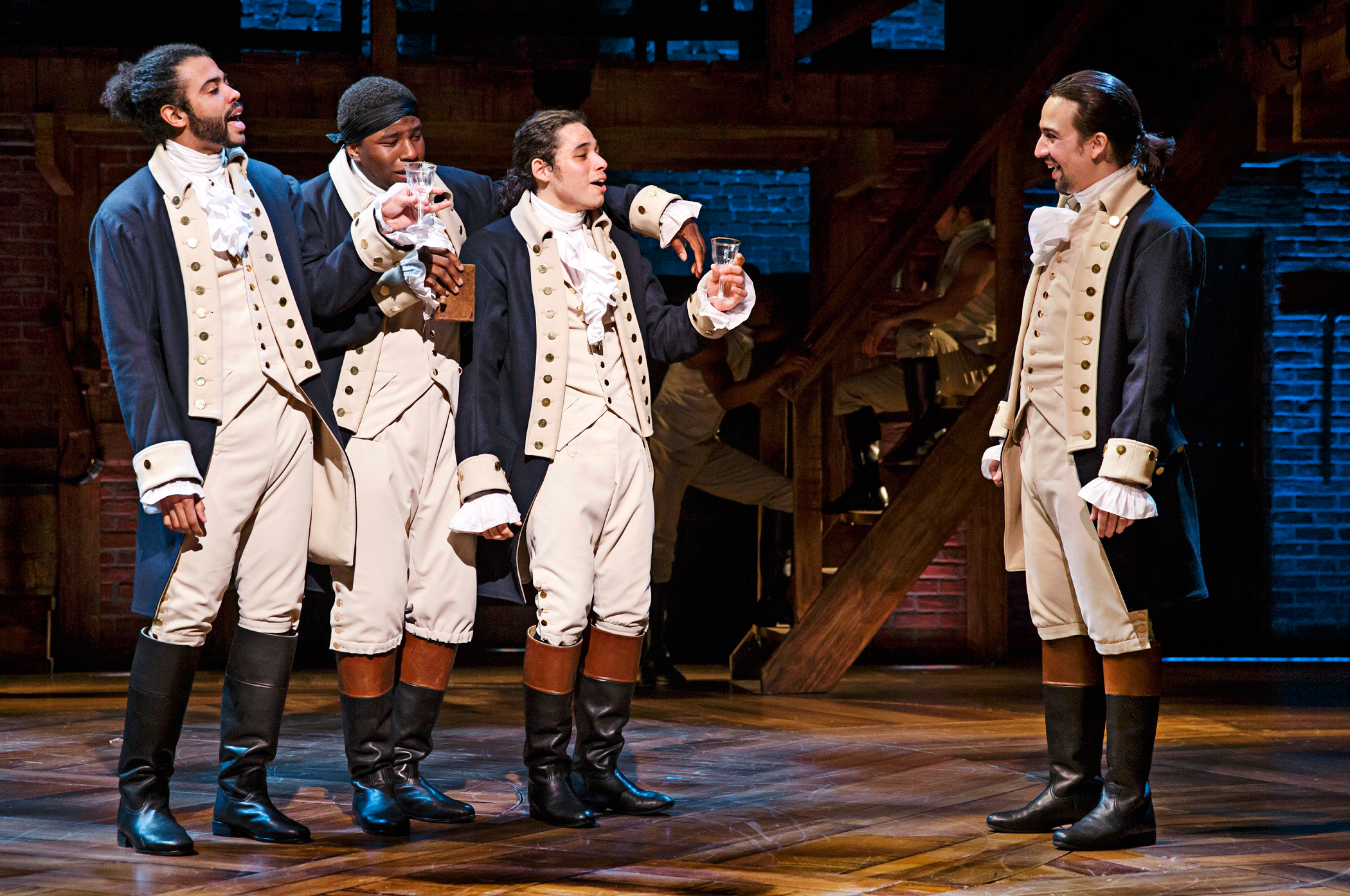
The event, to be held in Kamine Gymnasium at Kirby Sports Center and moderated by Lafayette President Nicole Hurd, represents a perfect convergence of history, artistry, and educational mission. For a college named after the Marquis de Lafayette—the French military officer who became a Revolutionary War hero and champion of liberty—hosting the creator of Hamilton carries particular resonance. Miranda's groundbreaking musical features Lafayette College's namesake as a central character, breathing new life into the historical figure for a modern generation.
"Lin-Manuel Miranda's creative journey exemplifies the goals of the Thomas Roy and Lura Forrest Jones Visiting Lecture Series," President Hurd said in announcing the event. The series, which has brought distinguished speakers to Lafayette for over five decades, aims to expose students to "figures of extraordinary accomplishment" who can inspire them to "reach for new heights in the world beyond."
The lecture will be a ticketed program for students, faculty, and staff, with a livestream planned for alumni and friends of the college. Given Miranda's stature and the event's timing during Lafayette's bicentennial year, anticipation is already running high, with the college implementing a lottery system for tickets due to overwhelming demand.
A Revolutionary Voice in American Theater
Lin-Manuel Miranda's journey from college student writing musicals in a dorm room to cultural phenomenon mirrors the kind of transformative impact that Lafayette College hopes to inspire in its own students. Born in New York City in 1980 and raised in the vibrant Latino neighborhood of Inwood, Manhattan, Miranda discovered his passion for storytelling early. As a student at Hunter College High School, he began writing musicals and directed a production of West Side Story, demonstrating an early affinity for blending contemporary culture with classic theater.
At Wesleyan University, where he earned his B.A. in 2002, Miranda launched the first drafts of what would become his Broadway debut musical, In the Heights, during his sophomore year. This collegiate project—initially staged at Wesleyan's student theater in 1999—set the foundation for a groundbreaking career fueled by Miranda's desire to see more diverse stories and voices represented on stage.
In the Heights opened on Broadway in 2008 as a love letter to the Latino community of Washington Heights in NYC. The musical celebrated Latinx immigrant stories through a dynamic fusion of salsa, merengue, hip-hop, and traditional Broadway styles, earning four Tony Awards, including Best Musical and Best Original Score, plus a Grammy Award for Best Cast Album. Miranda himself originated the lead role of Usnavi, a bodega owner narrating the neighborhood's dreams and struggles, receiving a Tony nomination for his performance.
But it was Miranda's second major musical that transformed him into a global phenomenon and forever changed American theater. Hamilton: An American Musical, inspired by Ron Chernow's biography of Alexander Hamilton, took years to craft. Miranda created a hip-hop-infused retelling of America's founding era, intentionally casting Black and Latinx actors as the Founding Fathers to draw connections between past and present. The show premiered off-Broadway in early 2015 and quickly transferred to Broadway that summer, where it was heralded as revolutionary.
The accolades were unprecedented. Hamilton received a record 16 Tony Award nominations, winning 11—including Best Musical, Best Original Score, and Best Book of a Musical. Miranda won the Pulitzer Prize for Drama in 2016, recognizing Hamilton's profound cultural impact. The original Broadway cast recording topped charts, spending 10 weeks at number one on Billboard's Rap Albums chart, and earned the Grammy for Best Musical Theater Album.
By blending America's founding narrative with modern musical forms and a consciously inclusive cast, Hamilton reimagined who gets to tell America's story. As President Hurd noted, Miranda's work "brought the Marquis [de Lafayette] to life in a new century" and has "forever changed not only musical theater, but the way we look at art."
Beyond the stage, Miranda has expanded his influence into film and television. He wrote music for Disney's Moana, including the Oscar-nominated "How Far I'll Go," and co-wrote the soundtrack for Encanto, which produced the viral, chart-topping "We Don't Talk About Bruno" and won the Academy Award for Best Animated Feature. His directorial film debut with tick, tick… BOOM! in 2021 garnered Academy Award nominations and was named one of the American Film Institute's Top Ten Films of the Year.
The Prestigious Jones Lecture Legacy
Miranda's appearance continues a distinguished tradition that has shaped Lafayette College's intellectual life for more than five decades. The Thomas Roy and Lura Forrest Jones Visiting Lecture Series was founded in 1973 by Trustee Emeritus Thomas Roy Jones (class of 1926) in honor of his wife Lura, with the goal of providing Lafayette students opportunities to engage with "individuals of exemplary accomplishment in the academic world or in public life."
The lecture series has become one of Lafayette's most anticipated traditions, typically featuring a major public lecture or moderated discussion in the evening, along with additional opportunities for students to interact with speakers in more intimate settings, such as afternoon seminars or class visits. By design, the series enriches the intellectual life of the college, exposing students to fresh ideas, global perspectives, and inspiring personal stories from leaders across diverse fields.
The roster of past Jones Visiting Lecturers reflects the interdisciplinary spirit that defines a liberal arts education. Primatologist and conservation icon Dr. Jane Goodall delivered the lecture in 2013, inspiring the campus with her experiences in wildlife research and advocacy. In 2011, Broadway legend Stephen Sondheim appeared in conversation with journalist Frank Rich, sharing insights from his life in theater—a particularly memorable event that presaged Miranda's upcoming visit.
Other distinguished speakers have included Nobel Laureate poet Derek Walcott, celebrated novelist Amitav Ghosh addressing climate change, political scientist Francis Fukuyama, essayist Barbara Ehrenreich, and philosopher Kwame Anthony Appiah. Recent years have continued to showcase thought leaders such as digital well-being researcher Dr. Gloria Mark in 2024 and philosopher Dr. Meghan Sullivan in 2025.
The selection process for Jones Lecturers is a community effort emphasizing academic relevance and excellence. Each year, faculty members nominate potential speakers who have demonstrated notable accomplishments in academia or public life. These nominations are reviewed by the Presidential Advisory Committee on Commencement, which considers how a speaker might engage and inspire the student body. The committee typically narrows the list to the top five or six choices before extending an invitation.
This careful selection process ensures that chosen speakers align with Lafayette's educational values and current interests. Often the lecturer's work connects with pressing global issues or interdisciplinary themes that resonate across multiple areas of study on campus. The impact can be significant: courses across different departments may incorporate the speaker's work into their syllabi, student organizations may host follow-up discussions, and the lecture frequently sparks conversations that linger long after the event.
Because the lecture is open to the public, it also serves as a bridge between Lafayette and the broader community, drawing alumni, local residents, and scholars from the region. In this way, the Jones Visiting Lecture fulfills its purpose as a forum to consider the views and work of prominent public figures and discuss timely topics, creating a shared intellectual experience that extends beyond the classroom.
Bicentennial Themes and Historical Resonance
Miranda's selection as the 2026 Jones Visiting Lecturer carries special significance as Lafayette College celebrates its 200th anniversary. The college was founded in 1826 and named after the Marquis de Lafayette—a revolutionary hero who championed freedom and human dignity during the American Revolution and fought for liberty on both sides of the Atlantic.
As the college turns 200, it has been reflecting on its history of "human triumph and creativity" while looking ahead to its third century with renewed inspiration. Miranda's works, especially Hamilton, echo these very themes. In Hamilton, the Marquis de Lafayette is portrayed as a symbol of youthful idealism and transatlantic cooperation in the fight for independence—a characterization that brings the college's namesake vividly to life for contemporary audiences.
"The themes of human triumph and creativity woven throughout Miranda's artistic pursuits echo the story of our founding," the college noted in its announcement. The musical celebrates visionaries like Alexander Hamilton and Lafayette who overcame adversity to build something new—a theme that parallels Lafayette College's own story of growth and innovation over two centuries.
By bringing Miranda to campus during the bicentennial, Lafayette not only honors its heritage but also challenges the community to think about how creativity and courage will shape its next hundred years. It's a statement that the spirit of revolution and innovation that the Marquis de Lafayette embodied in the 18th century is alive today in voices like Miranda's—and that Lafayette's students can carry that spirit forward.
Miranda's career itself is a testament to innovation, interdisciplinary thinking, and breaking the mold—values at the heart of a liberal arts education. He famously merged historical research with hip-hop music to create Hamilton, stepping outside the box of traditional theater and showing what is possible when one mixes passion for history, literature, music, and social commentary. This creative risk-taking led to a cultural phenomenon, illustrating that unbridled creativity and scholarly insight can go hand in hand.
Champion of Diversity and Educational Opportunity
Beyond his artistic achievements, Lin-Manuel Miranda has actively pushed the boundaries of representation in American theater and become a powerful advocate for arts education and social justice. Through works like Hamilton and In the Heights, Miranda has created opportunities for actors of color and reimagined who can be the face of American history.
He famously insisted on diverse casting for Hamilton, specifying non-white actors to portray the historically white Founding Fathers. The impact of this decision has been profound. Actors' Equity Association honored Hamilton with an "Extraordinary Excellence in Diversity on Broadway" award, and in 2018 bestowed Miranda with the Rosetta LeNoire Award for his contributions to inclusion in theater.
As the chair of Equity's diversity committee noted, Hamilton caused a "shift in how non-Caucasian theater artists view their career options," proving that telling a story brilliantly "can indeed defy all kinds of outdated barriers and assumptions." In Miranda's own words, casting actors of color in America's origin story "robs [the story] of its inevitability" and strips away any "plaster sainthood" around the historical figures, making the narrative more relatable and true to the nation's diverse populace.
This bold artistic vision has influenced not only casting trends on Broadway but also how audiences and educators think about American history and who gets to tell it. Miranda created In the Heights in part to give himself roles to play as a young Puerto Rican actor frustrated by limited opportunities on Broadway. In doing so, he not only seized an opportunity for himself but also opened doors for countless other performers of color.
Miranda's influence extends deeply into education. Having once worked as a high school English teacher himself, he is a passionate advocate for arts education and accessibility. "Arts education…saved my life," Miranda has said on multiple occasions, crediting school theater programs with giving him an outlet and sense of purpose during his youth.
He argues that exposure to the arts isn't about turning every student into a professional artist, but about unlocking their potential in whatever field they choose. "Art is the gateway to so many other professions," Miranda explains—whether a student finds they love directing and thus builds leadership skills, or they discover a passion for stage tech that leads to an engineering career. "It widens the aperture of your very small high school universe," he says, allowing young people to imagine broader futures than they otherwise might.
In 2015, during Hamilton's Broadway run, Miranda partnered with the show's producers, the Rockefeller Foundation, and the Gilder Lehrman Institute to launch the Hamilton Education Program—an initiative that has enabled thousands of high school students from under-resourced schools to experience the musical and engage in hands-on history projects.
Social activism and humanitarian relief are also central to Miranda's work. A proud son of Puerto Rico, he has been a leading voice in disaster relief for the island. After Hurricane Maria devastated Puerto Rico in 2017, Miranda mobilized fellow artists to record the benefit single "Almost Like Praying" and helped raise millions for recovery efforts. He also brought Hamilton to San Juan in 2019 for a special run, using the production to raise funds for local arts organizations.
Miranda and his family established the Miranda Family Fund, supporting scholarships and opportunities for Latinx creatives, and he has lent his voice to campaigns for immigrant rights and LGBTQ+ equality. As Lafayette's announcement notes, Miranda is an "active advocate for arts education, disaster relief, and equity initiatives, particularly in Puerto Rico" who "continues to shape how culture, history, and identity are brought to the stage and screen."
What to Expect: Opportunity and Art
Given the event's title, "Opportunity and Art," and Miranda's past talks and public interviews, several themes are likely to emerge during the moderated conversation with President Hurd. The intersection of artistic expression and opportunity creation will likely feature prominently—both for the creator and for others.
Miranda may discuss how giving voice to marginalized perspectives enriches art and society, and perhaps reflect on how Lafayette students might find their own voice. He has previously highlighted in commencement addresses how writing and reading were nurtured in school and how teaching high school himself taught him the value of listening and being present.
The intersection of art and social impact is another probable theme. Miranda often emphasizes that art is not created in a vacuum—it responds to and can influence real-world issues. Hamilton sparked nationwide conversations about immigration, representation, and how history is taught. Miranda might touch on how his Puerto Rican heritage and advocacy work have informed his art, and vice versa.
For Lafayette students, especially those involved in theater, music, or creative writing, this represents a rare chance to glean wisdom from someone who was in their shoes—an undergraduate dreaming up musicals—and went on to reshape an industry. Having a figure like Miranda on campus can be deeply validating for students of color or first-generation college students who see aspects of their identity reflected in his achievements.
In the lead-up to the event, Lafayette has planned complementary activities, including sending a group of students to attend a Broadway or New York theater performance as part of the lecture experience. Such initiatives amplify the impact by providing experiential learning—those students will see a professional show and later connect that experience to the campus discussion.
A Defining Moment
As Lafayette College celebrates 200 years, hosting Lin-Manuel Miranda as the Jones Visiting Lecturer is both an honor and a statement of values. Miranda's creativity, passion, and social conscience mirror the ideals Lafayette strives to instill in its graduates: intellectual curiosity, artistic bravery, and a commitment to making a difference.
His impressive array of awards—three Tony Awards, a Pulitzer Prize for Drama, multiple Grammy Awards, a Primetime Emmy Award, a MacArthur Fellowship, and a Kennedy Center Honor—places him among the elite group of artists who have achieved PEGOT status (all except the Oscar, which he has been nominated for multiple times). He has a star on the Hollywood Walk of Fame, has been named a Disney Legend, and is a New York Times bestselling author.
Yet beyond the accolades, it's Miranda's approach to his craft and his commitment to using his platform for social good that makes him an ideal Jones Lecturer for Lafayette's bicentennial. His lecture on February 12, 2026, will bridge the past and future—linking the revolutionary spirit of the college's namesake with the forward-looking creativity of one of today's most influential artists.
The event encapsulates what the Jones Visiting Lecture Series is all about: connecting students with extraordinary individuals who can broaden their horizons. In Miranda's story—from writing college musicals to winning a Pulitzer Prize—students will find inspiration to foster their own potential. And in his emphasis on opportunity, art, and inclusivity, the entire Lafayette community is invited to reflect on how we can carry forth a legacy of human triumph and creativity into the next century.
For faculty across disciplines, this represents an opportunity to incorporate Miranda's work into coursework—history classes might examine Hamilton's portrayal of the founding era, theater classes might study its form and impact, and English or Spanish classes might discuss In the Heights and bilingual expression. The broader Lafayette community, including alumni and residents of Easton, will also benefit through the livestream broadcast, ensuring that even those not in the gymnasium can partake in this defining moment.
As one of Lafayette's most anticipated events in its bicentennial year, Lin-Manuel Miranda's Jones Visiting Lecture promises to be remembered for years to come—a convergence of art, history, and education that embodies the college's mission and honors its revolutionary heritage while inspiring the next generation of leaders, creators, and changemakers.