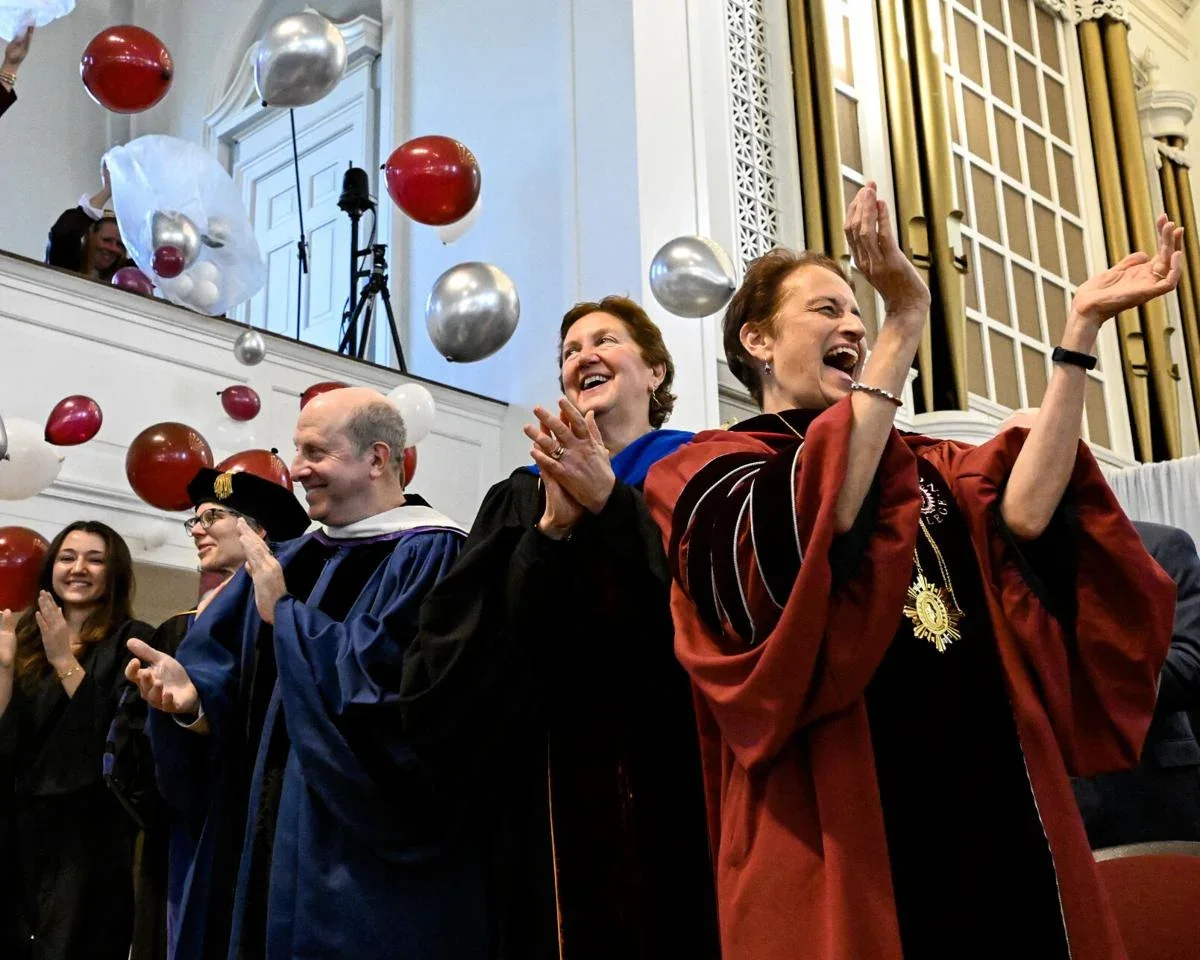
Union College inauguration of new president Elizabeth Kiss
Elite liberal arts colleges – often dubbed the “Little Ivies” – are renowned for academic excellence and prestige. Schools like Amherst, Colgate, and Wesleyan boast small classes, illustrious alumni, and intellectual rigor. However, today’s students and families are increasingly scrutinizing tangible outcomes like career placement, interdisciplinary skills, and return on investment (ROI). In this context, Union College (Schenectady, NY) is carving out a reputation as perhaps the most practical and outcomes-driven among its peers. Union has long been highlighted in guides like Hidden Ivies for its exceptional education, but it is also noted for strong ROI and career preparation. This article examines Union’s trajectory – including the role of its new president, the significance of its engineering program, and comparisons with peer institutions – to assess whether Union is emerging as the “pragmatic” member of the Little Ivies. The focus is on functional excellence over prestige performance, emphasizing career preparation, interdisciplinary STEM/humanities integration, and affordability. We’ll support these claims with examples, data, and leadership statements, painting a neutral yet provocative analysis of how Union’s approach stacks up against Amherst, Colgate, Wesleyan, and the broader liberal arts ethos.
A New President with a Vision for Integration and Impact
Union College’s new president, Dr. Elizabeth Kiss, stepped into her role on July 1, 2025, bringing an ethos that aligns closely with practical, outcome-focused education. Kiss – an Oxford-trained philosopher and former president of Agnes Scott College – was drawn to Union specifically for its “distinctive integration of STEM and liberal arts”. Upon her appointment as Union’s 20th president, the Board of Trustees lauded her understanding of the College’s mission of blending technical and humanistic disciplines. Kiss herself emphasized that “Union has a unique place among these institutions with its long-standing commitment to integrating traditional liberal arts disciplines with engineering.”. This integration is not common among elite liberal arts colleges, and Kiss sees it as a foundation for preparing students in a practical, relevant way for modern challenges.
In her first campus addresses, President Kiss highlighted the “secret sauce” of Union – an infectious enthusiasm for the college’s unique model, coupled with a clear-eyed acknowledgment of challenges facing small liberal arts schools. At the 2025 Convocation, she spoke about leaning into what makes Union “Union”, citing the college’s heritage of crossing boundaries. As early as the 19th century, Union pioneered curricular innovations by teaching natural sciences, modern languages, and engineering alongside the classics. Kiss noted that this tradition now informs Union’s efforts to help students combine and integrate disciplines and experiences both in and beyond the classroom – efforts that “prepare students to lead and thrive in a world being reshaped by powerful new technological tools and global challenges.”. In her view, such integrative experiences imbue students with the “wisdom, empathy and courage” in leadership that Union’s vision calls for.
Notably, Dr. Kiss’s background shows a commitment to practical excellence in liberal education. During 12 years as president of Agnes Scott, she oversaw the creation of “Summit,” a signature program focusing on global learning and leadership development, and earned recognition for institutional innovation. This track record suggests she values outcomes like leadership skills and global competency, not just academic prestige. Her tenure at the Rhodes Trust similarly involved expanding opportunities (e.g. new Rhodes Scholarships in Africa and Asia) – a reminder that broad access and impactful results are central to her leadership. At Union, Kiss has expressed passion for undergraduate research, study abroad, and athletics as key parts of a holistic, empowering education. All these elements point to an institutional leader who champions inclusive, experiential, and outcome-oriented education rather than ivory-tower insularity.
It’s also worth noting that Union’s leadership recognized the changing higher ed landscape even before Kiss. Her predecessor, President David R. Harris (2018–2025), implemented a strategic plan that included expanding engineering and launching new programs to attract students. Under Harris, Union completed its largest-ever fundraising campaign ($316 million) and initiated new majors designed to appeal to student interests and job market demands. This context set the stage for Kiss to build on momentum. “There’s no doubt this is a tough time for higher education… it’s time for all of us to put our shoulder to the wheel and stand up for our values,” Kiss said, underscoring that Union must continuously prove the value of its model. In summary, Union’s new president appears ideally suited to push the College further toward functional excellence – doubling down on its integration of liberal arts and STEM, and ensuring that the outcome is graduates who are both broadly educated and well-prepared for real-world leadership.
Union’s Engineering Program: Marrying Liberal Arts with STEM
One of Union College’s defining distinctions – and a major pillar of its practical orientation – is its engineering program. Unlike most liberal arts colleges, Union offers fully ABET-accredited undergraduate engineering degrees in multiple fields. In fact, Union was the first liberal arts college in the United States to offer engineering, beginning in 1845. This longstanding commitment to engineering gives Union a “distinctive place in higher education,” as a Union news release proudly states. While peer institutions such as Amherst, Colgate, and Wesleyan have no engineering departments (often sending interested students to dual-degree programs at other universities ), Union has built engineering into its core identity.
Today, Union’s Templeton Institute for Engineering and Computer Science anchors an array of programs including biomedical, electrical, computer, and mechanical engineering, with newer offerings in civil and environmental engineering in the accreditation pipeline. The curriculum emphasizes hands-on learning and collaborative projects, delivered in the intimate setting of a 2,200-student college. In essence, Union strives to provide “rigorous, ABET-accredited engineering within a collaborative, undergraduate-focused environment that values both technical depth and broad intellectual development.” This balance of technical and liberal education is formalized through initiatives like the annual Engineering and Liberal Education (ELE) Symposium, which Union hosts to bring together educators interested in integrating technology and the liberal arts. It’s a deliberate effort to break down silos – engineering students at Union take courses in humanities and social sciences, while liberal arts majors have opportunities to engage with technology and design. As President Kiss puts it, Union’s mission is to “bring people together across boundaries” – an ethos that engineering and liberal arts faculty jointly uphold.
Union is doubling down on this STEM-humanities synergy with significant investments. In 2025, the College announced a $60 million Engineering and Computer Science Initiative, fully funded by donors, to upgrade facilities and programs. The project includes a new 30,500-square-foot building with state-of-the-art teaching labs for civil, environmental, biomedical engineering, plus makerspaces and 3D printing labs. The building, connected to Union’s Integrated Science and Engineering Complex, is slated to open by Fall 2027. At the same time, older facilities (Butterfield Hall and others) will be renovated to create modern classrooms, lounges and research spaces that encourage interdisciplinary mingling of students and faculty. “Over the past 20 years, Union has invested in nearly all the buildings associated with the liberal arts… This project rounds out that investment by enhancing the engineering portion of the curriculum,” noted Union’s Dean of Faculty, Michele Angrist. The message is clear: Union sees engineering and computer science as key components of a Union education, not as outliers. As former President David Harris stated during the initiative’s launch, the generous donor support for this project is a testament to “the importance of engineering and computer science as a key component of a Union education.”
This focus yields practical benefits for students. Engineering majors at Union get the kind of close mentorship and undergraduate research opportunities typically found at liberal arts colleges, combined with robust technical training usually found at larger universities. Small wonder Union’s program has been nationally recognized – ranked #21 among undergraduate engineering programs at schools not offering a doctoral degree (U.S. News & World Report). More importantly, Union’s model produces graduates who are both versatile and workforce-ready. Jennifer Currey, a Union engineering professor, noted that new facilities and integrated maker spaces will “enable continuation of collaborations across disciplines,” preparing students to tackle complex problems that don’t fall neatly into one department. For example, a biomedical engineering major at Union might also pursue coursework in ethics or public policy, reflecting the school’s belief that technical solutions must be informed by a broader context. The Engineering and Liberal Education philosophy means a computer science student might team up with an economist or a visual artist on a project, or an English major might take an introductory coding course – experiences that mirror the interdisciplinary nature of the real world.
In contrast, Amherst, Colgate, and Wesleyan have more traditional liberal arts curricula without in-house engineering. They often offer 3-2 dual-degree engineering programs (e.g., partnerships with Dartmouth or Columbia) for the few students who pursue engineering, requiring an extra year and transfer to another institution. Those programs can be excellent, but they underscore a fundamental difference in institutional focus. Union’s approach keeps technically inclined students on campus, fully immersed in the liberal arts environment while they earn an engineering degree. This one-stop integration of STEM and humanities arguably makes Union more “outcomes-driven” – students graduate not only with a well-rounded education, but also with a professional credential and project experience that can translate directly to careers in industry or technology. It exemplifies “practical” without abandoning the liberal arts ethos.
Career Preparation and “Life After Union”
A critical aspect of outcomes-driven education is how well a college prepares students for careers and postgraduate success. Here, Union College shines with a hands-on approach to career development that rivals or exceeds many of its peers. The College’s Career Center (Becker Career Center) has earned national accolades – according to The Princeton Review, Union has one of the top career services offices in the country, ranked #12 among private schools for career placement. This isn’t just a vanity statistic; it reflects tangible resources and programming that benefit students. Union’s career services provide 1:1 advising, robust internship programs, and alumni networking events starting early in a student’s college journey. In fact, Union touts a “robust international internship program,” enabling students to gain work experience abroad as well. Such experiences help students apply classroom knowledge in real-world settings – a hallmark of an outcomes-driven education.
The results of Union’s career focus can be seen in surveys and alumni outcomes. Nearly 80% of alumni recently surveyed said that their Union degree helped launch their career, getting them started on their desired paths. More than 85% of Union alumni report being satisfied with their careers – a rate “higher than other institutions” according to Union’s data. And importantly, Union graduates tend to advance quickly: many achieve leadership roles within 10 years of graduation, illustrating strong career mobility. These metrics suggest that Union not only imparts knowledge, but also instills skills and offers support that translate to workplace success and personal fulfillment. For students, that means an education grounded in pragmatic value – one that pays dividends in the job market and beyond.
Some concrete examples highlight Union’s career prep ethos. The College’s Career Dashboard showcases top industries and employers for alumni, which include fields like finance, engineering, technology, education, medicine, and law. This broad spread of industries indicates Union’s liberal arts core is intact (alumni in law, education, etc.), but the presence of engineering and finance among top fields shows a tilt toward practical sectors. Union’s curriculum and advising actively encourage internships; hundreds of internships are completed by Union students each year (500+ internships listed on their portal). The school helps fund unpaid internships and research through grants, ensuring that financial constraints don’t prevent students from gaining experience. In fact, Union’s recently expanded financial aid initiative (discussed in the next section) explicitly includes support for experiences like terms abroad, mini-terms, and internships so that all students can afford to participate.
Union’s approach contrasts with a more laissez-faire attitude historically found at some elite colleges, where career services existed but perhaps took a back seat to purely academic pursuits. That model is changing across the board – even pure liberal arts colleges now emphasize career development – but Union appears to be at the forefront of making it “mission-critical.” For instance, Wesleyan University (a peer liberal arts college) notes that it has “robust career resources and a vibrant alumni network”, and about 85% of its latest class secured employment or graduate school shortly after graduation. Wesleyan has even created a MOOC for career planning and tries to engage students with career services early. Amherst College, too, boasts high placement rates and its alumni regularly earn prestigious fellowships or join firms like Google and Bain. However, what differentiates Union is the intentional marketing and integration of career readiness into the student experience. Union unabashedly promotes outcomes: from day one, students know about the “Life After Union” resources, see statistics of alumni success, and can navigate a Career Dashboard tracking alumni outcomes by major and industry. The school even publicizes that it was ranked among colleges with the best ROI by Princeton Review, appealing to families’ desire for quantifiable value. This transparency and focus on career outcomes reflect a practical mindset: Union isn’t shy about the fact that college is an investment meant to prepare one for life and work.
Importantly, career preparation at Union doesn’t come at the expense of intellectual depth. It’s framed as “and” not “or.” A Union student might major in English or History and still take advantage of technology workshops or internships in business; likewise an engineer or computer science major is required to take courses in writing, ethics, and social analysis. The goal is a well-rounded graduate who can communicate and think broadly, but also navigate the job market confidently. This philosophy aligns with broader research suggesting that liberal arts skills (critical thinking, communication, adaptability) combined with technical know-how make for the most employable and resilient professionals. Union appears to execute on this by blending its curriculum and encouraging experiential learning. For example, Union’s distinctive trimester system and “mini-terms” allow short, intensive courses often abroad or focused on a single project. One could spend a mini-term in an international location tackling, say, public health or sustainability from interdisciplinary angles – experiences that yield talking points in interviews and clarity of career interests.
The payoff is evident in salary data and employment outcomes. According to the compensation analysis by PayScale (as reported by Stacker), the median mid-career salary of Union College graduates is about $131,900 per year. This is virtually on par with Amherst College alumni ( $133,400) and higher than Wesleyan University alumni ($129,600), indicating Union grads perform very well in the labor market. Colgate University’s alumni show an even higher mid-career median (~$152,600), likely reflecting Colgate’s pipeline into high-paying finance and consulting jobs. But Union’s figure – despite a somewhat less ultra-selective admissions profile – underscores that its focus on engineering and professional fields boosts earning potential. Nearly 45% of Union degrees are in STEM fields (the Stacker data shows 44% STEM degrees ), far above peers like Wesleyan (20% STEM) or Colgate (27% STEM). This heavier STEM mix contributes to strong salary outcomes, but crucially Union’s liberal arts grounding ensures those STEM students have soft skills and global awareness as well. One could argue Union is trying to offer the best of both worlds – a strategy that seems to be paying off in graduates’ success.
Furthermore, Union’s alumni outcomes aren’t just about salaries. The college proudly notes its graduates achieve placements in top graduate programs (lists of popular grad schools include Columbia, NYU, Harvard, etc., depending on field). Whether it’s MBA, law school, med school, or PhDs, Union students are getting in – a sign that the academic quality remains high even amid the career-oriented initiatives. The College’s culture encourages pursuing prestigious national scholarships too. For example, Union alumni have won Watson Fellowships, Fulbrights, and other awards, although schools like Amherst and Wesleyan often overshadow in sheer numbers of such awards due to their larger emphasis on academic prestige. Still, Union’s balance of outcomes is noteworthy: a student body that can produce, in one graduating class, both a cohort of engineers heading to industry and, say, a Rhodes Scholar or an NSF-funded researcher.
In summary, Union College’s approach to career preparation is a key reason it is viewed as outcomes-driven. The combination of a top-ranked career center, high alumni career satisfaction, integrated internships/study abroad, and solid salary/placement metrics demonstrates a commitment to functional excellence. Union is not merely content to provide an enriching four-year experience; it actively strives to launch students into meaningful careers and lives. This practical outlook sets a tone that, while increasingly common, is still more pronounced at Union than at some of its “Little Ivy” counterparts that have traditionally been more hands-off about life after college.
Affordability, Access, and ROI
Any discussion of “practical” education must consider affordability and return on investment. A college that focuses on outcomes would ideally also ensure that the outcomes are achieved without untenable cost to students. Union College has taken notable steps in this realm, positioning itself as a school that provides value for money and expands access across socioeconomic groups.
First, Union is among the relatively small number of U.S. colleges that meet 100% of demonstrated financial need for all admitted students. This policy means that if you get into Union, the college pledges to make it financially feasible for you to attend (through a combination of grants, work-study, etc.). Not all of the Little Ivies can claim this – Amherst and Wesleyan do meet full need and are need-blind in admissions (thanks to large endowments), while Colgate meets full need as well but is need-aware in admissions. Union’s commitment to meeting need demonstrates that it values outcomes for all students, not just those who can pay. It aligns with Union’s historical ethos of inclusion (recall Union was founded with a mission of bringing together people of different denominations/backgrounds ) and its modern focus on social mobility. President Kiss has spoken about higher education as a “catalyst for innovation and social mobility,” attracting students from around the world who contribute greatly. Ensuring affordability is key to that social mobility piece.
Union hasn’t stopped at just meeting need in the traditional way. In 2019, the college launched the “Making U Possible” initiative, a bold financial aid program to reduce the burden on middle- and upper-middle-income families. Recognizing that formulaic need calculations can miss families who appear affluent on paper but still struggle, Union expanded aid eligibility. Families earning up to $250,000 with a certain expected contribution now qualify for at least $20,000 in Union scholarship grant aid. Previously, some of those families would have gotten little or nothing, despite feeling pinched by tuition. These Making U Possible Family Grants essentially widen the bracket of who gets aid, acknowledging real-life factors like home equity, debt, or recent income changes that affect a family’s ability to pay. By doing so, Union aimed to prevent “middle-class squeeze” and ensure a Union education is attainable to more students. This program was part of The Presidential Initiative for Scholarship and Immersive Excellence, which also raises funds to help students afford not just tuition but the full range of experiences – study abroad, internships, research, etc. – that are integral to a Union education. In practical terms, Union didn’t want students to skip a term abroad or an unpaid internship due to cost, since those experiences are linked to outcomes and personal growth.
The focus on ROI (Return on Investment) is also evident in how Union markets itself. As mentioned, Union earned a spot on The Princeton Review’s list of best value colleges for 2024, and previously was noted among colleges with the best ROI. Even though “value” can be subjective, these recognitions typically consider factors like net cost, graduation rate, and post-grad earnings. Money Magazine’s rankings and the Wall Street Journal’s new rankings (which weigh outcomes at 70%) also favor schools that deliver strong outcomes relative to cost. In WSJ’s 2024 college rankings – which explicitly reward value-added and outcomes over prestige – liberal arts colleges like Amherst (ranked #8 overall) and Babson (#10) soared, and even some publics outranked privates. Union did not make the very top of that list (it was outside the top 100 in 2024 and around #186 in 2025 overall), but the methodology shift underscores a point: colleges are now being measured by how well they propel students forward, not just by selective reputations. In this paradigm, Union’s strengths – solid graduation rate ~85%, strong early-career salaries, comprehensive career support, and manageable student debt levels – make it competitive on value. For example, one estimate put Union’s 20-year net ROI around $472,000 (additional earnings vs. the cost of attendance), which is a healthy figure. Over 30 years, College Scorecard data (via CollegeFactual) show a million-dollar-plus ROI for many Union grads, similar to peers.
It’s also worth noting that Union’s financial aid strategy, while generous, has had to balance institutional finances. A Moody’s report in 2024 flagged that Union was drawing heavily on its endowment to fund aid and had significant debt. In response, Union’s academic leadership looked at new programs to attract students who can pay (for instance, possibly adding high-interest majors that full-pay students desire). This highlights a tension many private colleges face: remaining accessible and outcome-focused, yet financially sustainable. Union appears to be navigating this by growing programs that boost enrollment (including the kind of pre-professional programs that appeal to students and yield grads with good outcomes) without abandoning its commitment to need-based aid. Its fundraising success (over $300M in 7 years) also helps underwrite these priorities. In any case, from the student perspective, Union’s efforts mean more families can afford Union, and students can graduate with relatively lower debt. The average need-based scholarship at Union is over $38,500, and more than 60% of students receive some financial assistance. Those metrics are comparable to Amherst (where ~50% receive aid but with even larger awards, given Amherst’s no-loan packages) and better than some peers that have a smaller percentage on aid.
Finally, Union’s focus on value extends to diversity and inclusion, which ties into outcomes. By enabling first-generation and lower-income students to attend and fully participate, Union boosts those students’ chances of upward mobility. The Class of 2029 that President Kiss welcomed had 23% first-generation college students – a significant portion. Programs like Making U Possible and strong mentoring can help such students succeed academically and professionally. In an era where social ROI (how education benefits society by producing engaged, employed citizens from all backgrounds) matters, Union’s approach is practically minded and laudable. A truly outcomes-driven college isn’t just about high salaries for the privileged; it’s about launching a diverse array of students into secure, meaningful careers. Union’s blend of financial aid, immersive learning funding, and career development does just that.
Comparing Union to Amherst, Colgate, and Wesleyan
How does Union’s institutional focus and outcomes compare to the other elite liberal arts colleges often mentioned alongside it? Each of these peer “Little Ivies” has its own strengths, but their philosophies can differ in subtle ways. Below we explore these comparisons, highlighting themes of prestige vs. practicality:
Amherst College (MA) – Prestige and Intellectual Breadth. Amherst is arguably at the pinnacle of liberal arts prestige: hyper-selective admissions, an open curriculum with no general ed requirements, and a track record of producing scholars, PhDs, and leaders in many fields. Amherst’s focus is on offering unparalleled academic freedom and depth. Students often win elite fellowships (Fulbright, Gates, Rhodes) and join top firms or grad schools after graduation. However, Amherst has no engineering or business programs, and career preparation is a more behind-the-scenes affair. The Career Center at Amherst is strong (and Amherst’s outcomes in earnings are excellent, with mid-career pay around $133k ), but Amherst tends to emphasize academic and personal development over overt “career training.” An Amherst student can study broadly – which in the long run can be extremely valuable – but may not get the same immediate technical skill-set that a Union engineer or computer science major would. In terms of functional excellence, Amherst excels at producing well-rounded critical thinkers and scholars; its graduates succeed in part due to the college’s prestige and rigorous training. Yet, one could say Amherst leans a bit more toward “prestige performance” – burnishing academic reputation (rankings, famous alumni, etc.) – whereas Union is a bit more hands-on about linking education to employment. Amherst’s resources per student are vast (endowment over $3 million per student) which it uses to ensure quality and access, but it hasn’t felt a need to introduce career-oriented programs to justify its value. The contrast with Union is one of degree: both deliver great outcomes, but Union explicitly integrates, say, 3D printing labs for undergrads or leadership in engineering competitions, whereas Amherst relies on the power of a pure liberal arts education, trusting outcomes will follow.
Colgate University (NY) – Tradition, Network, and Financial Outcomes. Colgate, like Union, is in upstate New York and has historical prestige (founded 1819). It shares with Union a more traditional campus vibe (and Division I hockey!), but academically Colgate does not offer engineering or other pre-professional majors beyond economics and the like. Colgate’s strength lies in a strong alumni network and a culture that pipelines many graduates into high-paying industries such as finance, consulting, and media. In fact, salary data consistently shows Colgate grads at or near the top among liberal arts alumni earnings – e.g., a mid-career median of ~$152,600, which outpaces Union and others. This suggests Colgate is very outcomes-driven in practice: students achieve high ROI, leveraging the Colgate brand and connections. Colgate’s career services are reportedly “phenomenal” as well, with students praising the breadth of opportunities to prepare for life after college. Where Colgate differs from Union is in academic focus: Colgate’s curriculum is more on the traditional liberal arts side (though it has a core curriculum unlike Amherst’s open system). It doesn’t emphasize interdisciplinary STEM to the same extent, and its recent initiatives have been more about strengthening areas like entrepreneurship and thought leadership in a liberal arts context. Colgate has a robust finance and business mentorship ecosystem (Wall Street immersion programs, etc.), which is another route to practical success. You might say Colgate exemplifies “ROI via networking” – students benefit from a loyal alumni base (Colgate is known for its active alumni), leading to internships and jobs. Union, conversely, is cultivating ROI via curricular integration and skill-building. Also of note: Colgate is slightly larger (~3,000 students) and historically had a more homogeneous student body (though it’s diversifying). Union’s smaller size and STEM presence could give it a different character – possibly more collaborative across disciplines. Both schools are outwardly very successful in outcomes; Union’s edge might be in producing graduates with a dual competency in technology and liberal arts, whereas Colgate produces a lot of specialists in finance, law, etc., who excel thanks to strong fundamentals and connections. In essence, Colgate competes well in outcomes, but it achieves it without the on-campus engineering or explicit “practical education” branding that Union embraces.
Wesleyan University (CT) – Interdisciplinary Creativity and Progressive Education. Wesleyan is another top-tier liberal arts college, noted for its experimental culture, arts programs, and emphasis on student-driven interdisciplinary study. Wesleyan has some graduate programs (unusual for a LAC) and a reputation for producing many students who go into creative industries (film, music), academia, and social activism. Wesleyan has no engineering school, but it does have strong sciences and encourages interdisciplinary majors (like Neuroscience and Behavior, or Science in Society Program). The ethos at Wesleyan is that a broad liberal arts education is itself the best career preparation – it trains adaptable thinkers. Wesleyan’s President Michael Roth often writes about “practical idealism” and the idea that liberal education prepares one for civic life and a range of careers, not one narrow job. Wesleyan’s outcomes are indeed strong: its graduates have mid-career salaries (~$129.6k) close to Union’s, and the school touts above-average acceptance rates to law and med schools (17–30% higher than national averages). The Gordon Career Center at Wesleyan actively engages students, and the school leverages its alumni (which include many in Hollywood and tech entrepreneurship). However, Wesleyan’s approach to careers is often couched in terms of finding one’s passion and “making a difference,” consistent with its more progressive identity, rather than explicitly focusing on ROI or technical skill. For instance, a significant number of Wesleyan graduates pursue non-profit or arts work (sectors which are fulfilling but not always high-paying). Wesleyan is proud of that, framing it as success in a broad sense. Thus, compared to Union, Wesleyan might prioritize prestige in academia and creative impact a bit more, while Union highlights job readiness and cross-disciplinary STEM competence. Both are interdisciplinary – Wesleyan via student-chosen combinations in the arts and sciences, Union via structured integration of engineering with humanities – but Wesleyan’s lack of engineering means a student seeking a traditional engineering career would have to do a 3-2 program or go to grad school. Union provides a more direct path in that regard. Culturally, one might say Wesleyan embodies the ideal of education for education’s sake (and social good), trusting that careers will follow, whereas Union openly emphasizes education for career and practical impact, while still insisting it’s not just vocational training but “education with breadth and depth.” Neither approach is right or wrong – they reflect different interpretations of the liberal arts mission in the 21st century.
In comparing Union to these peers, a theme emerges: Union College is consciously positioning itself on the spectrum closer to “practical excellence.” It has one foot firmly in the liberal arts camp (small classes, broad curriculum, focus on values and critical thinking) and one foot in the STEM/career camp (engineering programs, career center accolades, ROI initiatives). Amherst and Wesleyan tilt more toward traditional liberal arts purity (with Amherst the most traditional academically, Wesleyan the most experimental but still non-pre-professional). Colgate sits somewhere in between but without STEM – it achieves practical outcomes through a classic liberal arts education augmented by strong alumni networks and student ambition in lucrative fields. If we consider outcomes-driven to mean actively orienting the institution to measurable post-grad success, Union seems to take that more literally than the others. It doesn’t mean Union sacrifices academic quality – rather, it integrates it with real-world application more overtly.
Conclusion: Functional Excellence as the New Prestige?
Union College’s recent trajectory – underpinned by leadership vision, unique academic offerings, and student-centered support – indeed suggests it is emerging as perhaps the most practical and outcomes-focused Little Ivy. By championing functional excellence (what can students do and achieve with their education) over solely prestige performance (relying on brand and selectivity), Union is both provocation and proof of concept in liberal education. Its century-old melding of engineering with the arts has come of age in a time when interdisciplinary skills are at a premium. Its new president explicitly values that melding and will likely drive it further. The college is investing mightily in areas that directly enhance student outcomes – from new STEM facilities to expanded career programs and financial aid access. And the data – strong placement rates, high mid-career earnings, top value recognitions – validate Union’s approach, showing that a school can deliver ROI while still cultivating the traditional hallmarks of a liberal arts education (critical thinking, creativity, ethical leadership).
Of course, being “outcomes-driven” is not a panacea. Union, like its peers, must continue to adapt to challenges: demographic shifts, economic pressures, and the evolving needs of students. Prestige and practicality are not mutually exclusive – Amherst, Colgate, Wesleyan all have elements of both. In many ways, the Little Ivies are converging: prestige institutions are bolstering career development, while schools like Union that emphasize practicality are gaining prestige as their outcomes improve. The Wall Street Journal’s refocused rankings and public skepticism about college value have accelerated this convergence. Union College may simply be ahead of the curve in reframing elite liberal arts education as a launchpad for tangible success in addition to intellectual growth.
For prospective students and observers, Union’s rise poses an intriguing question: Will the metrics of career and ROI come to rival academic reputation as measures of excellence in the liberal arts realm? Union seems to be betting on it, prioritizing wisdom with work-readiness, empathy with entrepreneurship, courage with computational skill. As President Elizabeth Kiss eloquently put it, “The vision of Union, to develop every student to lead with wisdom, empathy and courage… spoke to me. There is something unique about the way a school like Union can foster those qualities, and we really need to foster [them].”. In today’s world, fostering those qualities might mean ensuring students can both think deeply and act decisively in their careers and communities.
In the unofficial league of Little Ivies, then, Union College is making a provocative case that outcomes – jobs, innovations, societal contributions – are the ultimate proof of educational excellence. Functional success, in Union’s view, is not a dirty word but the fulfillment of the liberal arts promise. Other colleges are surely watching, and students are taking note. Whether Union is “the most” practical one can be debated, but it’s indisputable that Union has embraced a value-driven model that resonates in 2026 and beyond. In doing so, Union may well be redefining what prestige itself means: not just the prestige of entering with perfect SATs, but the prestige of graduating with the skills and drive to shape the world – with “wisdom, empathy, and courage,” and a great job to boot.
Sources: Union College News; Stacker.com (alumni salary & career data); Union College Office of Admissions/Financial Aid; Wall Street Journal ranking analysis; Amherst, Colgate, Wesleyan data as cited.