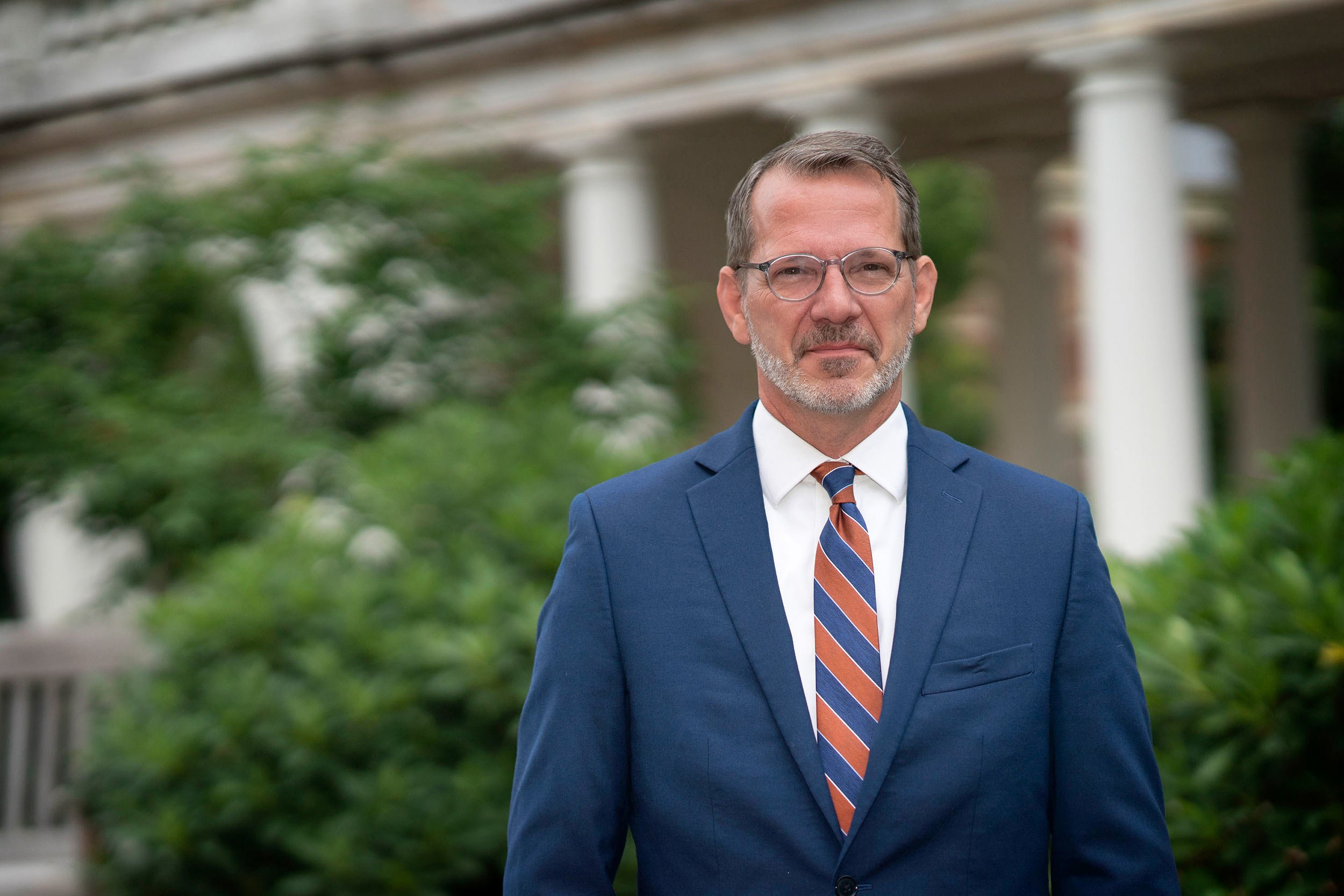
Provost Ian Baucom
Middlebury College – one of New England’s storied “Little Ivies,” the elite group of small liberal arts colleges known for Ivy-caliber academics – has ushered in a new era. On November 2, 2025, Ian B. Baucom was formally installed as Middlebury’s 18th president in an inauguration ceremony that coincided with the college’s 225th anniversary. The three-day celebration surrounding the inauguration blended tradition and forward-looking vision, offering a glimpse into how Baucom’s leadership will shape Middlebury’s future and potentially signal broader directions for its peer institutions. With an ambitious strategic planning initiative underway and a call to rearticulate “what Middlebury is for,” Baucom’s presidency is more than a ceremonial transition – it’s a rallying point for the liberal arts in a time of change. This post explores the highlights of the inauguration festivities, Baucom’s leadership vision and strategic goals, and what his arrival could mean for the future of the “Little Ivies” and liberal arts colleges at large.
A Historic Inauguration Weekend
Former president Laurie L. Patton places the official College medallion around Ian Baucom’s neck during the inauguration ceremony, symbolizing the transfer of Middlebury’s leadership.
The inauguration of Ian B. Baucom was designed as a three-day celebration of Middlebury’s past, present, and future. One day after the College’s 225th birthday, the campus came alive with academic and cultural events that underscored community and continuity. The festivities included faculty-led roundtable discussions on critical topics, exhibitions of student and faculty research, open houses at the library’s Special Collections, a celebratory arts night at the Mahaney Arts Center, and even a Halloween-themed meet-and-greet with the new president and his family. These events built up to the formal inauguration ceremony on Sunday, Nov. 2, held in the college’s Virtue Field House – an occasion marked by academic pageantry and inclusive community spirit.
More than 500 people attended the ceremony, including Middlebury students, faculty, staff, alumni, local community members, and delegates representing over 35 other colleges and universities. Such broad representation signaled Middlebury’s connections across higher education and the significance of this leadership change beyond the campus. The approximately three-hour ceremony featured a rich tapestry of voices and performances – blending prayer, poetry, personal reflections, music, and calls to action. Special guest speakers ranged from beloved Middlebury alumna and novelist Julia Alvarez ’71 (writer in residence emerita), to faculty leaders like Professor Bettina Matthias (German Department chair) and Dima Ayoub (Arabic Department chair), to a staff representative (Timothy Parsons, a horticulturist from Facilities Services). Representatives of the Student Government Association, the Alumni Association, the Town of Middlebury Selectboard, and Middlebury Athletics also offered remarks, underscoring that this was truly a community-wide welcome for the new president.
The ceremony intertwined Middlebury’s traditions with fresh energy. In a notable break from stuffy convention, the procession of faculty and dignitaries entered to the upbeat strains of Bob Marley’s “Waiting in Vain,” performed by the Middlebury Afropop Ensemble. Music and arts were woven throughout the program. Professor Damascus Kafumbe – a music professor and co-chair of the Inauguration Committee – led an African instrumental processional and performed original songs on the East African adungu, lending a global and celebratory tone to the event. The Middlebury College Choir offered a choral piece, and student a capella and instrumental groups performed, reflecting the college’s vibrant arts culture. At the pivotal moment of investiture, former president Laurie L. Patton (Middlebury’s 17th president, who served from 2015–2025) placed the official College medallion around Baucom’s neck, symbolically passing on the mantle of leadership. The audience erupted in a standing ovation as Baucom stepped to the lectern for his inaugural address.
Everything about the inauguration weekend – its timing on a historic anniversary, its mix of formal and informal elements, and the broad participation – reinforced that this was more than a routine ceremony; it was a deliberate launch of a new chapter. As Middlebury’s Communications office framed it, Baucom’s installation marked “the beginning of a new era” for the College. The stage was set for President Baucom to honor Middlebury’s proud 225-year legacy while also charting a course toward its future.
Meet Ian B. Baucom: A Leader with a Global Perspective
Ian B. Baucom comes to Middlebury with a compelling personal and professional background that informs his vision for the College. Born and raised in South Africa during the era of apartheid, Baucom witnessed firsthand both profound inequality and the transformative power of education. His parents were missionaries who ran adult literacy programs for Black mine workers, instilling in him early on the belief that education can change lives and communities. That upbringing amid apartheid’s injustices gave Baucom a deep appreciation for democracy and access to learning. “I am, profoundly, a beneficiary of the American project of democratic education,” he said in his inaugural speech, noting that opportunities in higher education “changed my parents’ lives… it changed my life”. This personal journey – from a small rural town in 1970s South Africa to earning a Ph.D. and now leading a top U.S. college – exemplifies the very ideals of access and inclusion that he champions. “How I arrived in Middlebury from a town of a couple hundred people in deeply rural apartheid South Africa is one of those American stories that just doesn’t happen without colleges and universities opening their doors to students everywhere,” Baucom reflected. It’s a testament to the notion that academia can be a force for social mobility and justice.
Professionally, Baucom is both a scholar and an experienced administrator. He earned renown as an English professor and later served as Executive Vice President and Provost at the University of Virginia (UVA) before taking the helm at Middlebury. At UVA – a large research university – he helped guide strategic initiatives and academic programs, experience that will prove valuable as he now focuses on an institution centered on undergraduate liberal arts education. Baucom’s colleagues describe him as a principled and approachable leader. James E. Ryan, former UVA president and longtime friend, praised Baucom as “a principled leader with the necessary skills to be a successful president” who excels in roles ranging from visionary strategist to empathetic teacher. Ryan recounted that Baucom is “an exceptional teacher” at heart, someone who “will welcome constructive disagreement” and “never stop learning” alongside those he leads. Perhaps most tellingly, Ryan highlighted Baucom’s authenticity: “Being a real person who is also a college president matters… With the trust of a community, there is no obstacle too difficult to overcome”. This sentiment speaks to Baucom’s collaborative, human-centered approach to leadership.
Early indications show Baucom leading in exactly that spirit. Since officially beginning his Middlebury tenure on July 1, 2025, he has been highly visible on campus – meeting students for lunch, chatting with faculty on walking tours of campus, dropping in on classes and sports events. In a message to the community, he noted how quickly he learned that at Middlebury “family is not a metaphor. It’s a lived reality, in sweet days and aching days” – an acknowledgement of the close-knit campus culture, shared joys, and recent sorrows. (Tragically, the Middlebury community lost a student in October, and Baucom’s first act at the inauguration podium was to lead a solemn moment of silence in her memory. This gesture demonstrated his sensitivity to the community’s emotional landscape from the outset.) Baucom has also shown a willingness to confront challenges head-on. Within months of arrival, he made a difficult decision to wind down the College’s graduate programs at the Middlebury Institute of International Studies in Monterey – part of an effort to address a budget deficit and refocus resources. It was a bold move that signaled pragmatism and an intent to “strengthen the core” of Middlebury’s educational mission.
All of these experiences – personal, academic, and administrative – shape Baucom’s perspective as he takes leadership of Middlebury. He is a president who intimately understands why education matters for democracy, who has navigated the halls of both elite liberal arts and large universities, and who clearly relishes the day-to-day interactions that build trust in a campus community. As he quipped to The Middlebury Campus newspaper, he wouldn’t want to be a college president in any other era because “it’s so clear that what we do matters” in this moment. That clarity of purpose is what he now brings to Middlebury at the dawn of a new chapter.
A Vision for Middlebury: Defining “What We Are For”
The centerpiece of President Baucom’s inaugural address – and indeed of his emerging vision for Middlebury – is the idea of reaffirming the College’s purpose by focusing on “what we are for.” In an age when societal discourse often highlights what institutions are against, Baucom flipped the script, urging Middlebury to define itself in positive, proactive terms. He framed the entire inauguration weekend around the guiding question: “What is Middlebury for?”. This question is more than a slogan; it’s a challenge to articulate the core values and aspirations that should drive Middlebury into the future.
In his speech, Baucom offered some powerful answers. He celebrated Middlebury as an institution “for the life-transforming power of the liberal arts, the advance of knowledge, and the flourishing of young lives” – affirming the traditional mission of residential liberal arts colleges to awaken intellectual curiosity and personal growth. He declared that Middlebury must be for foundational principles like freedom of expression and academic freedom, and for the power of reason, evidence, science, and art in guiding human progress. In a thinly veiled reference to recent challenges on college campuses, Baucom made it clear that Middlebury will stand on the side of open inquiry and truth-seeking. He also linked the College’s purpose to the health of democracy itself: Middlebury, he said, is for the idea “that democracy needs colleges and universities to thrive”. At a time when higher education’s value is being questioned in some quarters, Baucom is effectively arguing that places like Middlebury are guardians of democratic society – training citizens to think critically, engage in dialogue, and bridge differences.
Perhaps most strikingly, Baucom articulated a series of forward-looking commitments reflecting contemporary global and social challenges. Middlebury, in his view, is for:
Democracy and Civic Participation: The college should be a “center of democracy,” demonstrating how diverse communities can deliberate and live together. Baucom noted that ceremonies like convocation and commencement are microcosms of pluralism in action – people from many backgrounds convening for a common purpose. In an era of polarization, he wants Middlebury to model civic dialogue and democratic values.
Defining Itself Positively: “In a time in which too much of our culture…defines itself by what it is against, we will define ourselves by what we are for,” Baucom proclaimed. This philosophy underscores an optimistic leadership style – focusing on shared goals (inclusion, knowledge, justice) rather than the divisiveness that often dominates headlines.
Freedom of Expression and Inquiry: He insists that Middlebury be a beacon of free expression and academic freedom. This means encouraging robust debate and protecting the classroom as a space for difficult conversations – a particularly salient stance given a 2017 incident at Middlebury that drew national attention to campus speech issues. Baucom’s emphasis here signals that the exchange of ideas will be championed, not stifled, under his watch.
Knowledge and Virtue: Invoking Middlebury’s Latin motto “Scientia et Virtus” (Knowledge and Virtue), Baucom affirmed a commitment to both intellectual excellence and moral character. A Middlebury education, he suggests, should cultivate not only sharp minds but also ethical, virtuous leaders.
Climate Responsibility: Baucom asserted that Middlebury must be for climate action and environmental stewardship. This aligns with Middlebury’s existing leadership in sustainability (the college pioneered the nation’s first environmental studies program and launched an ambitious Energy2028 initiative for carbon neutrality). Under Baucom, environmental responsibility remains front and center as a defining purpose.
Bridging Divides: Middlebury should stand for “connection across political divides” and fostering understanding across differences. Baucom’s own life – bridging continents and cultures – and his scholarly focus on democracy suggest he will prioritize civil discourse and inclusive dialogue on campus. This commitment comes at a time when liberal arts colleges are striving to host conversations that welcome a range of perspectives.
The Arts and Innovation: He highlighted Middlebury being for “the arts, writing, and scientific innovation”. In other words, creativity and discovery in all fields are to be celebrated. Middlebury has long been known for strengths like its renowned Language Schools and Bread Loaf Writers’ Conference (for literature) as well as cutting-edge undergraduate research; Baucom’s vision reinforces that fostering creativity and innovation is core to the College’s identity.
These points paint a picture of Baucom’s values-driven roadmap for Middlebury. Throughout his address, he intertwined personal anecdotes with institutional history to make the case that Middlebury’s enduring purpose is tied to expanding who has access to education and what that education empowers them to do. He invoked Middlebury’s milestones of inclusion – for instance, celebrating Alexander Twilight, class of 1823, the first African American graduate of Middlebury, and Maybelle Chellis, class of 1886, the first female graduate. By naming these trailblazers, Baucom linked Middlebury’s 19th-century legacy of breaking barriers to its present mission of equity and access.
The emotional high point of his speech came as Baucom promised to “be your president” – a servant-leader for the whole Middlebury community. He emphasized that he didn’t come to Middlebury to be the President as a title, but to actively serve as the president for students, faculty, staff, alumni, and neighbors alike, “on sweet days and hard days”. He movingly extended this commitment beyond the campus borders, saying he would be president “around the globe as the town’s college becomes ever more the world’s college, and the planet’s college”, joining his life and family with the Middlebury family. In those words, he cast Middlebury as both proudly rooted in its local Vermont community and boldly global in its reach and responsibilities.
In sum, Baucom’s vision is rooted in rejuvenating Middlebury’s liberal arts ethos for the 21st century – doubling down on the idea that nurturing knowledge, virtue, and community at a small college can have outsized impact on the wider world. It’s a vision that aligns Middlebury’s identity with actively addressing the challenges of our time (from climate change to democratic decay) through the lens of a liberal arts education.
Strategic Planning: Charting Middlebury’s Future
To translate vision into action, President Baucom wasted no time initiating an extensive strategic planning process that will guide Middlebury in the years ahead. In late October 2025, just days before the inauguration, he announced the launch of a Middlebury-wide Strategic Planning Initiative, the first comprehensive planning effort at the College in over a decade. This initiative is a community-driven endeavor to “rearticulate our mission, purpose, and aspirations for our next decade and more” – effectively answering that big question, “What is Middlebury for?”, in concrete terms and goals.
The strategic planning process is notable for its inclusive structure and ambitious timeline. Baucom appointed a 13-member Strategic Planning Steering Committee co-chaired by two faculty members (Professor Jessica Holmes and Professor AJ Vasiliou) and comprising faculty, staff, students, and trustees from across Middlebury’s various schools and programs. He charged this committee with facilitating a “widely collaborative and transparent process”, soliciting input through small-group lunches, open forums, and community meetings. A series of 11 working groups (composed of people from different parts of Middlebury) is tackling specific questions and topic areas. The timeline is brisk: recommendations are to be developed by spring 2026, with a finalized strategic plan to be presented to the Board of Trustees in May 2026 for approval. If all goes according to plan, Middlebury will move into executing the new strategy by mid-2026.
What will this strategic plan encompass? Baucom outlined three overarching themes to organize the effort: “Strengthen the Core, Connect the Whole, and Meet the Moment.” These themes neatly capture a balance of internal focus, integration, and external engagement:
Strengthen the Core: Reinvest in Middlebury’s core mission of undergraduate teaching, research, and the close faculty-student mentorship that defines a residential liberal arts college. Key questions include how to enhance the curriculum for the future, expand access and financial aid to welcome a diverse student body, attract and support outstanding faculty and staff, and improve campus spaces to enrich learning. This theme recognizes that Middlebury’s strength has always come from the rigor of its academic program and the vitality of its campus community; thus, doubling down on those fundamentals is imperative.
Connect the Whole: Break down silos and forge stronger connections across all parts of Middlebury, as well as between the College and the wider world. This means better integrating Middlebury’s various programs – the undergraduate College in Vermont, the Middlebury Language Schools, the Bread Loaf School of English and Writers’ Conferences, the C.V. Starr Schools Abroad, and formerly the Institute at Monterey – into one cohesive institution with a unified vision. It also means reimagining Middlebury’s global mission and its partnerships with local, state, national, and international communities. In practical terms, questions are being asked about defining Middlebury’s global strategy, its role in graduate and professional education for the public good, and how the College can be a stronger partner to Vermont and beyond. This theme underscores Baucom’s intent for Middlebury to leverage its unique assets – such as its renowned language and study-abroad programs – to be a globally connected institution without losing its intimate scale and New England roots.
Meet the Moment: Equip Middlebury to confront the major challenges and transformations of our era, so that the College not only responds to the times but helps lead in higher education. Baucom explicitly calls for focus on issues like upholding academic freedom, advancing diversity, equity and inclusion (DEI) in a deliberate (not reactive) way, grappling with the impacts of artificial intelligence (AI) and technological change, and taking action on urgent planetary issues like climate change. These are areas where higher education’s role is being fiercely debated nationally. By including them in the strategic plan, Middlebury aims to “meet the moment” and position itself at the forefront of shaping how a liberal arts college can address these pressures. For example, one planning question asks how Middlebury can be made into a “beacon of academic freedom” at a time when free inquiry faces threats. Another asks how Middlebury can engage with the revolution of AI in a way that aligns with its humanistic values. These forward-looking inquiries show Middlebury refusing to shy away from change – instead, it seeks to proactively define its path through the upheavals affecting all of higher education.
Guiding all three themes is Baucom’s foundational query: “What is Middlebury for?” This question is being used as a framework throughout the planning process. In a letter to campus, Baucom urged the community to be bold and imagine Middlebury’s future in terms of purpose and impact, not just for the next ten years but for the generations to follow. He noted that the liberal arts are under sharp external questioning today, even as the world’s challenges make Middlebury’s mission more urgent than ever. This strategic plan is as much about reaffirming the value of liberal arts education in society as it is about Middlebury’s internal goals. “A strategic planning process, which is primarily and generally for the college itself, is also a way of making a case for college…for the liberal arts, and it’s urgent,” Baucom told The Middlebury Campus.
Baucom’s aspirations for Middlebury are lofty. He has unabashedly stated “our ambition should be nothing less than establishing Middlebury as the leading liberal arts college and institution in the world”. In conversations with students, he even more bluntly said, “My aspiration is for us to be the best liberal arts college in the country, in the world. I want to be the best… I want your education to be the best”. That kind of statement can raise eyebrows – after all, the “best” liberal arts college is a subjective claim in a field of many excellent institutions. But what Baucom likely means is that Middlebury should strive for excellence on its own terms: providing the most meaningful undergraduate experience anywhere and leading by example on issues that matter. The strategic plan will translate that drive into specific priorities and “dreams with deliverables”.
By May 2026, when the plan is set to be approved, we’ll see concrete initiatives and goals emerge. Will it recommend new academic programs or pedagogical innovations? Further expansions in financial aid to broaden access? Investments in campus infrastructure or sustainability projects? New partnerships locally or globally? Those details will define Middlebury’s path in the near term. But even now, the process itself is signaling how Middlebury intends to evolve: collaboratively, boldly, and true to its core values. It’s also setting a tone of transparency and community ownership of the College’s direction – which is itself a cultural shift that Baucom is fostering.
A New Era for Middlebury and the “Little Ivies”
Middlebury’s presidential inauguration and strategic planning are not happening in isolation. They come at a pivotal moment for America’s elite liberal arts colleges, often dubbed the “Little Ivies.” This unofficial moniker refers to a group of small, highly selective colleges in the Northeast – schools like Middlebury, Williams, Amherst, Wesleyan, Bowdoin, and others – known for academic excellence, historic prestige, and tight-knit campus experiences comparable to the Ivy League. These institutions share common opportunities and challenges in today’s educational landscape. Thus, the direction Middlebury takes under Ian Baucom’s leadership could have resonance for its peers, shedding light on how liberal arts colleges can adapt and lead in the 2020s and beyond.
One clear implication of Middlebury’s new era is a reaffirmation that the liberal arts college model remains vital and relevant, provided it is willing to evolve. Baucom’s vocal defense of core principles – academic freedom, inclusive education, scientific and artistic inquiry, preparation for democratic citizenship – is a heartening sign at a time when liberal arts education has been under scrutiny. Across the country, small colleges have faced questions about their value proposition: critics ask if they are too expensive, too insular, or too ideological. Middlebury’s answer, under Baucom, is to proudly double down on its mission while directly addressing contemporary issues. The strategic plan’s theme “Meet the Moment” encapsulates a lesson for all Little Ivies: standing still is not an option. Whether it’s grappling with AI’s impact on teaching or taking action on climate change, top liberal arts colleges are recognizing they must innovate and engage with the world’s problems to stay relevant. Middlebury is openly embracing that challenge, which might encourage peer institutions to do the same, each in line with their own strengths.
Another area where Middlebury’s approach could influence peers is the emphasis on positive narrative and community trust. Baucom’s mantra of focusing on “what we are for” instead of what we oppose comes at a time when many campuses have been mired in polarizing debates (often around free speech, diversity, or historical legacies). Middlebury itself experienced this in 2017, when a controversial speaker’s visit led to protests and a moment of soul-searching about the balance between free expression and inclusion. By foregrounding shared values – knowledge, virtue, inclusivity, and the betterment of society – Baucom is trying to set a unifying tone. This could be a model for other colleges: to heal divisions by rallying everyone around common purpose and principles. It doesn’t mean avoiding hard issues; rather, it means approaching them from a stance of “Here’s what we stand for” (e.g. open dialogue, diversity of thought, mutual respect) instead of just what we stand against. In practice, Middlebury’s plan to become a “beacon of academic freedom” and to articulate DEI strategies in a “deliberate and nonreactive way” will be a closely watched experiment. If successful, it may provide a template for peers to maintain both inclusivity and free expression without the conversation devolving into acrimony.
The global and local integration that Middlebury pursues may also hold lessons for fellow Little Ivies. Traditionally, many of these colleges are located in small towns (like Middlebury, Vermont) but have long had global reach through study abroad and international student communities. Baucom’s vision explicitly ties the local and the global: calling Middlebury “the town’s college” and “the world’s college” in the same breath. He is actively encouraging Middlebury to be a better partner to its home region – for instance, engaging in Vermont’s efforts to address rural challenges like housing and childcare – while also strengthening its international programs and impact. This “glocal” mindset (thinking globally, acting locally) might inspire similar institutions to deepen their community engagement and global connectivity. Many Little Ivies, such as those in the New England Small College Athletic Conference (NESCAC), have strong local identities and alumni networks worldwide. Middlebury’s attempt to more intentionally connect its Vermont campus with its overseas sites, and to integrate its graduate and summer programs with undergraduate life, will be watched by peer schools that also juggle multiple programs (for example, Wesleyan’s graduate offerings or Amherst’s relationship with the Folger Library, etc.). The outcome could illustrate how a small college can amplify its influence by uniting its disparate parts under one vision.
Importantly, Middlebury’s bold goal to be the leading liberal arts college “in the world” raises the competitive bar for the Little Ivies group. These colleges have historically been collegial as much as competitive, sharing best practices through consortia and often learning from one another. If Middlebury makes strides – say, in innovating curriculum (perhaps incorporating interdisciplinary climate studies or AI ethics programs), or in student outcomes, or in campus diversity – it could spur others to step up similarly. Healthy competition can drive improvement across the board. Middlebury’s pursuit of excellence might encourage peer schools to clarify their own strategic visions. Indeed, some already are in transition: Amherst College and Bowdoin College appointed new presidents in recent years with mandates to continue momentum, and Williams College has been investing heavily in its academic enterprise. The eyes of peer institutions may be on Middlebury to see how Baucom’s fresh leadership, coming from outside the traditional Northeast liberal arts orbit (he’s the first Middlebury president in decades without prior affiliation to the College), reinvigorates a venerable institution.
We should also note the national context that all liberal arts colleges now face, which Baucom explicitly acknowledges. The return of political pressures – exemplified by the federal government’s recent scrutiny of campus policies – makes this a defining era for higher education leadership. In one of his first acts as president, Baucom joined other college leaders in signing a statement rejecting the previous administration’s proposed “Compact for Excellence in Higher Education,” which many saw as an infringement on academic self-governance and inclusion efforts. He has identified “defending academic freedom and, with it, democracy” as the greatest challenge facing Middlebury and higher ed broadly. This stance is likely echoed by presidents at Williams, Swarthmore, and other Little Ivies who are equally concerned about maintaining institutional autonomy and the freedom to pursue truth. Baucom’s proactive stance in the public arena (signing statements, speaking out) suggests that Middlebury will not shy away from advocacy on behalf of its values. We can expect these colleges to increasingly band together in defending the virtues of a liberal arts education – whether it’s to argue for continued federal student aid, visa policies that welcome international students, or simply to promote the idea that educating broad-minded citizens is a public good. Middlebury’s voice, under Baucom, will contribute to that chorus, reinforcing the collective strength of the liberal arts sector.
Conclusion: Leading by Example in Challenging Times
As the celebratory dust settles from Middlebury’s inauguration weekend, one thing is clear: Ian B. Baucom’s presidency represents both a renewal of the College’s timeless mission and an audacious push into its future. The reverberations of his leadership are likely to extend beyond Middlebury’s idyllic Vermont campus, offering a case study in how a “Little Ivy” can adapt and lead in the 21st century. Baucom is aligning Middlebury’s identity with big ideas – democracy, global citizenship, environmental stewardship, innovation – that transcend any one campus. By doing so, he’s implicitly asserting that small colleges can have a big impact, and that the liberal arts model is not antiquated, but perhaps exactly what the world needs now: educated individuals who are curious, ethical, culturally fluent, and unafraid to tackle complex problems.
For Middlebury College, the coming years will test how well this new vision can be realized. The strategic plan will need to convert ideals into actionable initiatives, all while navigating practical constraints like budgets and a rapidly changing higher ed environment. There may be hard choices ahead (as seen in the decision to phase out the Monterey programs), and not every aspiration will be easily achieved. Yet, if the energy and optimism of the inauguration are any indication, Middlebury is embracing this moment of change with confidence. Students, faculty, and alumni are engaging in the planning discussions; the community appears ready to voice both its hopes and concerns, fulfilling Baucom’s intent for a transparent, participatory process. That buy-in will be crucial. After all, a president’s vision can only take root if the broader institution feels ownership of it.
For the “Little Ivies” and other peer colleges, Middlebury’s journey under President Baucom will be worth watching. It may reaffirm that these small but mighty schools can continue to punch above their weight in shaping higher education’s trajectory. By prioritizing both the intimate undergraduate experience and engagement with global issues, Middlebury is trying to have the best of both worlds – a strategy other liberal arts colleges may emulate in their own way. In the competitive ecosystem of top-tier colleges, sharing successful approaches benefits them all. If Middlebury can, say, crack the code on weaving AI literacy into a liberal arts curriculum, or demonstrate measurable improvements in civic education and civil discourse on campus, such practices could spread to peer institutions facing similar imperatives.
In the final analysis, Middlebury’s new president has signaled that he sees this not just as the start of a new administration, but as the start of a new era for the institution’s role in society. During his inauguration, Baucom asked the Middlebury community to imagine the future boldly: “to say what we are for anew, to imagine our future anew; to make a distinctively Middlebury case for higher education anew”. That call-to-action resonates far beyond Vermont. In answering it, Middlebury might very well help make the case anew for the value of all liberal arts colleges in our modern world – proving that the “Little Ivies” can be big leaders when it comes to educating for a better future.
Sources:
Middlebury College News & Announcements – Ian B. Baucom Inaugurated as 18th President of Middlebury College
The Middlebury Campus (student newspaper) – Coverage of Inauguration and interviews
Middlebury College – Announcement of Strategic Planning Initiative (President’s letter, Oct. 29, 2025)
Middlebury College – Inaugural Address excerpts and event details
Wikipedia – Definition of “Little Ivies” colleges
WCAX News – Brief report on Baucom’s inauguration (Nov. 2, 2025)