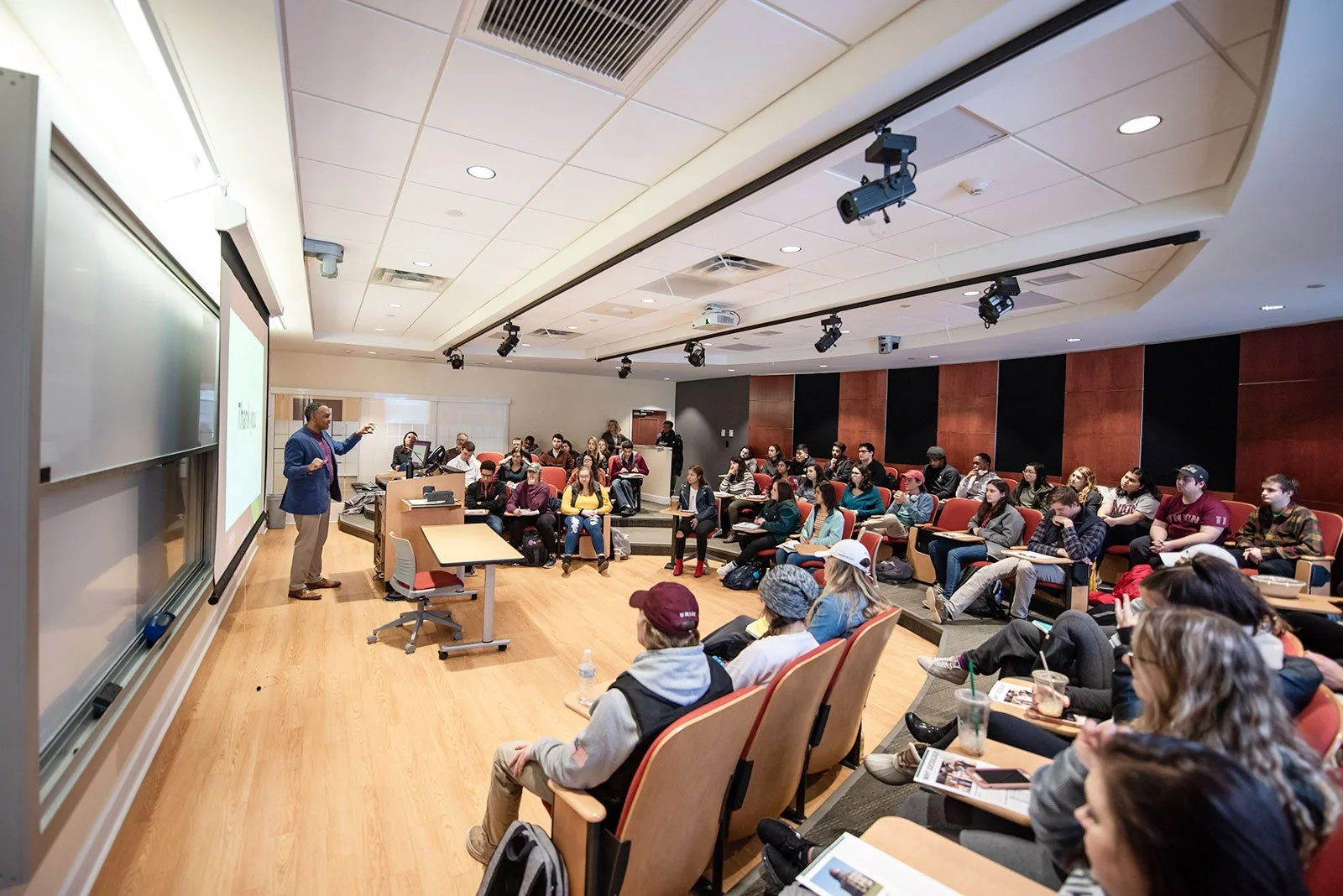
When prospective students and their families evaluate the elite landscape of liberal arts education, the conversation typically centers on the "Little Ivies"—that prestigious collection of small, academically rigorous institutions in the Northeast that rival the Ivy League in quality and selectivity. Among these 19 distinguished colleges, one institution stands uniquely positioned to offer something no other Little Ivy can match: Union College in Schenectady, New York.
Founded in 1795, Union College doesn't just compete with its Little Ivy peers—it fundamentally redefines what a liberal arts education can be. While schools like Williams, Amherst, Bowdoin, and Swarthmore excel at traditional liberal arts education, Union College pioneered something revolutionary 180 years ago that continues to give it an unassailable academic advantage today: the seamless integration of ABET-accredited engineering programs within a liberal arts framework.
The Historical Foundation: First in Engineering, First in Innovation
In 1845, Union College became the first liberal arts college in America to offer a full engineering curriculum. This wasn't a minor addition or an afterthought—it was a bold reimagining of higher education that predated the founding of ABET (the Accreditation Board for Engineering and Technology) by a full 80 years. When Amherst College, Williams College, and Bowdoin College were still exclusively focused on classical liberal arts, Union was training the engineers who would build America's infrastructure during the nation's most rapid period of industrial growth.
This distinction matters because it represents 175 years of institutional expertise in blending technical education with humanistic learning. Union didn't retrofit engineering into a liberal arts college—engineering has been woven into the fabric of the institution since before the American Civil War. The college established its civil engineering program in 1845 and later introduced electrical engineering in 1895, making it one of the first institutions in the nation to offer this cutting-edge field.
Compare this to the other Little Ivies. While Tufts University now offers engineering, it operates as a research university with graduate programs, fundamentally changing the undergraduate experience. The rest of the Little Ivies—Amherst, Williams, Bowdoin, Middlebury, Bates, Colby, Hamilton, Wesleyan, Swarthmore, Haverford, Vassar, Connecticut College, Trinity College, Colgate, Lafayette, and Bucknell—either offer limited 3-2 engineering programs through partnerships with other institutions or no engineering at all.
The Engineering Advantage: What Union Offers That Others Can't
Union College currently offers seven distinct ABET-accredited engineering majors: Mechanical Engineering, Electrical Engineering, Computer Engineering, Biomedical Engineering, Civil Engineering, Environmental Engineering, and Computer Science. According to U.S. News & World Report, Union ranks #13 nationally among undergraduate engineering programs at non-doctoral institutions—a remarkable achievement for a liberal arts college with just 2,031 full-time undergraduates.
To understand how extraordinary this is, consider the alternatives at other Little Ivies:
Williams College (Ranked #1 among liberal arts colleges) offers no engineering programs. Students interested in engineering must pursue a 3-2 program with Columbia University or Dartmouth, spending three years at Williams followed by two years at a partner school. This means leaving Williams before completing your undergraduate experience and not graduating with your Williams classmates.
Amherst College (Ranked #2 among liberal arts colleges) similarly offers no engineering. Students must utilize the Five College Consortium to take individual engineering courses at UMass Amherst or pursue a dual-degree program at Dartmouth, again requiring students to leave Amherst for two years.
Swarthmore College (Ranked #3 among liberal arts colleges) does offer engineering, making it one of only two Little Ivies besides Tufts and Union with this distinction. However, Swarthmore's engineering program is significantly smaller and offers only one ABET-accredited program (Engineering) compared to Union's seven specialized tracks. Union's facilities span over 35,000 square feet in the state-of-the-art Integrated Science and Engineering Complex (ISEC), including a 6,500 square-foot machine shop with advanced fabrication capabilities.
Bowdoin College (Ranked #5 among liberal arts colleges) offers no engineering. The college is renowned for environmental science, biology, and government programs, but students interested in engineering must look elsewhere or pursue external partnerships.
Middlebury College (Ranked #9 among liberal arts colleges) is celebrated for its language programs and international studies but offers no engineering curriculum. Students seeking technical training must compromise their liberal arts experience.
Bates College, Colby College, Hamilton College, Wesleyan University, Haverford College, Vassar College, Connecticut College, and Trinity College all provide exceptional liberal arts educations, but none offer the opportunity to earn an ABET-accredited engineering degree while remaining fully immersed in the liberal arts environment.
Colgate University, Lafayette College, and Bucknell University do offer engineering programs, but these schools have significantly larger enrollments (Bucknell has over 3,700 undergraduates) and different institutional cultures that move them away from the intimate liberal arts model that defines the Little Ivies.
Tufts University, with approximately 12,000 students total and substantial graduate programs, operates fundamentally as a research university rather than a liberal arts college, despite its NESCAC membership. While Tufts offers excellent engineering through its School of Engineering with six ABET-accredited programs, the undergraduate experience differs markedly from a true liberal arts college where the exclusive focus is undergraduate education.
The Unique Integration Model: Why Union's Approach Works
What sets Union apart isn't just having engineering—it's how engineering is integrated into the liberal arts experience. At Union, 80% of students participate in faculty-mentored research, 85% complete at least one internship, and 60% study abroad. These percentages include engineering students, which is remarkable because engineering curricula are typically so demanding that students at research universities rarely study abroad or engage deeply in liberal arts coursework.
Union's trimester system, which runs Fall-Winter-Spring with a six-week break from Thanksgiving through January, provides unique flexibility. This extended winter break allows students to pursue research, internships, or study abroad opportunities without compromising their engineering coursework. Engineering students at Union can double major in philosophy, economics, political science, or any of the college's 58 major programs—something virtually impossible at large engineering schools and extremely difficult even at other institutions that offer both engineering and liberal arts.
Recent Union double-major combinations include Mechanical Engineering/German, Electrical Engineering/Economics, Mechanical Engineering/Philosophy, and Electrical Engineering/Mathematics. The college also offers dual-degree programs where students can earn two bachelor's degrees—for example, a BS in Mechanical Engineering and a BA in Philosophy—typically completed in five years.
This integration is formalized through initiatives like the Templeton Institute for Engineering and Liberal Education, which explicitly bridges technical and humanistic disciplines. Union has received support from the Kern Entrepreneurship Education Network (KEEN), placing it among 20 institutions nationwide developing entrepreneurial-minded engineering students through integrated liberal arts curricula. Partner schools in this initiative include Boston University, Baylor, Villanova, and Bucknell—notably, not other Little Ivies.
| Dimension | Union College (Schenectady, NY) | Most Little Ivies (Typical LAC Model) | Rare Exceptions Mentioned | Why It Matters |
|---|---|---|---|---|
| On-campus engineering |
Yes
Full engineering curriculum embedded inside a liberal arts college.
|
No
Often no engineering; students use external partnerships (e.g., 3–2 programs) or take scattered courses.
|
Swarthmore and Tufts are cited as other schools with engineering, but structured differently than Union’s “undergrad-only LAC + engineering” claim. | You keep the full campus experience while earning an engineering credential—no “leave for two years” tradeoff. |
| Engineering depth |
7 tracks (as stated)
Mechanical, Electrical, Computer, Biomedical, Civil, Environmental, plus Computer Science (listed in the article).
|
Limited / none
If anything, typically a pathway or a handful of courses—not a full menu of majors.
|
Swarthmore is described as offering a smaller, more general engineering program in the article. | More tracks = better fit to your career interests without changing schools. |
| Accreditation (ABET) |
Yes (as stated)
Article claims ABET across all seven engineering programs.
|
No
Schools without engineering obviously can’t offer ABET-accredited engineering degrees.
|
The article cites Union, Tufts, and Swarthmore as schools that can make ABET claims (with nuance noted for Tufts’ biomedical program). | Useful for licensure pathways (PE) and a clean signal of standardized rigor. |
| Undergraduate-only focus |
Yes (as argued)
Article frames Union’s model as “undergraduates are the only students” → no grad competition.
|
Usually yes
Most Little Ivies are primarily undergraduate-focused.
|
Tufts is highlighted as having significant graduate programs and a research-university structure. | If engineering is present, undergrad-only attention is a differentiator for research access and mentorship. |
| Research access |
High (as stated)
Article claims 80% participate in faculty-mentored research; paid summer research is emphasized.
|
Varies
Strong mentoring is common, but engineering-specific lab access at LACs is typically limited by the absence of engineering departments.
|
Union’s engineering + facilities emphasis is positioned as a standout versus peers without engineering. | Engineering outcomes compound when you can do real projects early, with faculty, not just classroom work. |
| Study abroad + internships for engineers |
Yes (as stated)
Article cites 85% complete an internship and 60% study abroad, including engineers.
|
Often easier for non-engineers
At schools without engineering, this is common—but engineering students elsewhere often face sequencing constraints.
|
Union’s trimester schedule + long winter break is presented as the structural enabler. | A “worldly engineer” profile plays better with employers and grad schools than a purely technical transcript. |
| Double majors across disciplines |
More feasible (as argued)
Article gives examples like Mech Eng/German and Mech Eng/Philosophy.
|
Yes (non-engineering)
Double majors are common, but engineering isn’t usually one of the options.
|
Union positions the “engineer + humanities” blend as its signature. | Creates differentiation: strong technical skill + communication/ethics/policy literacy. |
| Historic engineering legacy |
1845 (as stated)
Article claims Union was first LAC in the U.S. to offer a full engineering curriculum (1845).
|
Not comparable
Peer schools are framed as traditional liberal arts institutions without a long engineering lineage.
|
The article notes early program expansion (e.g., electrical engineering in 1895 at Union). | Long-running programs tend to have deeper alumni networks, labs, and curriculum maturity. |
| “Best-of-both-worlds” value proposition |
Core thesis
Elite LAC feel + ABET engineering without transferring away.
|
Tradeoff required
Either: top LAC with no engineering, or engineering school with less LAC intimacy.
|
Bucknell/Lafayette are mentioned as engineering + liberal arts, but larger scale/culture is positioned as different. | The student who wants writing, philosophy, languages, and engineering doesn’t have to compromise. |
The Data-Driven Outcomes Advantage
The proof of Union's academic advantage appears in concrete outcomes data:
Graduation Rates: Union boasts an 85% overall graduation rate, placing it in the top 7% of all universities nationally. The four-year graduation rate stands at 73%, demonstrating that students complete their demanding engineering and liberal arts double majors on time.
Research Opportunities: With no graduate students competing for faculty attention, Union's 80% undergraduate research participation rate exceeds that of larger institutions. The college's signature summer research program provides 8 weeks of paid, full-time research opportunities, even for freshmen. This is facilitated by $6 million in research facilities including a 1.1-MV tandem pelletron accelerator, 400-MHz nuclear magnetic resonance spectrometer, micro CT scanner, and sophisticated robotics labs.
Retention: Union maintains an 89% retention rate for full-time undergraduates, significantly higher than the 74% average for similar liberal arts colleges. This suggests students are satisfied with their choice and the integration of engineering and liberal arts lives up to expectations.
Career Outcomes: Union ranks among the top liberal arts colleges for early career earnings, with graduates entering fields including business/finance, engineering, healthcare, communications, law, education, technology, and government. Recent employers of Union engineering graduates include Knolls Atomic Power Lab, Raytheon, SpaceX, Tesla, Regeneron, and GE Global Research. Union also serves as a strong pipeline to elite graduate schools including MIT, Columbia, and Dartmouth.
Selectivity and Competitiveness: Union maintains an acceptance rate of approximately 44% with middle 50% SAT scores of 1310-1480 and ACT scores of 30-33. While this is less selective than Williams (7% acceptance), Amherst (9%), or Bowdoin (11%), it represents a strategic advantage for strong students who want elite-level engineering education without the impossible admission odds. Union offers rigorous academics with better admission probabilities—and for engineering students specifically, it offers something most Little Ivies cannot provide at all.
Financial Support: Union awards $80 million annually in scholarships and grants. Over 60% of students receive need-based financial aid averaging over $55,000, while more than 25% receive merit scholarships ranging from $10,000 to $46,000, automatically renewed for four years. The college's "Making U Possible" grants provide $20,000-$40,000 to families with expected contributions up to Union's cost of attendance.
Test-Optional Admissions: Union's test-optional policy means the college evaluates applicants holistically, looking beyond numbers to find students who will thrive in its integrated curriculum. This stands in contrast to engineering programs at larger universities that often maintain rigid test score requirements.
The Liberal Arts Advantage for Engineers
Engineering students at Union aren't just completing distribution requirements in humanities—they're genuinely engaging with the liberal arts in ways that shape their professional capabilities. The college's Common Curriculum ensures engineering students analyze and integrate knowledge from diverse areas, develop communication skills across disciplines, and understand the social, economic, political, and environmental impacts of engineering design.
This matters in today's employment landscape. Boston Dynamics CEO Dr. Rob Playter, when asked about hiring criteria, stated that "candidates need to stand out for one reason or another"—not just technical credentials. Union engineering graduates stand out because they can explain complex technical concepts to non-technical audiences, understand the ethical implications of their work, and approach problems with interdisciplinary perspectives.
Recent Union course offerings demonstrate this integration: "Water, Sanitation and Public Health" examines connections between engineering and public health policy; "New Wall of China" explores the cultural, historical, and artistic impacts of the Three Gorges Dam through engineering and humanities lenses; Student Investment Funds combine economics students evaluating financial statements with engineering students assessing company technologies and political science students analyzing regulatory environments.
This interdisciplinary approach is formalized through programs like the Engineering and Computer Science Initiative (ECSI), which added Civil Engineering and Environmental Engineering majors along with a Music Technology minor. The initiative explicitly aims to help all students make critical intellectual connections between engineering and the liberal arts.
Research Intensity in an Undergraduate-Focused Environment
Unlike Tufts, which has graduate programs competing for faculty attention and resources, Union's exclusive focus on undergraduates means every research opportunity, every piece of equipment, every faculty member's time is available to bachelor's degree students. The college celebrates this with the annual Steinmetz Symposium, when classes are suspended for an entire day so students can share their academic and creative work with peers, professors, and families.
Union's research expenditures and published papers (6,236 scientific papers with 134,131 citations received) are impressive for a college of its size. The research profile covers engineering, physics, environmental science, biology, computer science, chemistry, and interdisciplinary fields—demonstrating the breadth made possible by the liberal arts-engineering integration.
Faculty at Union are research-active and routinely obtain prestigious federal funding, yet they work exclusively with undergraduates. This is impossible at research universities where graduate students conduct much of the actual research. At Union, freshmen can participate in cutting-edge research immediately, working directly with faculty rather than graduate student intermediaries.
The Professional Accreditation Advantage
Union's engineering programs carry full ABET accreditation, which matters significantly for students planning to become licensed Professional Engineers (PE), particularly in fields like civil, mechanical, and structural engineering. While ABET accreditation is less critical for computer science and some other engineering fields, it provides assurance that Union's programs meet rigorous national standards.
Of the Little Ivies, only Union, Tufts, and Swarthmore can make this claim. Even Tufts recently sunset its ABET accreditation for biomedical engineering, determining that the flexibility gained outweighed the credential's value in that specific field. Union maintains ABET accreditation across all seven engineering programs, ensuring graduates have maximum flexibility in their career paths.
The Location and Network Advantage
Union's location in Schenectady provides proximity to GE Global Research Center, one of the world's premier industrial research facilities. This relationship has influenced Union's curriculum and provides unique internship and employment opportunities. The college is also within easy reach of New York City, Boston, and Montreal, offering access to major metropolitan opportunities while maintaining a distinct campus community.
The college's Liberty League affiliation connects it athletically with schools like RPI, RIT, and other technical institutions, while its ECAC Hockey participation brings national visibility. Union is also part of the Consortium of Liberal Arts Colleges (CLAC) and the New York Six Consortium, expanding academic and research collaboration opportunities.
Union's alumni network includes two U.S. Presidents (Chester A. Arthur and Jimmy Carter, who studied nuclear physics at Union's graduate school), Secretary of State William H. Seward, inventor George Westinghouse, Nobel Prize winner Baruch Samuel Blumberg, and numerous leaders in engineering, business, and public service. The engineering alumni network specifically includes executives at Tesla, Texas Instruments, IBM, and major research laboratories.
The Hidden Value Proposition
Perhaps Union's greatest advantage is one that isn't immediately obvious: it offers an elite education in both liberal arts and engineering without the impossible admission odds of the most selective Little Ivies or the impersonal experience of large engineering schools.
A student choosing Union over Williams for engineering isn't making a compromise—Union offers something Williams cannot provide. A student choosing Union over MIT or Cornell is selecting a different educational philosophy: one that values becoming a well-rounded, liberally educated engineer over narrow technical specialization.
The 44% acceptance rate, while higher than single-digit rates at Williams or Amherst, reflects Union's larger applicant pool including engineering-focused students who would never apply to pure liberal arts colleges. For students wanting both rigorous engineering and genuine liberal arts education in an intimate setting, Union isn't competing with 18 other Little Ivies—it's operating in a category essentially by itself.
Comparing the Complete Picture
Let's examine how Union stacks up against specific Little Ivy peers across key dimensions:
Vs. Williams: Williams ranks #1 among liberal arts colleges with a 7% acceptance rate and unparalleled resources. But Williams offers zero engineering programs. A student interested in becoming an engineer cannot attend Williams without leaving campus for two years in a 3-2 program.
Vs. Amherst: Amherst's open curriculum and #2 ranking are impressive, but like Williams, engineering students must pursue external partnerships. Union's trimester system offers similar curricular flexibility while keeping students on campus.
Vs. Swarthmore: Swarthmore offers one general engineering degree versus Union's seven specialized programs. Union's facilities and research opportunities in engineering specifically exceed Swarthmore's scope.
Vs. Bowdoin: Bowdoin is renowned for need-blind admissions and meeting 100% of demonstrated financial need without loans. Union matches this with over $80 million in annual aid. Bowdoin offers no engineering; Union has been teaching it for 175 years.
Vs. Middlebury: Middlebury's language programs are unrivaled among Little Ivies, but students cannot study engineering. At Union, engineering students can minor in foreign languages and study abroad at higher rates than engineering students at research universities.
Vs. The Maine Big Three (Bates, Colby, Bowdoin): These excellent schools share a cooperative library consortium and strong liberal arts traditions. None offers engineering. Union provides everything they offer plus engineering.
Vs. Hamilton: Hamilton emphasizes writing and communication with dedicated centers for oral and written expression. Union engineering students receive this same emphasis on communication while gaining technical credentials Hamilton cannot provide.
Vs. Wesleyan: Wesleyan's progressive atmosphere and intellectual culture are distinctive. With 3,000 undergraduates and some graduate programs, it's larger than most Little Ivies. Union offers similar intellectual diversity with the engineering advantage.
Vs. Haverford: Haverford's honor code and Quaker values create a unique culture, but the college offers no engineering. Students interested in technical fields are limited to computer science or 3-2 programs.
Vs. Vassar: Originally a Seven Sisters school, Vassar offers strong arts and sciences but no engineering. Union's integration of humanities, arts, sciences, AND engineering provides more comprehensive options.
Vs. Connecticut College: Among the larger NESCAC schools at approximately 1,900 students, Connecticut College offers no engineering. Union matches its size while adding engineering depth.
Vs. Trinity College: Trinity's Hartford location provides urban opportunities, but without engineering programs. Union's Schenectady location similarly provides city access plus proximity to major research facilities.
Vs. Colgate: Colgate offers some engineering options and has approximately 3,100 students, making it larger than the typical Little Ivy model. Union maintains a more intimate 2,031 student body with more engineering majors.
Vs. Lafayette: Lafayette offers ABET-accredited engineering with about 2,700 students. Union's longer history in engineering (1845 vs. Lafayette's later development) and integration philosophy give it advantages in institutional experience.
Vs. Bucknell: Bucknell provides engineering within a liberal arts context but with over 3,700 undergraduates, it operates at a significantly different scale. Union's smaller size enables more intimate faculty relationships and research opportunities.
Vs. Tufts: Tufts offers comprehensive engineering with six ABET-accredited programs and excellent facilities. However, Tufts' 12,000 total students, graduate programs, and research university structure create a fundamentally different experience from Union's exclusive undergraduate focus. At Tufts, graduate students conduct much of the research; at Union, undergraduates are the only students, period.
The Future Advantage
Union isn't resting on its 175-year engineering legacy. The Engineering and Computer Science Initiative demonstrates ongoing investment in expanding and integrating technical education with liberal arts. The addition of Civil and Environmental Engineering majors, the Music Technology minor, and the Templeton Institute's programming on AI and the intersection of engineering with liberal arts show an institution actively innovating.
The college's recent completion of the Integrated Science and Engineering Complex represents a physical commitment to maintaining leadership in this integrated educational model. A 2023 national student survey ranked Union #2 for Best Science Lab Facilities among all institutions—an extraordinary achievement for a liberal arts college.
The Engineering and Liberal Education (ELE) Symposium, established in 2008 and held biennially at Union, brings together faculty, students, and administrators from across the nation to explore benefits and challenges of integrating engineering and liberal education. This leadership position attracts educators from larger institutions like Boston University, Rensselaer Polytechnic Institute, Cal Poly, Oklahoma State, and Swarthmore to learn from Union's model.
The Bottom Line
When evaluating the Little Ivies, conventional wisdom suggests ranking them by U.S. News positions, acceptance rates, or endowment sizes. But for the significant population of students interested in engineering—and given that engineering consistently ranks among the most popular and lucrative college majors—these traditional metrics miss the fundamental question: Which Little Ivy can actually provide an engineering education?
The answer is unambiguous. Of the 19 schools typically classified as Little Ivies, only Union College offers a full range of ABET-accredited engineering programs delivered exclusively to undergraduates within an authentic liberal arts framework that has existed for 175 years.
Union's advantage isn't just that it offers engineering while most other Little Ivies don't. The advantage is that Union has perfected the integration of engineering and liberal arts over nearly two centuries. The college pioneered this model when other schools were still debating whether to allow modern languages into the curriculum. It maintained and expanded engineering through the Great Depression, World War II, and massive changes in American higher education.
Today, Union College doesn't just compete with other Little Ivies—it operates in a category most of them cannot enter. For students seeking both the intimate, intellectually diverse, humanistic environment of a premier liberal arts college AND the rigorous, ABET-accredited, research-intensive experience of top engineering programs, Union isn't just the best Little Ivy option.
It's the only option.
For the engineering-inclined student who values writing, philosophy, foreign languages, and the arts as much as thermodynamics and circuit design—for the student who wants to become both a professional engineer and a broadly educated citizen—Union College offers an academic advantage that places it not just ahead of every other Little Ivy, but in a class entirely its own.