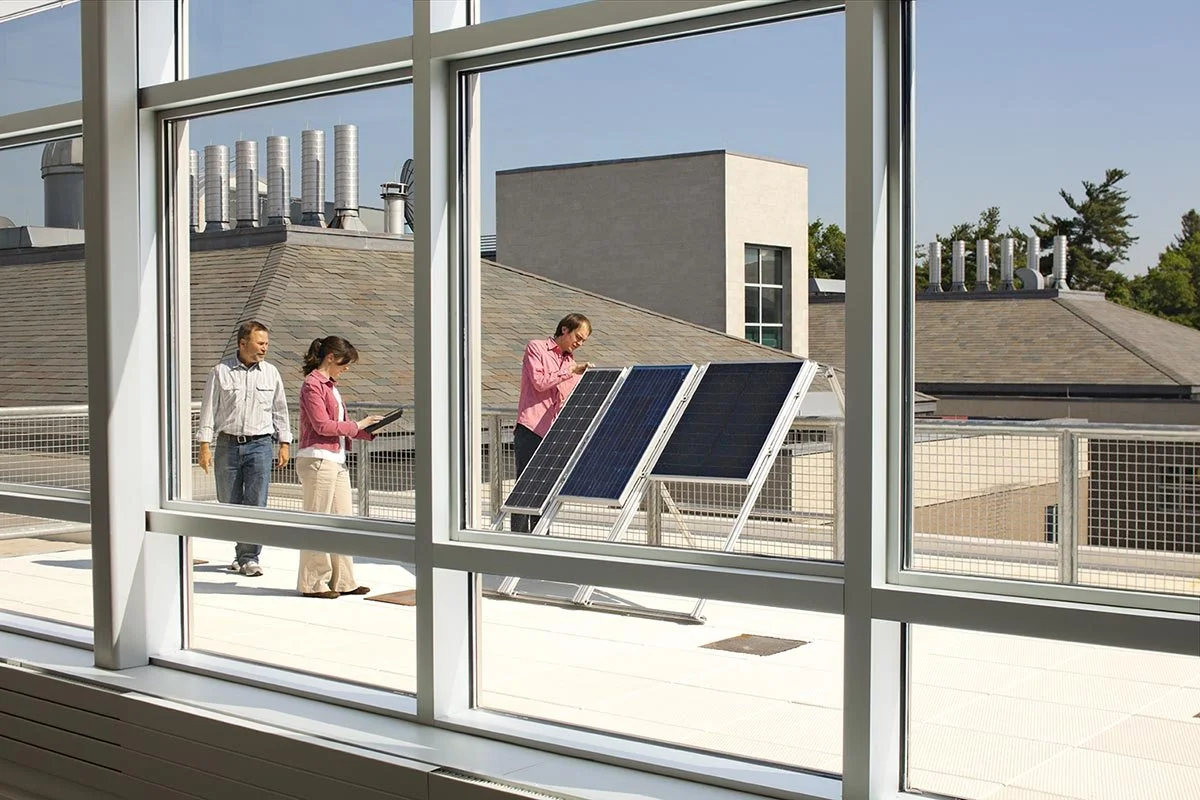
Wold Engineering & Science Center
Union College has been quietly but decisively expanding its engineering and computer science footprint. Over the past two academic years, the college has added new majors, committed tens of millions of dollars to facilities, and seen sustained growth in student demand for technical programs. In a higher-education landscape where most elite liberal arts colleges avoid full engineering degrees, this strategy makes Union structurally unusual—and increasingly outcome-driven.
What’s Actually Expanding at Union
New Engineering Majors
Union has added Civil Engineering and Environmental Engineering, restoring disciplines that had not been offered for more than two decades. These programs launched with immediate student demand and are now enrolling full cohorts that will graduate later this decade. Together with Union’s existing programs—Mechanical, Electrical, Computer, Biomedical Engineering, and Computer Science—the college now offers one of the broadest engineering portfolios among small liberal arts institutions.
Enrollment Growth in STEM
Engineering and computer science now account for over one-fifth of Union’s undergraduate population, up from roughly 15% a decade ago. Computer science has been the fastest-growing area, prompting additional faculty hiring and space reallocation. Internal projections suggest STEM majors could approach one-quarter of the student body within a few years.
This growth is not accidental. It reflects deliberate positioning by Union toward applied, career-relevant disciplines while preserving a liberal arts core.
A New Engineering & CS Building
Union is investing approximately $60 million in a new engineering and computer science complex scheduled to open in 2027. The facility will include:
Purpose-built teaching laboratories
Centralized research labs for faculty-student collaboration
Makerspaces and project rooms
Modern classrooms designed for team-based engineering work
The new building replaces outdated infrastructure and consolidates programs that were previously spread across campus. It also doubles available lab capacity, directly addressing bottlenecks caused by enrollment growth.
Major Philanthropic Backing
A recent $40 million alumni gift, following an earlier $51 million contribution, has accelerated Union’s engineering and CS expansion. These funds support facilities, faculty growth, and program development and signal long-term institutional commitment rather than a short-term enrollment play.
Why Union Is Structurally Different from Its Peers
Among the so-called “Little Ivies,” Union occupies a rare position.
Union offers ABET-accredited, four-year engineering degrees on campus.
Most peers do not offer engineering at all, or rely on 3-2 transfer arrangements.
For context:
Amherst College does not offer an undergraduate engineering major.
Williams College routes engineering-interested students into dual-degree programs elsewhere.
Wesleyan University lacks ABET-accredited undergraduate engineering programs.
By contrast, Union College allows students to complete a full engineering or computer science education without leaving campus, without extending time-to-degree, and without sacrificing accreditation.
This distinction matters for:
Professional licensure pathways
Employer screening
Graduate engineering admissions
Students seeking certainty rather than transfer complexity
Liberal Arts + Engineering Is Not a Slogan Here
Union’s engineering model is intentionally integrated with the liberal arts rather than siloed from it.
Engineering students complete a broad general education curriculum.
Faculty routinely co-teach across engineering, sciences, and humanities.
Capstone projects emphasize real-world problem solving with social, ethical, and economic context.
This structure produces graduates who are technically competent and effective communicators—an increasingly valued combination in engineering leadership, product management, and graduate research environments.
What This Means for Career Outcomes
Employment
Union graduates show strong early-career placement, with engineering and technology among the most common employment sectors. Alumni regularly secure roles in:
Engineering and manufacturing firms
Defense and aerospace contractors
Technology and software companies
Research and applied science organizations
Internships during undergraduate years are common, supported by institutional funding and industry partnerships.
Graduate School Placement
Engineering and computer science are among the top feeder disciplines for Union graduates entering graduate school. Alumni have gone on to competitive programs at:
Top-tier engineering universities
Research-intensive STEM graduate schools
Interdisciplinary science and technology programs
The combination of ABET accreditation, faculty-mentored research, and small-class academic rigor positions Union graduates well in competitive admissions pools.
Long-Term Trajectory
Union alumni data consistently show high satisfaction with career trajectory and early leadership attainment. The applied nature of engineering coursework, combined with liberal arts grounding, appears to accelerate adaptability as industries evolve.
Why This Expansion Is Low-Risk and High-Signal
From a parent or student perspective, Union’s engineering and computer science expansion has several important characteristics:
Pros
Clear differentiation among peer liberal arts colleges
Accredited degrees with predictable outcomes
Significant capital investment already committed
Enrollment growth aligned with labor-market demand
Strong early-career and graduate school results
Potential Trade-Offs
Heavier course loads typical of engineering curricula
Less emphasis on purely theoretical CS compared to large research universities
A campus culture increasingly shaped by applied STEM disciplines
For students seeking a traditional liberal arts experience without engineering, this shift may feel less aligned. For students who want outcomes, technical leverage, and flexibility, it is a net advantage.
Bottom Line
Union College is not dabbling in engineering and computer science—it is doubling down. With new majors, major facilities investment, rising enrollment, and structural advantages over its peer group, Union has positioned itself as one of the most outcomes-oriented liberal arts colleges in the country.
For families evaluating return on investment, employability, and graduate school readiness—without abandoning the benefits of a small, residential liberal arts environment—Union’s engineering and computer science expansion is not a side story. It is the story.