
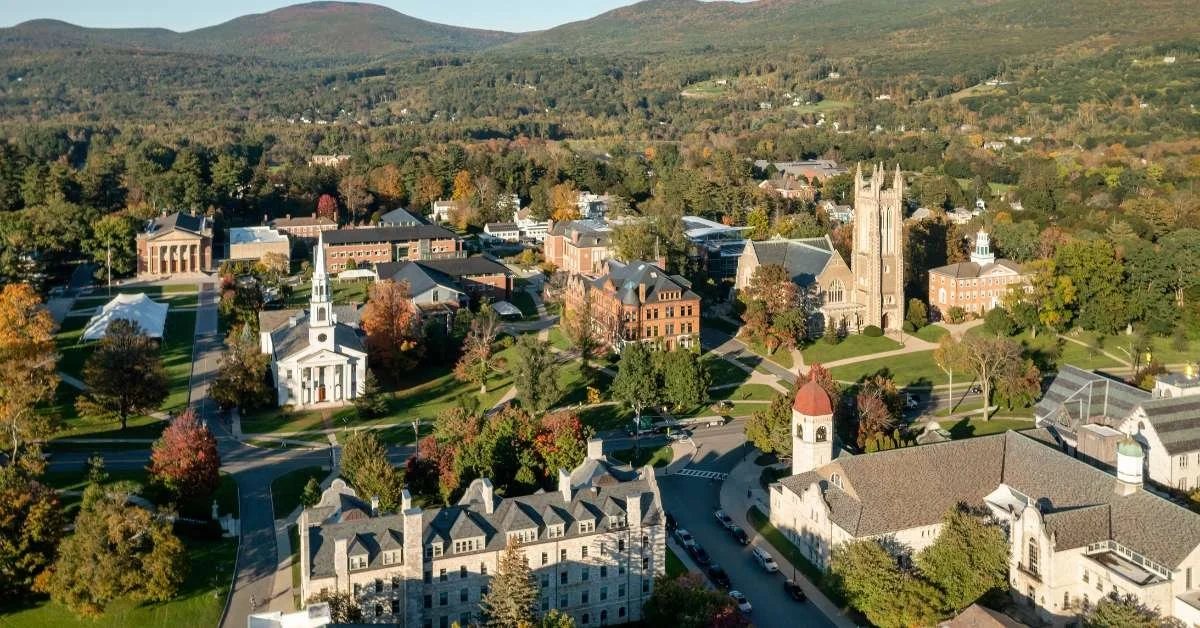
Elite Peer Ecosystem: The Company You Keep
One of the most significant, though often unspoken, components of the "Little Ivy" experience is the peer ecosystem. Education does not happen in a vacuum; it is shaped by the people in the room. At institutions like Williams, Amherst, and their peers, the student body itself is a primary educational resource. These colleges aggregate high-achieving, intellectually curious, and often wealthy or well-connected young people into a dense social network. The result is an environment where the "peer effect" drives academic and social ambition, creating a powerful incubator for future success.
The admissions offices at these schools are master curators. They are not just looking for smart individuals; they are building a class that acts as a diverse, high-functioning organism. When a student enrolls at a Little Ivy, they are surrounding themselves with valedictorians, concert pianists, published authors, and junior Olympians. This proximity to talent normalizes excellence. When your roommate is staying up until 2 AM to perfect a philosophy paper or launch a non-profit, it sets a behavioral standard. The "average" at a Little Ivy is exceptional elsewhere, and this baseline pushes students to stretch their own potential.
This ecosystem also functions as a pre-professional network from day one. The friendships formed in the dorms of a Little Ivy often translate into the business partnerships and political alliances of the future. Because the community is small, the connections are deep. Students are not just networking; they are living together. This creates a level of trust and familiarity that is invaluable later in life. It is an ecosystem of "future leaders" recognizing one another before they have fully bloomed.
However, this elite ecosystem has its downsides. It can create a "bubble" effect, where students are insulated from the economic and social realities of the wider world. The concentration of wealth and privilege—despite aggressive financial aid initiatives—can be palpable. The "imposter syndrome" can be severe for students from underrepresented backgrounds who find themselves navigating a social code that seems native to their wealthier peers. The schools work hard to mitigate this through diversity efforts, but the aura of elitism is difficult to fully dismantle.
Nevertheless, for those inside the ecosystem, the benefits are undeniable. The intellectual friction of arguing with brilliant peers sharpens the mind in ways that a textbook cannot. The social capital gained by being part of this group provides a safety net and a launching pad. The Little Ivy experience is defined by the understanding that you are not just getting an education from the faculty, but from the person sitting next to you—someone who is likely to go on to change the world.
Further Reading
Amherst College – Peer Learning & Student Body Impact
https://www.amherst.edu/academics
Williams College – Tutorial System & Peer Effect
https://www.williams.edu/academics/tutorial-system/
Swarthmore College – Diversity & Inclusion in Peer Ecosystem
https://www.swarthmore.edu/diversity-inclusion
Bowdoin College – Student Life & Social Capital
https://www.bowdoin.edu/student-life